When you pick up a prescription at the pharmacy, you might not realize that the price you pay isn’t just about the drug itself-it’s shaped by a complex system your employer set up months or even years ago. Most large employers offer health plans that include prescription drug coverage, and nearly all of them use something called a formulary to decide which drugs are covered and how much you pay for them. And in almost every case, the system is designed to push you toward generic medications-not because they’re less effective, but because they’re dramatically cheaper.
Why Generics Are the Default Choice
The FDA has been clear for decades: generic drugs are just as safe and effective as their brand-name versions. They contain the same active ingredients, work the same way in your body, and meet the same strict quality standards. The only real difference? Price. Generics typically cost 80-85% less than brand-name drugs. That’s not a small savings-it’s massive. Every week, generic medications save the U.S. healthcare system over $3 billion. Annually, that adds up to more than $150 billion. Employers didn’t invent this cost-saving strategy. They adopted it because they’re paying the bill. Health insurance premiums have been climbing for years, and prescription drugs are one of the fastest-growing expenses. By steering employees toward generics, employers can keep premiums lower and reduce their own out-of-pocket spending. It’s simple math: if 100 employees switch from a $200 brand-name medication to a $30 generic, that’s $17,000 saved every month just on that one drug.How Formularies Work: The Tiered System
Most employer health plans organize drugs into tiers. Think of it like a pricing ladder. The lower the tier, the less you pay. Here’s how it usually breaks down:- Tier 1: Generics - Usually $10 or less per prescription. This is where your plan wants you to be.
- Tier 2: Preferred Brand-Name Drugs - These are brand-name drugs your plan has negotiated a better price on. Copay is typically $40.
- Tier 3: Non-Preferred Brand-Name Drugs - If a generic exists but you choose the brand anyway, you pay more. Expect $75 or higher.
- Tier 4: Specialty Drugs - High-cost medications for conditions like cancer, MS, or rheumatoid arthritis. Copays can hit $200-$500 or even be a percentage of the total cost.
Who Controls the List? Pharmacy Benefit Managers (PBMs)
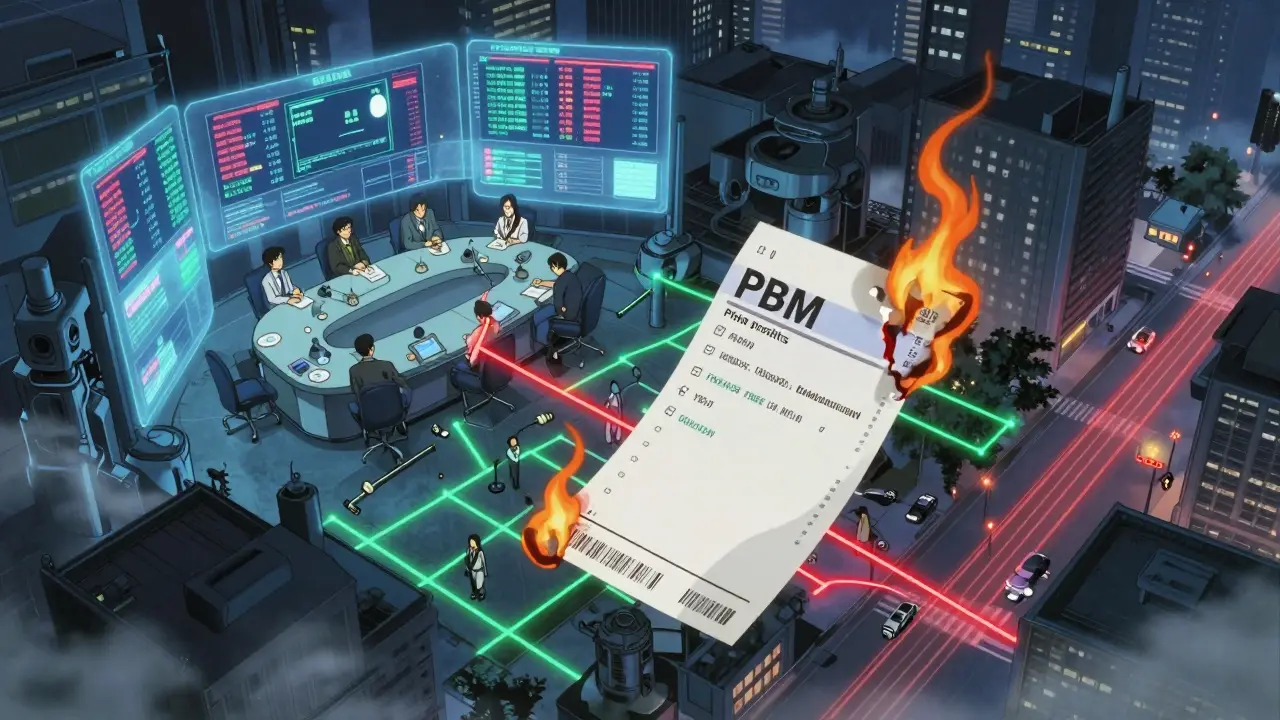
You might think your employer or insurer decides which drugs are covered. But the real power lies with Pharmacy Benefit Managers, or PBMs. These are middlemen-companies like OptumRx, CVS Caremark, and Express Scripts-that negotiate drug prices, manage formularies, and process claims for most employer plans. PBMs don’t just pick drugs. They use formularies as bargaining chips. In January 2024, each of the three largest PBMs removed over 600 drugs from their formularies. Why? To pressure drugmakers into offering bigger discounts. If a manufacturer won’t lower its price or offer a large enough rebate, the drug gets cut. No coverage. No exceptions. You pay full price-or find an alternative. This system works great for PBMs and employers. But here’s the problem: the savings don’t always reach you. PBMs make money through a practice called gross-to-net pricing. A drug might have a list price of $100, but after rebates and discounts, the PBM pays $45. That 55% difference? That’s the gross-to-net spread. And it’s not always passed on to you. Sometimes, the PBM keeps the difference. So even though your plan saves money, your copay stays the same.
What Happens When Your Drug Gets Removed?
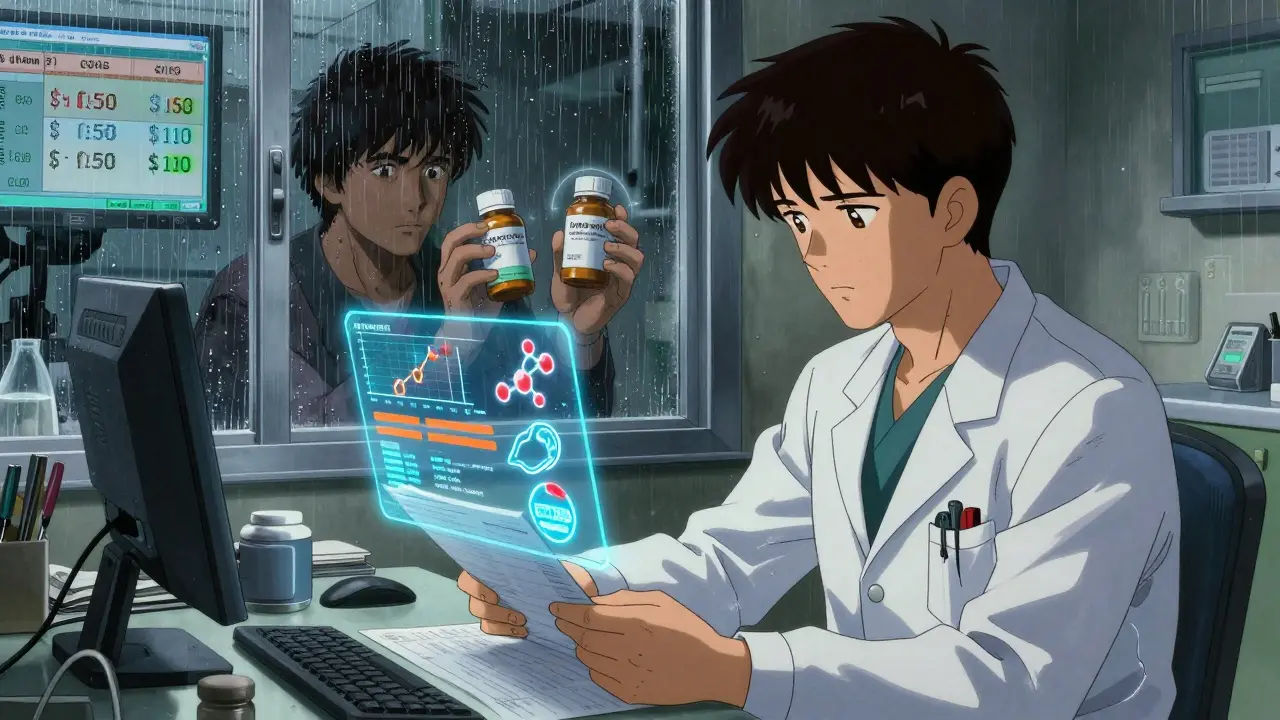
It’s not rare. A drug you’ve been taking for years suddenly disappears from your formulary. You show up at the pharmacy, and the pharmacist says, “Sorry, it’s not covered anymore.” That’s when you need to act fast. First, check your plan’s website or call your insurer. Look at your Summary of Benefits and Coverage (SBC)-it should list covered drugs and tiers. If your medication’s gone, ask if there’s a generic alternative. If not, ask about a medical exception. Your doctor can submit paperwork explaining why you can’t switch-maybe you had side effects with the generic, or it doesn’t work as well for you. Some employers have care managers who help with exactly this. They’ll work with your doctor and insurer to find a solution. They might find a different drug in the same class, help you get prior authorization, or even connect you with patient assistance programs.How to Take Control of Your Prescription Costs
You don’t have to just accept whatever your plan says. Here’s how to navigate it:- Check your formulary every time you refill. Formularies change often. Just because a drug was covered last month doesn’t mean it is this month.
- Ask your pharmacist. They know what’s covered, what’s not, and what alternatives exist. Don’t assume the first drug they suggest is the only option.
- Use in-network pharmacies. Some plans offer extra savings only if you fill prescriptions at certain pharmacies. HealthOptions.org’s Price Assure Program, for example, automatically lowers costs for generics at in-network locations.
- Ask about mail-order options. Many plans offer 90-day supplies at lower copays. That’s a big help for chronic conditions like diabetes or high blood pressure.
- Know your rights. If your doctor says you need a non-formulary drug, you can request a coverage exception. You have the right to appeal if it’s denied.
Why Your Employer Pushes Generics (And Why It Matters)
Employers aren’t trying to trick you. They’re trying to keep your benefits affordable. If they didn’t push generics, premiums would go up-and you’d pay more each month just to have coverage. The goal isn’t to deny care. It’s to make care sustainable. But transparency is missing. Most employees don’t understand how formularies work. They don’t know why their copay changed. They don’t realize generics are just as good. That’s why smart employers are starting to educate their teams-through emails, payroll inserts, and even short videos. They’re saying: “Here’s what’s changing. Here’s why. And here’s how you can save.”The Bigger Picture: Where This Is Headed
The trend isn’t slowing down. PBMs are getting more aggressive with formulary exclusions. More drugs are being removed. More generics are being added. And with inflation still affecting drug prices, employers will keep looking for ways to cut costs. Some states are starting to regulate PBMs. There’s growing pressure to make gross-to-net pricing more transparent. In the future, you might see plans that pass savings directly to you-lower copays, not just lower premiums. For now, the system favors generics. And for good reason. They’re safe. They’re effective. And they save billions every year. The challenge isn’t whether generics are a good idea-it’s whether the people who pay for them know how to use the system to their advantage.Frequently Asked Questions
Are generic drugs really as good as brand-name drugs?
Yes. The FDA requires generic drugs to have the same active ingredients, strength, dosage form, and route of administration as the brand-name version. They must also meet the same strict standards for quality, purity, and performance. The only differences are in inactive ingredients (like fillers or dyes) and packaging. Generics are tested to ensure they work the same way in your body.
Why did my copay suddenly go up for a drug I’ve been taking?
Your plan’s formulary likely changed. If a generic version of your brand-name drug became available, your insurer probably moved the brand to a higher tier (like Tier 3 or 4) and put the generic in Tier 1. This is standard practice. You can ask your pharmacist or insurer for the updated formulary list to see what changed.
Can I get my non-formulary drug covered if I really need it?
Yes, through a medical exception request. Your doctor can submit documentation explaining why a non-formulary drug is medically necessary-for example, if you had an allergic reaction to the generic, or if the generic didn’t control your condition. The insurer will review it and may approve coverage. Don’t assume it’s denied-ask.
What if my employer offers a Consumer-Driven Health Plan (CDHP)?
CDHPs usually come with a health savings account (HSA) and higher deductibles, but they also have strong incentives to use generics. Copays for Tier 1 drugs are often $0 or very low. The plan is designed to make you think about costs-so choosing generics can save you hundreds a year. Always check your plan’s drug list before filling a prescription.
Do all employer plans use the same formulary?
No. Different insurers and PBMs use different formularies. Anthem, for example, has six different drug lists for Ohio employers depending on the plan type. Your plan’s formulary depends on your employer’s contract with the insurer and PBM. Always check your specific plan’s list, not just what you’ve heard from coworkers.
Can I switch to a different drug if mine is removed from the formulary?
Often, yes. Your doctor can usually find a similar medication in the same drug class that’s covered. For example, if your brand-name statin is removed, there are likely several generic statins that work just as well. Don’t stop taking your medication without talking to your doctor first.




bhushan telavane
December 18, 2025 AT 10:04So in India we don’t even have access to most brand-name drugs unless you’re rich. Generics are the only option, and honestly? They work fine. My uncle takes the same generic blood pressure med for 10 years now-no issues. The system’s not perfect but it keeps people alive.
Mahammad Muradov
December 18, 2025 AT 11:28You’re all missing the real issue. PBMs aren’t middlemen-they’re corporate parasites. They take the savings, hide the rebates, and then act like they’re doing you a favor. The FDA doesn’t care. Employers don’t care. Only the patient pays the price in confusion and surprise bills. This isn’t healthcare-it’s financial engineering disguised as insurance.
Connie Zehner
December 19, 2025 AT 05:41OMG YES!!! I just had this happen last week 😭 I was on Lisinopril for 5 years and suddenly my copay jumped from $5 to $75!! I cried in the pharmacy aisle. My pharmacist was like ‘just switch to the generic’ but I was like… I don’t trust generics!! 😅 But then I tried it… and I felt the SAME. Like… why did I pay $200 for 3 months?? 😭
Vicki Belcher
December 19, 2025 AT 10:17Thank you for sharing this. It’s so important to understand how these systems work. Many people feel powerless, but knowledge truly is power. 🌟 If you’re on a chronic medication, always check your formulary every refill-don’t wait for a surprise. And if you’re confused? Call your plan. Ask for a care manager. You’re not alone in this. 💪❤️
Alex Curran
December 20, 2025 AT 22:28Formularies are a mess but they’re not the enemy. The real problem is PBMs getting paid based on the gap between list price and net price. That’s why they push high-cost drugs with big rebates instead of cheaper generics. The system rewards them for complexity. Simple fix? Ban gross-to-net. Make copays based on what the pharmacy actually pays. Done.
Kitt Eliz
December 22, 2025 AT 03:02STOP letting PBMs control your life!!! 🚨 Your employer is NOT your friend-they’re outsourcing their cost-cutting to you. That $30 generic? The PBM pocketed $50 in rebates. You’re being manipulated. Demand transparency. Demand direct savings. Use your HSA like a weapon. Switch to mail-order. Fight back. You’ve got rights. Use them. #PharmacyJustice
Nicole Rutherford
December 23, 2025 AT 14:40Of course generics work. I’ve been taking them since 2012. But you people act like you’re shocked. This has been going on for decades. If you can’t afford your meds, maybe you shouldn’t have chosen a job with crappy insurance. Stop acting like this is new. It’s not. You just didn’t read the fine print.
Mark Able
December 25, 2025 AT 01:52Wait so if I ask for a brand name and my doc writes a note can I just get it? Like I’m not trying to be difficult but I hate the generic version of my antidepressant. It makes me feel like a zombie. My doc says it’s the same. But I swear it’s not. Can I just fight this? I don’t want to be a burden but I need to feel like me again.
Chris Clark
December 26, 2025 AT 09:21bro i just found out my plan changed my meds last month and i didnt even notice til i got the bill. i thought i was saving money but turns out i was paying more for the same thing. i called my doc and they just said ‘oh yeah that happened’ like it was no big deal. why is no one telling us this stuff??
Dorine Anthony
December 28, 2025 AT 01:58I used to hate formularies. Then I got diagnosed with diabetes. My insulin was $500 a month. My plan moved me to a generic version-$25. I didn’t even know there was one. I’m alive because of this system. I don’t love it, but I don’t hate it either. Just wish they’d explain it better.
Marsha Jentzsch
December 29, 2025 AT 00:47THEY’RE LYING TO YOU!!! PBMs are in bed with Big Pharma!!! They make you switch to generics so they can get kickbacks from the generic manufacturers!!! And then they charge you more for the brand because they want you to pay more so they can get MORE rebates from the BRAND!!! It’s a scam!!! I’ve been researching this for YEARS!!!
Janelle Moore
December 30, 2025 AT 00:19Generics are fine. But what if you’re allergic to the dye in the generic? What if it gives you headaches? Who cares? The system doesn’t care. You’re just supposed to suffer and shut up. This isn’t healthcare. It’s a vending machine.
Henry Marcus
December 31, 2025 AT 12:45They don’t want you to know this but the real reason generics are pushed is because the government pays for them through Medicaid and Medicare and the PBM gets paid more per pill if it’s a generic. So they’re not saving YOU money-they’re saving the government. And you? You’re just the patsy in their profit scheme. Wake up.