You just walked out of the pharmacy counter with your new prescription. The pharmacist handed you the bag, you said thanks, and you headed for the door. But wait-did you actually look inside? Most people don’t. They trust the system implicitly. And while pharmacies are incredibly safe, they aren't perfect. In fact, medication errors affect roughly 1.5 million people in the United States every year. That’s not a statistic; that’s someone who took the wrong pill, at the wrong dose, or for the wrong condition.
Think of auditing your medication bag as the final safety net. It’s like double-checking your grocery receipt before you leave the store, but the stakes are literally life and death. This process, often called patient medication verification, takes less than thirty seconds. Yet, research published in JAMA Internal Medicine shows that when patients perform this structured check, they catch 87% of dispensing errors before those errors can cause harm. You are the last line of defense. Let’s make sure you’re ready to stand guard.
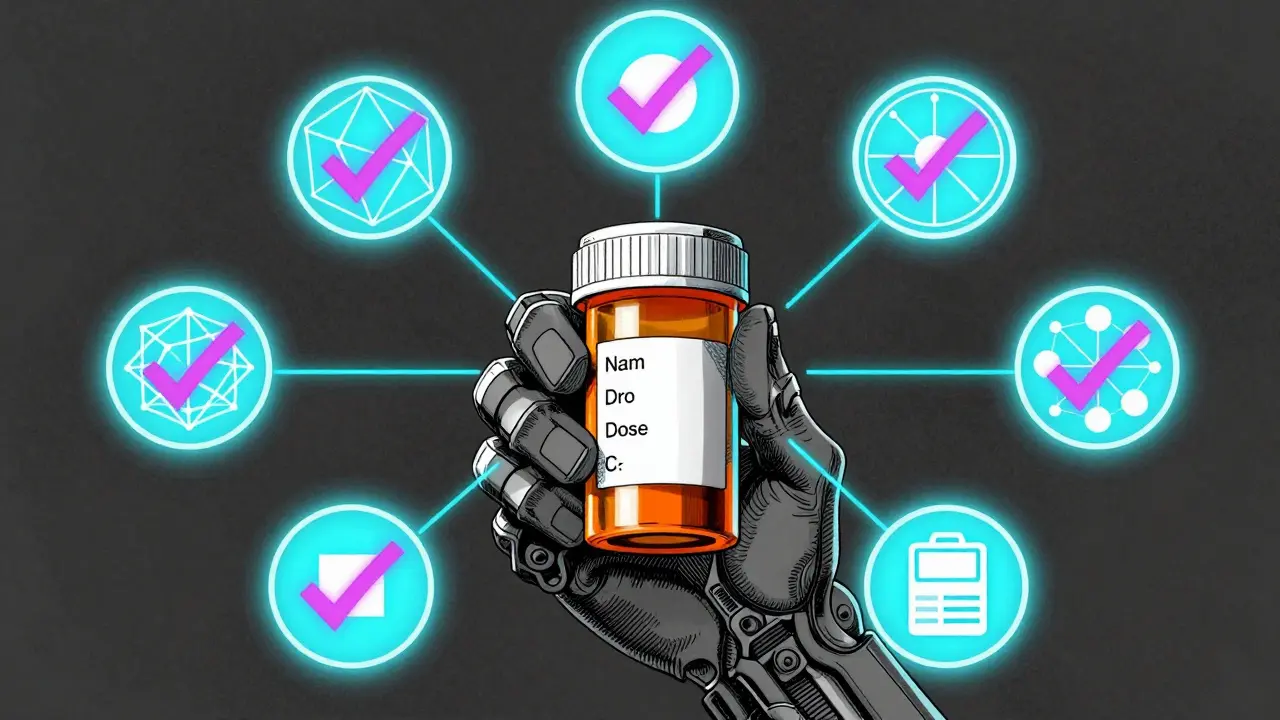
The Seven-Point Safety Checklist
You don’t need a degree in pharmacology to do this. You just need a systematic approach. Experts from the American Pharmacists Association (APhA) recommend a specific seven-point verification process. Keep these points in mind every time you pick up a script. It becomes muscle memory after a few tries.
- Patient Name: Check the label first. Does it say your name exactly? Sounds simple, right? But data from the National Community Pharmacists Association (NCPA) found that nearly 13% of errors involve giving the right drug to the wrong person because names were similar. If the label says "John Smith" and you are "Jon Smyth," stop immediately.
- Medication Name: Look at both the brand and generic names. Do they match what your doctor prescribed? Be careful with look-alike/sound-alike drugs. For example, Celexa and Celebrex sound similar but treat completely different conditions. The FDA reported over 1,800 incidents of wrong-drug errors due to these confusions in a single year.
- Dosage Strength: This is where things get tricky. Check the numbers and the units. Is it 5 mg or 50 mg? A decimal point error here can be catastrophic. The Institute for Safe Medication Practices (ISMP) notes that strength errors account for nearly one-third of all serious dispensing mistakes. If the bottle looks different from your previous refill, ask questions.
- Quantity: Count the pills if it’s a small bottle, or check the count on the label against what you expect. Did you ask for a 30-day supply but receive 14 days? Or did you get 60 days by mistake? Incorrect quantities can lead to running out of critical meds early or hoarding them unnecessarily.
- Expiration Date: Glance at the date on the vial or box. While most chronic medications won’t expire in six months, checking ensures you haven’t received an old stock item. According to USP standards, medications degrade over time, and taking expired drugs can mean taking ineffective ones.
- Appearance: What does the pill look like? Color, shape, and markings matter. If your usual blue oval pill is now a white circle, something has changed. Compare it to images online or ask the pharmacist to show you what it should look like. Visual confirmation is a powerful tool.
- Instructions: Read the "Take..." section on the label. Does it match what the doctor told you? Take it with food? Twice a day? Once a week? The APhA reports that incorrect directions for use are involved in over 14% of errors. If the label says "take one tablet daily" but your doctor said "twice daily," speak up now.
Why Your Eyes Are Better Than Their Software
You might wonder, "Why can’t the pharmacy just get it right?" They try. They use barcode scanners, automated counting machines, and rigorous double-checks by technicians and pharmacists. But technology fails. Humans fail. And sometimes, both fail at the same time.
A study from UCSF found that a structured patient audit outperforms casual inspection by 83%. Why? Because you know your body. You know what your blood pressure med usually looks like. You know that your child’s antibiotic comes in a sweet cherry flavor, not a bitter orange one. No algorithm knows that context. When you verify, you add a layer of intelligence that no machine can replicate.
Consider mobile apps. Tools like MedSafe allow you to scan barcodes to verify National Drug Codes. They are impressive, catching nearly 99% of code mismatches. But they require you to have a smartphone, good lighting, and tech literacy. For many seniors, this barrier is too high. The physical act of looking at the bottle, reading the label, and comparing it to your memory is accessible to everyone, regardless of income or tech skill.
Handling Common Obstacles
Let’s be real: checking your meds isn’t always easy. Labels can be tiny. Print can be faded. Some pharmacies rush you out the door. Here is how to handle the friction.
| Barrier | Impact | Practical Solution |
|---|---|---|
| Small Font/Blurry Print | Makes reading dosage and instructions difficult, especially for those with vision issues. | Ask the pharmacist for a magnifying card. Many chains like Walgreens provide these. Or, take a photo of the label with your phone to zoom in later. |
| Rushed Environment | Pressure to leave quickly leads to skipped checks. | Stay at the counter until you’ve done your check. It’s your right. Say, "I’m going to take thirty seconds to verify this before I go." |
| Complex Polypharmacy | Managing 10+ meds makes individual checks overwhelming. | Request a comprehensive "Brown Bag Review" with your pharmacist quarterly. Use a pill organizer to sort them visually at home. |
| Medical Jargon | Terms like "titrate" or "PRN" confuse patients. | Ask for plain language. If the label doesn’t make sense, ask the pharmacist to write out the schedule in simple terms on a separate card. |
If you have macular degeneration or cataracts, don’t suffer in silence. Tell the pharmacist. Under the 2024 Pharmacy Technician Certification Board requirements, staff are trained to assist with verification. They can read the label aloud to you. There is no shame in asking for help; there is only risk in assuming.
The Psychology of the "Final Check"
Why do we skip this step? Often, it’s deference. We respect the pharmacist’s expertise, so we assume infallibility. But experts make mistakes. Fatigue happens. Distractions happen. A pharmacist might be dealing with a crying baby in the waiting room while filling your script. A technician might misread a handwritten note from the doctor.
Dr. Michael Cohen, President of the Institute for Safe Medication Practices, puts it bluntly: "The 30 seconds a patient spends verifying their medication prevents 8 of 10 dispensing errors that reach the patient." He isn’t blaming pharmacists. He’s empowering patients. When you audit your bag, you aren’t accusing anyone of wrongdoing. You’re participating in a shared safety culture.
This shift in mindset is crucial. It moves you from being a passive recipient of care to an active partner in your health. Studies show that patients who verify their medications report 68% higher confidence in their pharmacy. Why? Because they feel in control. They know exactly what they are putting into their bodies.
Real-Life Scenarios: What Can Go Wrong?
To understand why this matters, let’s look at real cases. These aren’t hypotheticals. They happened to real people.
The Decimal Disaster: A mother picked up an antibiotic for her child. The label said "Give 5 mL." She assumed it meant 5 milliliters of the liquid suspension. But the bottle was marked 50 mg/5mL. The pharmacist had written "give 5" without specifying units clearly on the verbal handoff. By checking the concentration on the bottle against the label, she realized the discrepancy. Had she not checked, her child could have received a ten-fold overdose.
The Warfarin Mix-Up: An elderly man in Pennsylvania noticed his warfarin bottles looked slightly different-the color of the cap was off. He paused. He checked the strength. It was wrong. He caught a fatal dosing error before leaving the parking lot. This case was reported to the ISMP Medication Error Reporting Program and highlights how visual cues save lives.
The Silent Failure: Conversely, consider the patient who rushes. A study in Patient Education and Counseling found that verification performed in under 15 seconds detects only 22% of errors. Thirty seconds or more jumps that detection rate to 87%. Speed kills accuracy. Slow down.

Tools and Resources to Help You
You don’t have to do this alone. Several tools can make the audit easier and more reliable.
- FDA MedCheck App: Launched in late 2024, this free app allows you to scan labels and cross-reference them with official FDA databases. It’s downloaded over a million times and is particularly useful for checking expiration dates and recall notices.
- Laminated Wallet Cards: The CDC provides free wallet cards with the seven-point checklist. Ask your pharmacist for one. Keep it in your wallet next to your insurance card.
- Voice Assistants: New integrations with devices like Alexa allow for voice-guided verification prompts. If you have dexterity issues, speaking your check-list can be easier than writing or tapping.
- Pharmacy Magnifiers: As mentioned, many stores now keep large plastic magnifiers near the counter. Don’t hesitate to grab one.
Also, pay attention to label quality. Consumer Reports’ 2024 survey showed significant variation between pharmacies. Costco scored high on clarity, while others lagged. If your current pharmacy consistently has illegible labels, consider switching. Clear communication is part of the service.
Building the Habit
How do you make this stick? Start small. Next time you pick up a non-critical medication, like vitamins or a topical cream, practice the seven points. Notice how long it takes. It’s probably closer to twenty seconds than you think.
Then, apply it to your prescriptions. Make it a ritual. Open the bag. Pull out the bottle. Run through the list. Name, Drug, Dose, Quantity, Date, Appearance, Instructions. Once you’ve done it five times, it will feel natural. You won’t even think about it. You’ll just do it.
Remember, the goal isn’t to find fault. The goal is peace of mind. When you walk out of that pharmacy, you want to know, with absolute certainty, that what you are holding is exactly what you need. That certainty is worth thirty seconds of your time. Every single time.
Is it rude to check my medication at the pharmacy counter?
Not at all. Pharmacists expect and encourage this. In fact, many state laws now require them to prompt you to verify. Checking your meds shows you are engaged in your health, which professionals respect. It is better to ask a question at the counter than to suffer a side effect at home.
What should I do if I find an error?
Stay calm and polite. Point out the discrepancy clearly. For example, say, "This label says 5mg, but my prescription is for 10mg." The pharmacist will investigate immediately. If they confirm an error, they will correct it on the spot. Never leave with a medication you suspect is wrong.
Do I need to check over-the-counter (OTC) medications too?
Yes. OTC errors are common, especially with pain relievers or cold medicines that contain similar ingredients. Always check the active ingredients to avoid doubling up on doses, such as taking Tylenol and then a multi-symptom cold medicine that also contains acetaminophen.
How long does a proper medication audit take?
A thorough seven-point check takes about 20 to 30 seconds per medication. Rushing through it in under 15 seconds significantly reduces its effectiveness. Treat it like checking your seatbelt-a quick, non-negotiable safety step.
Can I rely solely on mobile apps for verification?
Apps are helpful supplements, but they shouldn't replace human judgment. Technology can glitch, and cameras can misread labels in poor light. Always combine digital tools with your own visual inspection and knowledge of your usual medications.