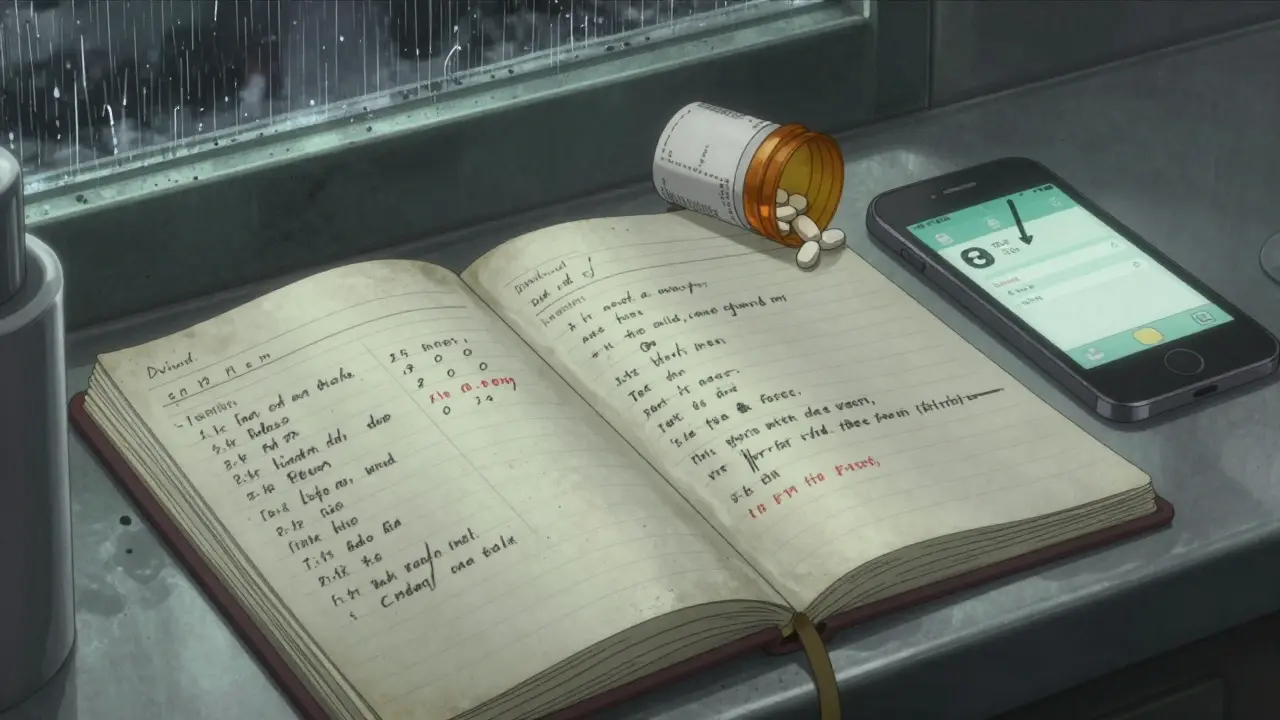
Why a Medication Log Matters More Than You Think
Every year, thousands of people accidentally take too much of a medication - not because they’re reckless, but because they lost track. Maybe they took a painkiller for back pain, then another later because the first didn’t seem to work. Maybe they mixed a prescription with a sleep aid they bought online. Or maybe they didn’t remember if they already took their dose that morning. These aren’t rare mistakes. They’re common, quiet, and deadly.
A medication log isn’t just for elderly patients or people on complex drug regimens. It’s a simple, powerful tool for anyone taking more than one medication - especially opioids, benzodiazepines, sleep aids, or pain relievers. The CDC says combining opioids with alcohol or sedatives increases overdose risk by up to 10 times. A log doesn’t just help you remember what you took. It helps you see patterns, spot danger, and stop an overdose before it happens.
What to Write in Your Medication Log
Don’t just write down the name of the pill. That’s not enough. A real medication log captures the details that save lives. Here’s what you need to record every time you take something:
- Medication name - Use the brand or generic name, but be consistent. Don’t switch between “oxycodone” and “Percocet” - pick one and stick with it.
- Dosage - Write the exact amount: 10 mg, not “one pill.” If the pill is cut or crushed, note it: “5 mg (half of 10 mg tablet).”
- Time taken - Use a 24-hour clock: 14:30, not “2:30 PM.” Precision matters. If you’re unsure, guess the closest time.
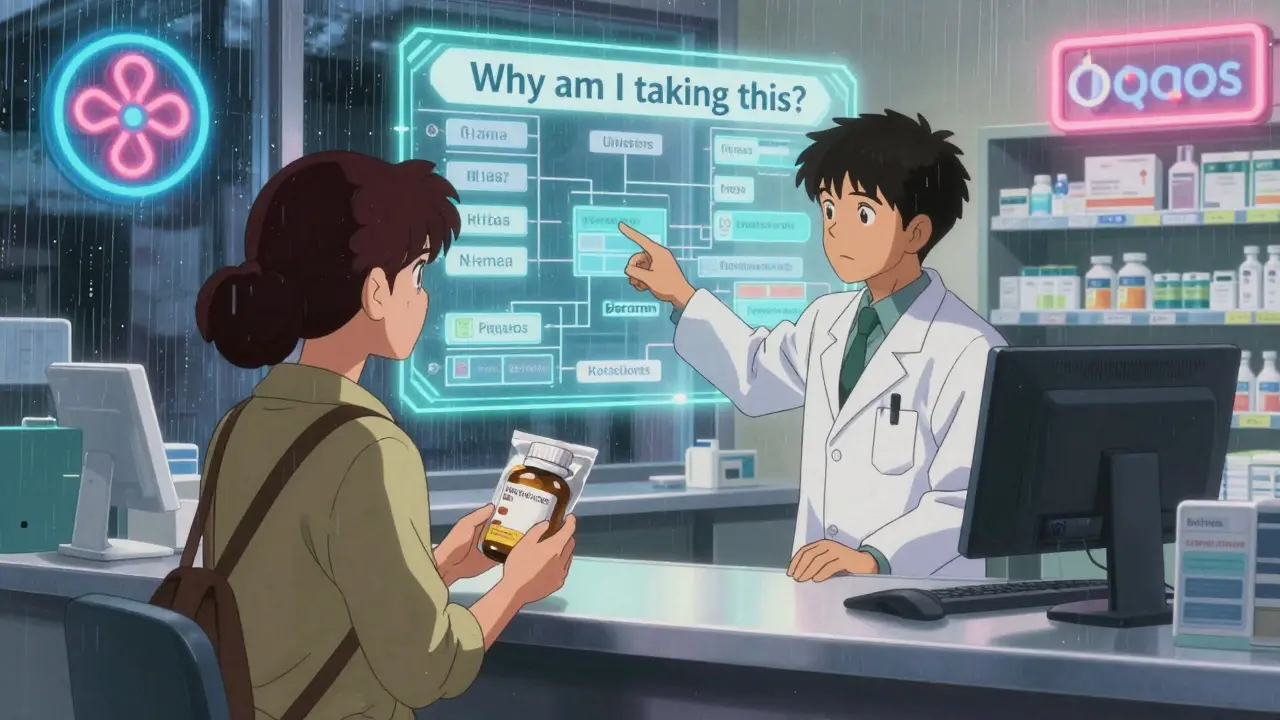
- Reason for taking it - “Headache,” “anxiety,” “trouble sleeping.” This helps you spot if you’re using meds to cope, not treat.
- How you took it - Swallowed, crushed, snorted, injected? The method changes how fast the drug hits your system - and how risky it is.
- Other substances taken - Alcohol, marijuana, benzodiazepines, sleep meds, even OTC cold pills. Write them all. Mixing even one extra substance can turn a safe dose into a lethal one.
- Effects or side effects - “Dizzy,” “no relief,” “felt calm,” “nauseous.” This tells you what’s working and what’s dangerous.
That’s it. Seven simple fields. No fancy app needed. A notebook, a sticky note, or a free notes app on your phone works fine.
How to Make It Stick (Without Feeling Like a Chore)
Most people start a log with good intentions. Then they forget. Or they skip a day. Or they write “took pain meds” and leave it at that. If your log isn’t accurate, it’s useless.
Here’s how to make it automatic:
- Link it to a habit - Write in your log right after you take your medication. Do it while brushing your teeth, right after breakfast, or before you get into bed. Make it part of the routine.
- Use reminders - Set a phone alarm labeled “Log it now.” Even a 10-second delay after taking a pill can make you forget.
- Keep it visible - Tape your log to the bathroom mirror. Put it next to your pill organizer. If you can’t see it, you won’t use it.
- Don’t wait - If you forgot to log it, write it down as soon as you remember. Don’t skip the day. “Forgot” is not an excuse - it’s a red flag.
People who log consistently reduce their risk of accidental overdose by more than half, according to harm reduction studies. It’s not magic. It’s awareness.

Spotting the Warning Signs in Your Own Log
Your log isn’t just a record. It’s a mirror. Look at it weekly. Ask yourself:
- Am I taking more than prescribed? - If you’re taking 3 pills a day but your prescription is for 2, that’s a problem.
- Am I taking it more often than before? - Going from once a day to three times a day in a week? That’s tolerance building - and it’s dangerous.
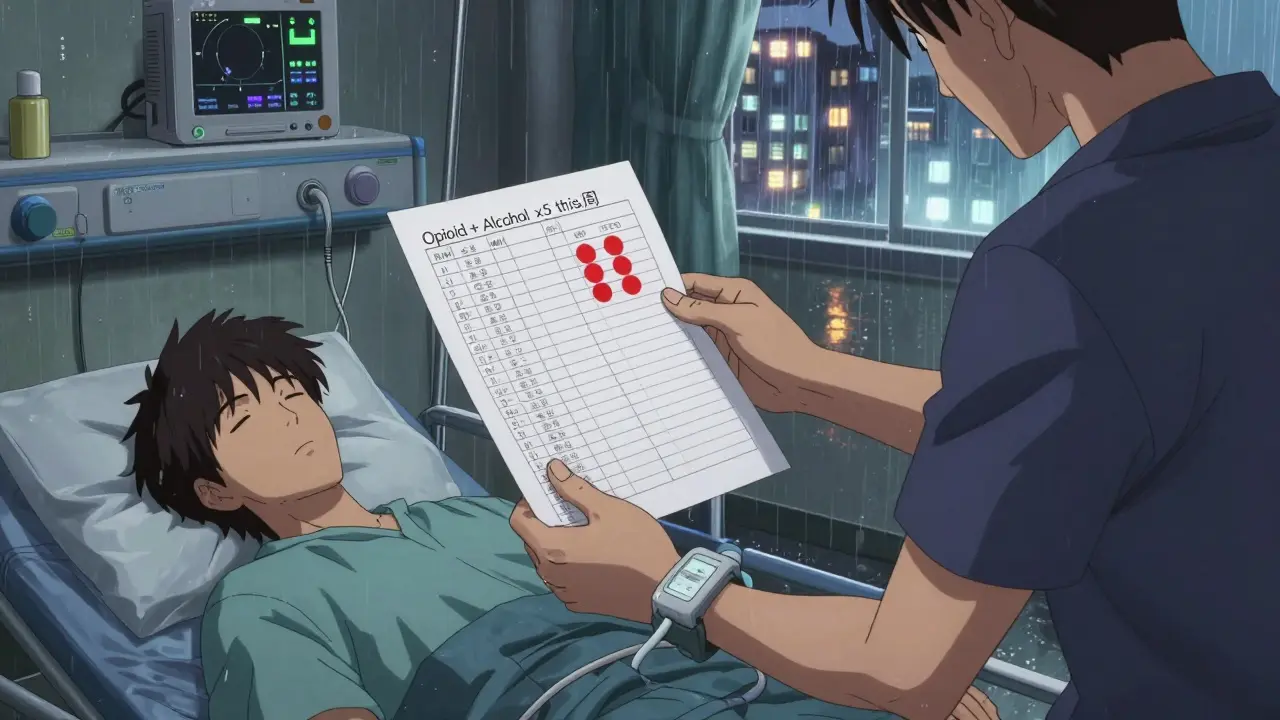
- Am I mixing substances? - If you’re taking opioids and alcohol on 5 out of 7 days, you’re playing Russian roulette.
- Do I feel worse after taking it? - If you take a pill for anxiety but feel more anxious, shaky, or nauseous afterward, something’s off.
- Am I taking it just to feel normal? - If your reason for taking it is “I don’t want to feel sick” or “I need to function,” that’s dependence talking.
These aren’t just habits. They’re warning signs. If your log shows any of these patterns, talk to a doctor, counselor, or harm reduction worker. Don’t wait for an emergency.
How a Log Helps Others Keep You Safe
Overdose doesn’t always happen alone. Many people overdose when they’re with others - and no one realizes what’s happening until it’s too late.
Share your log with someone you trust. A partner, a friend, a family member. Let them check it once a week. If you don’t answer a call or text for hours, they can look at your last entry. If you took 10 mg of oxycodone at 10 p.m. and haven’t moved since 2 a.m., they know something’s wrong.
Some people print their log and keep a copy in their wallet. Others use a shared digital note. Some harm reduction groups even offer “buddy systems” where two people log each other’s doses. It’s not about control. It’s about having someone who knows what you’ve taken - so they can act fast if you stop responding.
What to Do If You’re Using Illicit Drugs
If you’re using street drugs - fentanyl, heroin, counterfeit pills - your log becomes even more critical. You don’t know what’s in the pill. You don’t know the strength. That’s why testing strips are part of the log.
Every time you use a new batch:
- Test it with a fentanyl or xylazine strip (available for free at many harm reduction centers).
- Write down the result: “Positive for fentanyl,” “Negative,” “Unclear.”
- Record the dose you took - even if it’s just a tiny pinch.
- Write down how you felt: “Felt nothing,” “Too strong,” “Nauseated.”
This data tells you if a batch is dangerous. If you’ve had three bad reactions in a row to the same dealer’s pills, stop. Your log gives you proof - not just gut feeling.
When to Upgrade from Paper to Digital
A paper log works. But if you’re on multiple medications, take them at odd hours, or use them with other substances, a digital tool can help.
Free apps like Medisafe, MyTherapy, or even a simple Google Sheets template can:
- Send reminders to take your meds - and log them.
- Flag dangerous combinations (e.g., “Opioid + Alcohol = High Risk”).
- Generate weekly reports you can share with your doctor.
- Store photos of pills or prescriptions for reference.
But don’t wait for the perfect app. A sticky note with a pen is better than no log at all. Start simple. Improve later.
What You Shouldn’t Do
Here’s what makes a log useless - or worse:
- Don’t fake it - Writing “took meds” when you didn’t won’t help anyone. Honesty saves lives.
- Don’t skip days - One missed day can hide a dangerous pattern.
- Don’t rely on memory - You think you’ll remember. You won’t.
- Don’t wait until you’re in crisis - Start logging before you need it. Prevention isn’t reactive.
Final Thought: Your Log Is Your Lifeline
A medication log isn’t about being controlled. It’s about being in control. It’s not about shame. It’s about safety. It’s not for doctors - it’s for you. And if you’re taking any kind of medication that affects your brain, your breathing, or your heart - you deserve to know exactly what’s happening in your body.
Start today. Write down one dose. Just one. Then do it again tomorrow. You don’t need to be perfect. You just need to be consistent. Because the next time you feel dizzy, or confused, or like you’ve taken too much - your log will tell you the truth. And that truth might just save your life.




Chris & Kara Cutler
February 1, 2026 AT 21:25Lisa Rodriguez
February 2, 2026 AT 21:27Nicki Aries
February 3, 2026 AT 03:31June Richards
February 4, 2026 AT 00:25Lu Gao
February 4, 2026 AT 03:24Jamie Allan Brown
February 4, 2026 AT 10:00Ishmael brown
February 5, 2026 AT 08:08Nidhi Rajpara
February 5, 2026 AT 18:46Ed Di Cristofaro
February 7, 2026 AT 07:41Nancy Nino
February 8, 2026 AT 20:17