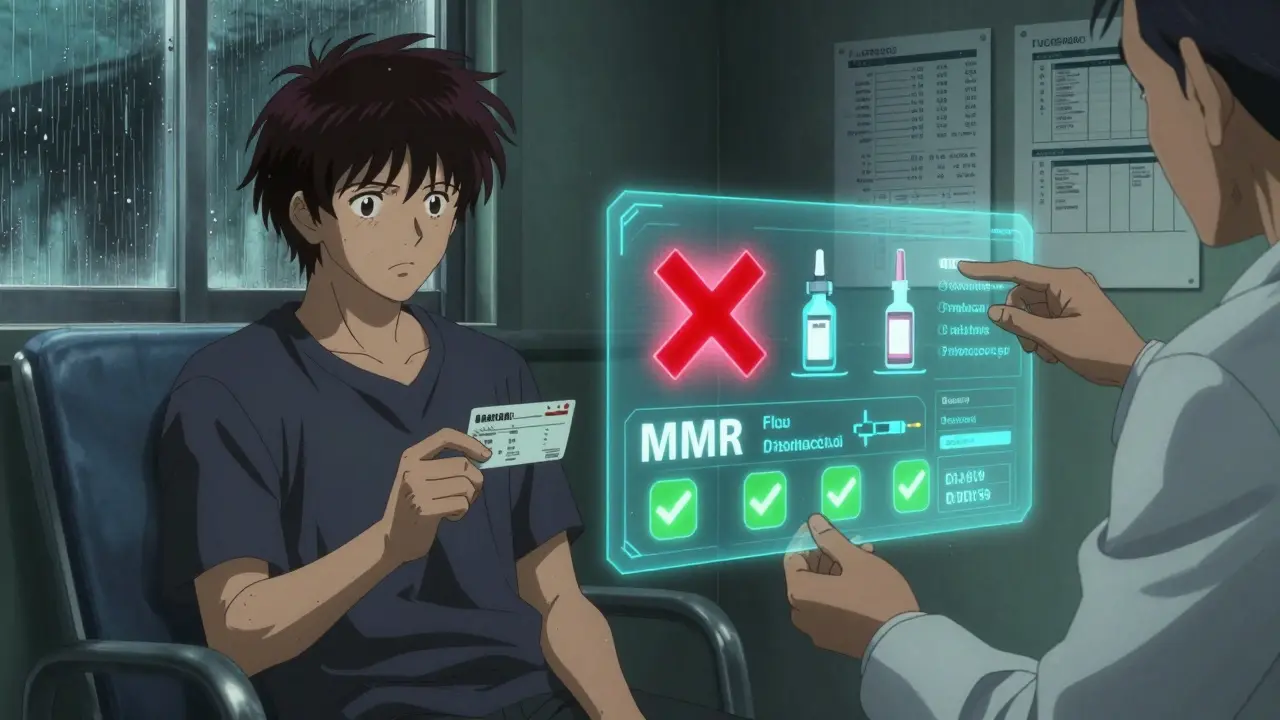
Getting vaccinated while on immunosuppressants isn’t just a matter of showing up at the clinic. It’s a carefully timed, medically coordinated decision that can mean the difference between protection and serious illness. If you’re taking steroids, rituximab, methotrexate, or any other drug that weakens your immune system, the rules for vaccines are completely different than for someone with a normal immune system. And the stakes are high: your body may not respond well to vaccines, or worse, a live vaccine could make you sick.
Live vs Inactivated: The Core Difference
Not all vaccines are created equal. The big divide is between live attenuated vaccines and inactivated vaccines. This isn’t just a technical detail-it’s a safety line. Live vaccines contain a weakened version of the actual virus. They’re designed to mimic a real infection so your immune system learns to fight it. That’s why they work so well in healthy people-they trigger a strong, long-lasting response. But for someone on immunosuppressants, that weakened virus can still replicate enough to cause disease. That’s why vaccines like MMR (measles, mumps, rubella), varicella (chickenpox), and the nasal spray flu vaccine (LAIV) are contraindicated if you’re moderately or severely immunocompromised. Inactivated vaccines, on the other hand, use killed viruses or pieces of them. They can’t cause infection. That’s why they’re the only safe option for most people on immunosuppressants. These include the injectable flu shot, hepatitis B, pneumococcal (PCV20, PPSV23), and all current COVID-19 vaccines (Pfizer-BioNTech, Moderna, Novavax).Timing Matters More Than You Think
Even safe vaccines don’t always work well if given at the wrong time. Your immune system needs a window to respond-and immunosuppressants can shut that window down. If you’re starting immunosuppressive therapy, get all necessary vaccines at least 14 days before your first dose. That’s the ideal scenario. But if you’re already on treatment, timing becomes even more critical. For patients on rituximab, ocrelizumab, or other B-cell depleting drugs, the window is narrow. You need to wait at least six months after your last dose before getting vaccinated. The best time? Three to six months after the last infusion, when your B-cells are starting to come back but before the next round of treatment. If you’re on ongoing therapy, aim to get vaccinated about four weeks before your next scheduled dose. For those on cyclophosphamide, vaccines should be given during the "nadir week"-the week after your chemo cycle when your white blood cell count is starting to recover. For patients on corticosteroids (like prednisone at 20 mg or more daily for two weeks or longer), try to vaccinate when the dose is reduced to under 20 mg/day. If that’s not possible, still get the vaccine-it’s better than nothing.COVID-19 Vaccines: More Doses, Not Just One
The rules for COVID-19 vaccines in immunocompromised people are different from the general public. You don’t just get one booster. You need a full primary series plus additional doses. If you’ve never been vaccinated, you need three doses of an mRNA vaccine (Pfizer or Moderna) as your initial series. After that, you should get two doses of the updated 2025-2026 vaccine. That’s two extra doses beyond what healthy adults get. Studies show antibody responses in immunocompromised people range from 15% to 85%, depending on the drug and condition. That’s why extra doses matter. One patient with rheumatoid arthritis on methotrexate reported getting detectable antibodies only after skipping her methotrexate for a week after each shot. That’s not standard advice-but it shows how personal this is.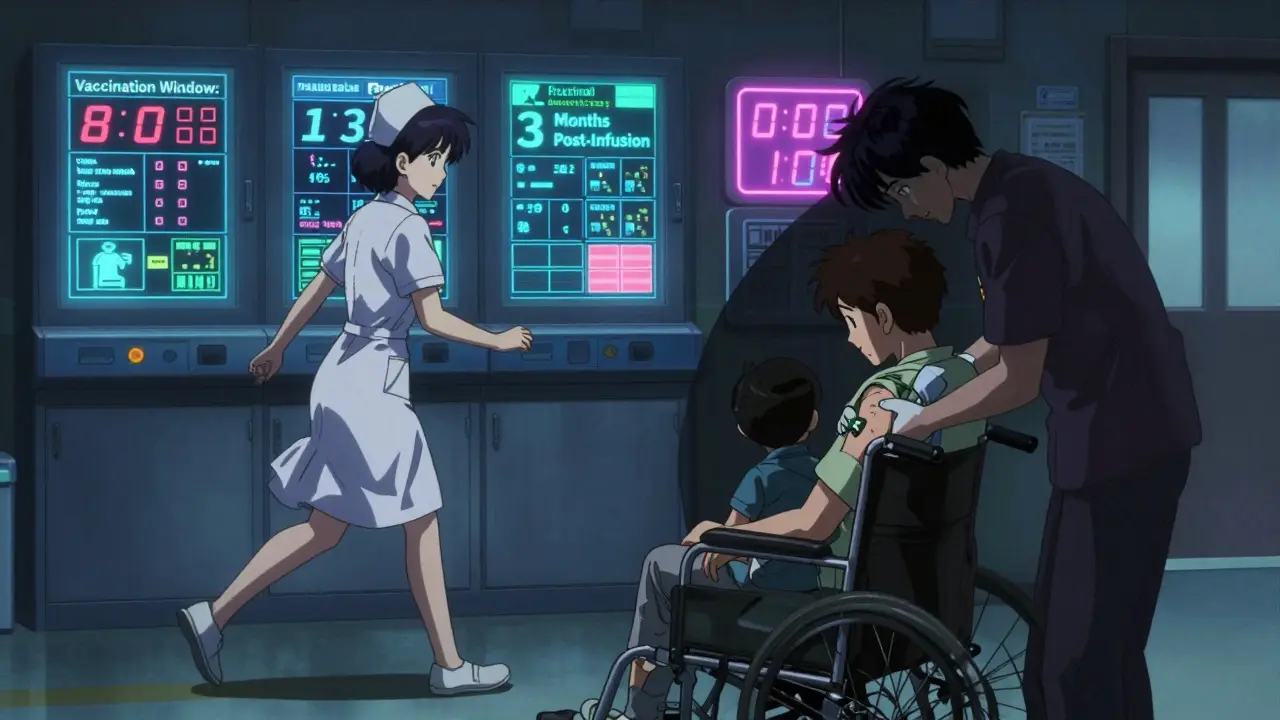
What About Flu, Hepatitis B, and Pneumococcal?
You need the flu shot every year-but only the inactivated version. Skip the nasal spray. It’s a live vaccine and unsafe for you. For hepatitis B, get the full series: either three doses of Engerix-B or Recombivax HB at 0, 1, and 6 months. Or the two-dose Heplisav-B at 0 and 1 month if your doctor recommends it. Pneumococcal protection is critical. Get both PCV20 and PPSV23. The order matters: get PCV20 first, then PPSV23 at least one year later. If you’ve already had PPSV23, wait at least one year before getting PCV20.What If You Got a Live Vaccine by Accident?
It happens. One patient on Reddit shared that her oncologist scheduled her for the nasal flu vaccine while she was on rituximab. She only caught it because her infectious disease specialist intervened. If you’ve received a live vaccine while immunocompromised, contact your doctor immediately. Watch for fever, rash, swollen glands, or unusual fatigue. Report it. There’s no antidote, but early monitoring can catch complications before they turn serious.Coordination Is Key
This isn’t something you should figure out alone. You need a team: your rheumatologist, oncologist, primary care provider, and pharmacist all talking to each other. Many hospitals now use electronic alerts. Epic Systems updated its software in January 2026 to flag immunocompromised patients in the system and suggest vaccination windows based on their medication history. That’s the future-but it’s not everywhere yet. If your clinic doesn’t have that system, keep your own record: list every drug you take, the dose, and the date of your last infusion or dose. Bring it to every appointment. Ask: "When is the best time to get my next vaccine?" Don’t assume they know.
What About Your Family?
Your vaccine isn’t the only one that matters. The people around you are your first line of defense. The IDSA guidelines say household members and close contacts should be up to date on all recommended vaccines. This "cocooning" strategy reduced household transmission of COVID-19 by 57% in one 2025 study. Make sure your kids get their MMR and varicella shots. Your partner should get the flu shot and COVID boosters. Even if you can’t get a live vaccine, your family can-and that protects you.Barriers and Real-Life Challenges
The guidelines are clear. But getting the right vaccine at the right time? That’s where things fall apart. One kidney transplant patient on Inspire.com said her pharmacy kept running out of the updated COVID vaccine. She missed her window and got infected during a winter surge. Some providers still don’t know the rules. A 2025 survey found only 62% of community oncology practices have standardized vaccination schedules. Even if your doctor knows, the pharmacy might not carry the right formulation. New specialized clinics like the Immunocompromised Vaccine Access Network (IVAN) are helping. They work directly with cancer centers to give vaccines during chemo breaks. But they’re still limited to a few states.What’s Next?
The field is moving fast. A new registry launched in November 2025 is tracking 5,000 immunocompromised patients to see how well vaccines work over time. Researchers are testing adjuvanted vaccines-formulations with stronger immune boosters-specifically designed for people with weak immune systems. In five years, we may have point-of-care tests that measure your immune response right in the clinic. That could tell your doctor exactly when to vaccinate you, not just based on your drug schedule, but on your actual immune status. Until then, the rules are simple: avoid live vaccines. Get inactivated ones at the right time. Take extra doses. Coordinate with your team. And make sure your loved ones are protected too.Your immune system is already fighting hard. Don’t let a missed vaccine or wrong timing be the thing that tips the balance.





Jillian Angus
December 24, 2025 AT 07:26Just got my flu shot yesterday and they tried to give me the nasal spray. I had to pull out the article and read them the riot act. Thank god I read this first.
John Pearce CP
December 25, 2025 AT 16:14The medical establishment continues to underestimate the complexity of immunocompromised care. Vaccination timing is not a suggestion-it is a precision protocol requiring cross-specialty coordination. The fact that only 62% of community oncology practices maintain standardized schedules reflects systemic failure, not individual negligence. This is not a public health issue-it is a governance failure.
EMMANUEL EMEKAOGBOR
December 25, 2025 AT 16:21As someone from Nigeria where access to even basic vaccines is inconsistent, I find this level of detail both comforting and heartbreaking. The guidelines here are precise, but in many parts of the world, the question isn't when to vaccinate-it's whether you can get the vaccine at all. We need global equity in access, not just precision in timing.
Joe Jeter
December 27, 2025 AT 00:37So let me get this straight-you’re telling me I can’t get the live flu vaccine because I’m on methotrexate, but my kid can get MMR and I’m supposed to trust that he won’t give me measles? That’s not science, that’s superstition. I’ve seen more people get sick from the shot than the disease.
Sidra Khan
December 28, 2025 AT 12:12Okay but why do we keep doing this? Like, I get that vaccines are important, but why are we giving 5 doses of COVID shots to people who still don’t respond? It’s like pouring water into a bucket with a hole. And don’t even get me started on the paperwork. I’m exhausted just thinking about it 😩
Lu Jelonek
December 29, 2025 AT 01:30I’ve worked in transplant clinics for 18 years. The most consistent factor in successful vaccination outcomes isn’t the drug schedule-it’s patient documentation. Those who bring printed medication lists, infusion dates, and prior vaccine records have a 73% higher seroconversion rate. It’s not magic. It’s preparation.
siddharth tiwari
December 29, 2025 AT 17:32they said live vaccines are bad but what if the gov is using them to track us? i mean why do they care so much about when we get shots? its not about health its about control. and why is the pharma industry pushing so hard? they make billions off this. i dont trust any of it
Diana Alime
December 30, 2025 AT 05:56I missed my window because the pharmacy said they didn't have the updated COVID shot... then I got COVID. Twice. And now my doctor says I need another booster? I'm done. I'm just gonna stay home and pray. This system is broken and I'm tired of being the guinea pig.
Bartholomew Henry Allen
January 1, 2026 AT 01:56Live vaccines contraindicated. Inactivated preferred. Timing critical. Extra doses required. Family vaccinated. Coordination mandatory. No exceptions. No compromises. The data is clear. Follow it or suffer the consequences.
claire davies
January 1, 2026 AT 02:27Oh my goodness, this post is like a love letter to the quietly heroic people navigating chronic illness with a system that barely notices them. I’ve watched my sister navigate rituximab and vaccine windows like a chess master-timing doses, begging pharmacists, printing out guidelines to hand to confused nurses. It’s not just medical advice-it’s survival choreography. And the fact that some clinics now have automated alerts? That’s not innovation. That’s basic human decency.
niharika hardikar
January 2, 2026 AT 21:32From a clinical immunology perspective, the B-cell depletion paradigm necessitates a reevaluation of humoral response kinetics. The 6-month post-infusion window is empirically validated through longitudinal serological monitoring, particularly in autoimmune and oncologic cohorts. The absence of CD19+ reconstitution correlates with diminished neutralizing antibody titers post-vaccination, rendering immunization ineffective if administered prematurely.
Rachel Cericola
January 4, 2026 AT 03:26Let me tell you something: if you’re immunocompromised and someone tells you to just "get the shot whenever"-walk out. That’s not care, that’s negligence. I’ve sat in waiting rooms with people who didn’t know the difference between the nasal spray and the shot. I’ve called pharmacies at 7 a.m. to check stock. I’ve emailed my rheumatologist at midnight because I was scared I’d missed my window. This isn’t just medical advice-it’s a full-time job. And you? You’re not just a patient. You’re the CEO of your own immune system. Own it. Document it. Demand better. And if your doctor doesn’t know this stuff? Find one who does. You deserve more than a guess.
CHETAN MANDLECHA
January 5, 2026 AT 10:19I’m on methotrexate and got my third COVID shot last month. My doctor told me to skip my dose for 7 days after. I did. My antibody test came back strong. I’m not a scientist but I know this: when you’re on meds that slow you down, you have to be smarter than the system. This post saved me from a bad decision. Thank you.