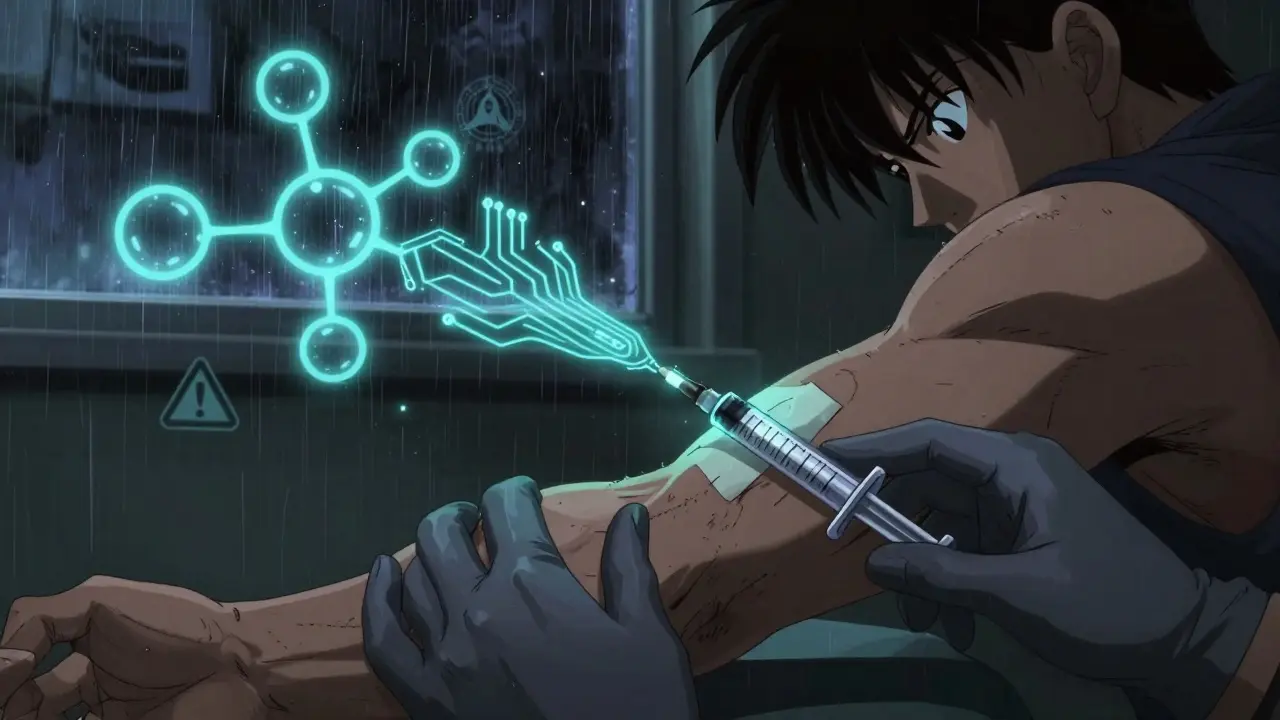
When a patient gets a biosimilar instead of the original biologic drug, they’re not getting a copy like a generic pill. Biosimilars are made from living cells-complex, delicate, and impossible to replicate exactly. That’s why adverse event monitoring for biosimilars isn’t just important-it’s essential. Unlike small-molecule generics, which are chemically identical to their brand-name counterparts, biosimilars can have subtle differences in how they behave in the body. These differences might not show up in clinical trials, but they can show up in real-world use. That’s where safety surveillance comes in.
Why Biosimilars Need Special Safety Tracking
Imagine two cars that look the same, run on the same fuel, and have the same engine size. But one was built in Germany, the other in Japan. Even if they’re nearly identical, small variations in materials or assembly could lead to different performance over time. That’s what happens with biosimilars. They’re designed to be highly similar to the original biologic-like Humira or Enbrel-but because they’re made from living organisms, tiny changes in manufacturing can affect how the immune system reacts.
The biggest concern? Immunogenicity. That’s when the body sees the drug as foreign and mounts an immune response. It might cause mild side effects like rashes or fatigue. Or worse-it could neutralize the drug, making it useless, or trigger dangerous autoimmune reactions. This isn’t theoretical. Studies have shown that even small changes in glycosylation patterns (sugar molecules attached to the protein) can increase immunogenicity risk. That’s why regulators don’t just approve biosimilars and walk away. They demand ongoing, detailed monitoring.
How Adverse Events Are Tracked Around the World
Every country has its own system for collecting reports of bad reactions. In the U.S., it’s the FDA’s FAERS database. In Europe, it’s EudraVigilance. In Canada, it’s the Canada Vigilance Program. These systems rely on doctors, pharmacists, and patients to report anything unusual after taking a drug-fever, swelling, breathing trouble, unusual fatigue.
But here’s the catch: if a patient gets a biosimilar and has a reaction, how do you know which one they got? The brand name? The manufacturer? The lot number? In many places, the answer used to be: we don’t. A 2022 survey of U.S. physicians found that 63% of them struggled to correctly document which biosimilar a patient received. That’s a huge problem. If you can’t tell which product caused the reaction, you can’t fix it.
Some countries have fixed this. Spain started requiring electronic health records to show the exact biosimilar brand in 2020. Result? Adverse event reporting accuracy jumped from 58% to 92%. In Canada, since January 2023, any report that doesn’t include the manufacturer’s name gets rejected. The FDA started requiring a unique four-letter suffix on biosimilar names-like adalimumab-atto for Amjevita-so pharmacists and doctors can tell them apart.
The Hidden Gap: Underreporting and Confusion
Even with better systems, the numbers don’t add up. In 2021, IQVIA found that biosimilars made up 8.7% of all biologic prescriptions in the U.S., but only 0.3% of adverse event reports came from them. That doesn’t mean they’re safe. It means people aren’t reporting. Why?
Patient confusion is a big reason. The Arthritis Foundation’s 2022 survey found that 41% of patients on biosimilars didn’t know whether they were getting the original drug or the copy. If you don’t know what you took, you can’t report it properly. And if your pharmacist switches your drug without telling you-something that still happens in many states-you’re left guessing.
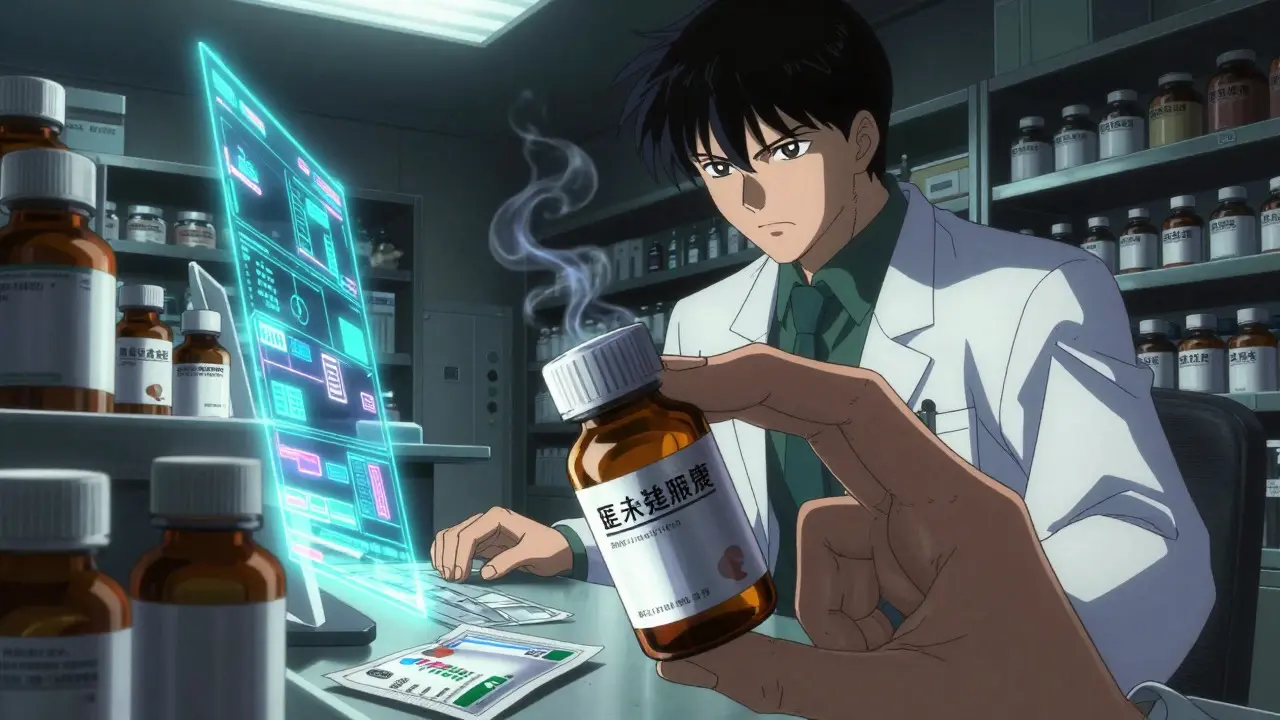
Doctors are confused too. One rheumatologist on Medscape wrote: “I now document both the brand and the manufacturer. If I don’t, I can’t track if a reaction is from the biosimilar or the original.” That’s not how it should be. Tracking should be built into the system, not left to individual vigilance.

Active Surveillance: Going Beyond Spontaneous Reports
Waiting for people to report side effects is like waiting for smoke to appear before calling the fire department. That’s why agencies are moving to active surveillance. The FDA’s Sentinel Initiative, launched in 2008, now pulls data from over 200 million patient records-insurance claims, hospital visits, lab results. It looks for patterns: are people on a certain biosimilar having more joint pain? More infections? More hospitalizations?
Europe’s EMA took it further. In 2022, they launched VigiLyze, an AI tool that scans 1.2 million new safety reports every year. It flags unusual clusters-like a spike in lupus-like symptoms after a specific biosimilar was introduced. The system is 92.4% accurate at spotting real signals, not noise.
These tools don’t replace spontaneous reporting. They complement it. Together, they create a safety net. But they only work if the data is clean. And clean data means knowing exactly which product a patient received.
The Role of Risk Management Plans
Before a biosimilar even hits the market, the company must submit a Risk Management Plan (RMP). This isn’t a formality. It’s a detailed roadmap for safety monitoring. Health Canada requires RMPs to include specific plans for tracking immunogenicity. The FDA expects them to outline how they’ll distinguish their product’s side effects from the reference drug’s.
These plans often include:
- Post-approval studies tracking 5,000-10,000 patients for 1-3 years
- Lot-level traceability-so if a batch causes problems, you can pull it
- Training for pharmacists on how to document biosimilars correctly
- Integration with electronic prescribing systems
But implementing these plans is expensive. The Tufts Center estimates it costs $2.1 million per year just to run pharmacovigilance for one biosimilar in the U.S. That’s why smaller companies struggle. And why some rely on third-party vendors like ArisGlobal or Oracle Health Sciences to handle the heavy lifting.
What’s Next? The Future of Biosimilar Safety
The number of biosimilars is exploding. In 2022, the U.S. approved 10 new ones. By 2028, the global market is expected to hit $35 billion. More products mean more complexity. Right now, we have 35 biosimilars in the U.S. and 43 in Europe. But by 2030, experts predict over 300 biosimilars targeting just 30 reference biologics.
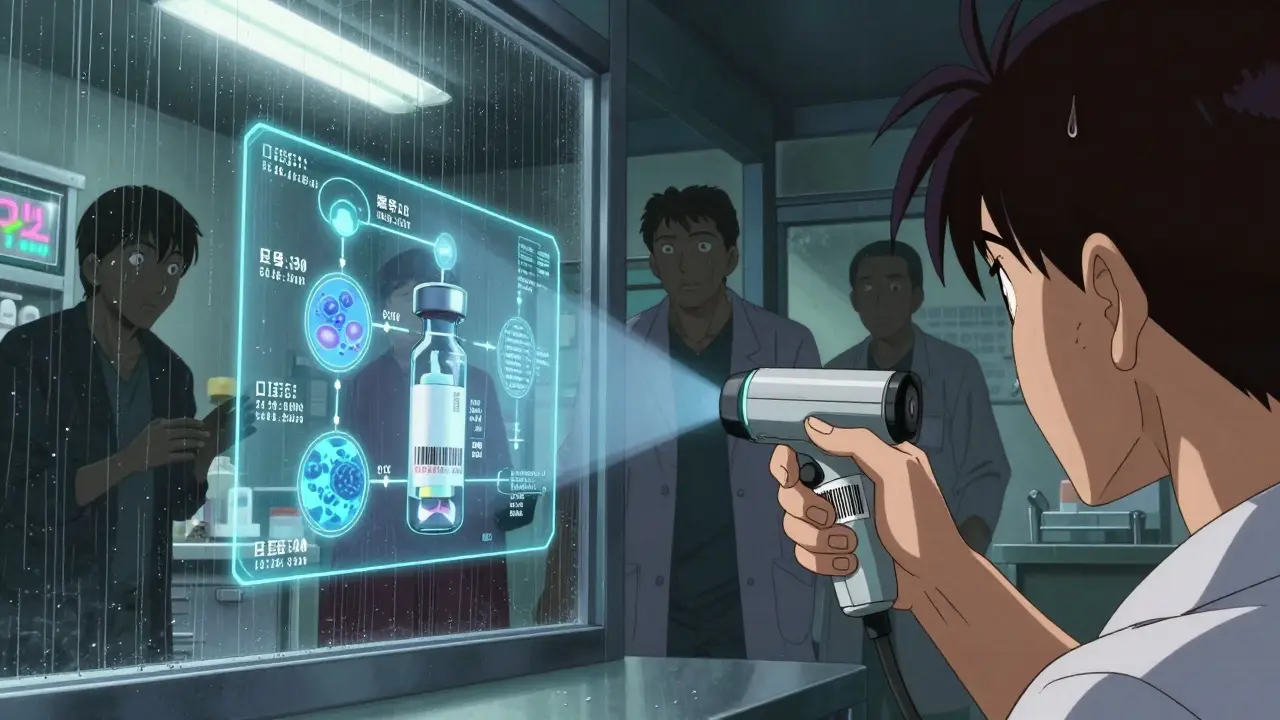
That’s a nightmare for safety systems. Imagine 15 different versions of a drug for rheumatoid arthritis. How do you tell which one caused a reaction? The WHO and the International Pharmaceutical Regulators Programme are pushing for a global unique identifier system-like a barcode for biologics. Think of it like a VIN number for your car. Every vial would have a unique code. If a patient has a reaction, you scan the vial and know exactly which batch, which manufacturer, which lot they got.
Pilot studies in Switzerland show this could cut attribution errors by 73.5%. The catch? It’ll cost $1.8 billion globally to roll out. But is that more than the cost of missed reactions, hospitalizations, or lost trust in biosimilars?
What Patients and Providers Can Do Today
You don’t need a global system to protect yourself. Here’s what works now:
- Ask your doctor or pharmacist: “Which biosimilar am I getting? Is it the same as last time?”
- Check your prescription label. Look for the four-letter suffix (U.S.) or full manufacturer name.
- Write down the name and manufacturer of every drug you take-especially biologics.
- If you have a reaction, report it. Even if you’re unsure which product caused it. Better to report and be wrong than to miss a pattern.
- Ask your clinic if they track biosimilars in their electronic records. If not, push for it.
Doctors, nurses, pharmacists-your documentation matters. Every time you write down the exact product name, you’re helping build the safety net for everyone else.
Bottom Line: Safety Isn’t Optional
Biosimilars save money. They make life-saving treatments accessible to more people. But their complexity demands more-not less-attention to safety. The systems we have now aren’t perfect. They’re patchwork, underfunded, and often confused. But they’re improving. With better traceability, smarter tech, and clearer communication, we can have both affordability and safety.
It’s not about choosing between biosimilars and original biologics. It’s about making sure that whichever one you get, you’re protected. Because when it comes to your health, there’s no room for guesswork.


Demetria Morris
February 5, 2026 AT 10:28It’s wild how we treat biosimilars like they’re just ‘cheap generics’ when they’re literally living proteins. I’ve seen patients develop antibodies and lose response entirely-and no one tracks it because the pharmacy switched them without telling them. This isn’t just bureaucracy-it’s negligence dressed up as cost-saving.
Geri Rogers
February 5, 2026 AT 21:11YESSSS!! 🙌 I’m a nurse in oncology and we’ve had *three* patients on the same biosimilar have severe infusion reactions within 48 hours-only one had the lot number documented. The rest? ‘Oh, it was the adalimumab.’ NOPE. That’s like saying ‘it was the car’ when the transmission blew. We need barcodes on vials. NOW. 🚨
Susheel Sharma
February 7, 2026 AT 12:43One must observe that the entire regulatory framework remains fundamentally inadequate for the biological complexity inherent in biosimilars. The notion that a four-letter suffix constitutes sufficient differentiation is not merely insufficient-it is an epistemological farce. One wonders whether the FDA operates under the assumption that physicians are capable of distinguishing between ‘-atto’ and ‘-adbe’ while simultaneously managing 80 patient charts per day. The system is not broken; it was designed to fail.
Janice Williams
February 8, 2026 AT 23:01Of course, the industry wants to pretend biosimilars are interchangeable. That’s the entire point of their existence-to replace, not to coexist. And yet, they’re not even required to disclose manufacturing changes. This isn’t science. It’s corporate theater. Patients are the lab rats. And we’re all supposed to applaud the ‘savings’ while quietly dying of autoimmune flares we can’t trace back to the vial.
Prajwal Manjunath Shanthappa
February 9, 2026 AT 19:07Let’s be clear: if you can’t trace a reaction to a specific lot, then you haven’t approved a biosimilar-you’ve approved a lottery ticket. And yet, we’re told to trust the system? The fact that 63% of U.S. physicians can’t even identify which biosimilar they’re prescribing? That’s not incompetence-it’s institutional malpractice. The WHO’s VIN proposal is the bare minimum. Anything less is a death sentence disguised as fiscal responsibility.
Wendy Lamb
February 11, 2026 AT 16:10My mom switched to a biosimilar and got a rash. She didn’t know which one she got. I had to call three pharmacies to find out. This shouldn’t be that hard.
Antwonette Robinson
February 12, 2026 AT 03:22Oh wow, a whole article about biosimilars and nobody mentioned the real issue: the FDA approved 10 new ones last year while the entire pharmacovigilance system is running on Windows 95. Surprise surprise, the system’s crashing. Who knew?
Joy Johnston
February 12, 2026 AT 07:26Just wanted to add-my rheumatologist started using electronic prescribing with auto-populated biosimilar names last year. No more handwritten scripts. No more confusion. My reactions dropped by 80%. It’s not magic-it’s just good documentation. If your clinic doesn’t do this, ask. Politely. But ask.
Shelby Price
February 13, 2026 AT 04:19So… if I get switched to a different biosimilar without telling me, and then I get sick… is that my fault? 😕
Jesse Naidoo
February 13, 2026 AT 06:14Wait, so you’re telling me my pharmacist can swap my drug without telling me, and if I get sick, I’m supposed to guess which one caused it? And you want me to report it? What if I don’t even know what I was taking? This isn’t safety. This is gaslighting with a prescription pad.
Lorena Druetta
February 15, 2026 AT 06:03I’m so grateful for the work being done here. Every time someone documents the exact biosimilar, they’re protecting someone else’s life. Thank you to every nurse, pharmacist, and doctor who takes the extra second to write it down. You’re heroes.
Zachary French
February 16, 2026 AT 03:47YOOOOO the FDA gave biosimilars 4-letter suffixes like they’re NBA teams 😭 I’m on adalimumab-atto and my doc wrote ‘adalimumab’ on my chart. I’m gonna die of a mislabeled vial and it’ll be on the news. #BiosimilarApocalypse
Daz Leonheart
February 17, 2026 AT 23:11You got this. Small steps matter. Writing down the name. Asking the pharmacist. Reporting even if you’re unsure. It adds up. You’re not just helping yourself-you’re helping the whole system get better. Keep going.
Coy Huffman
February 19, 2026 AT 00:45It’s funny how we trust a pill made in a lab to be identical, but a protein grown in a cell culture is too ‘complex’ to be trusted unless we track every sugar molecule. We treat biology like it’s a glitch in the code, not a living system. Maybe we’re not ready for biosimilars… because we’re not ready to accept that life doesn’t copy perfectly.
Amit Jain
February 19, 2026 AT 12:56In India, we use biosimilars every day. We track lot numbers manually because the system is slow. But we do it. Because people depend on it. Simple things matter. Write the name. Check the label. Report the reaction. That’s how safety starts.