
Anticonvulsant Birth Control Safety Checker
Check if your seizure medication affects the effectiveness of your birth control method. Select your medication and birth control method below to see if you need to consider alternative options.
When you're taking medication for seizures, the last thing you should worry about is accidentally getting pregnant. But for many women, that’s exactly what happens - not because they missed a pill, but because their seizure medication is quietly breaking down their birth control. This isn’t rare. It’s a well-documented, under-discussed interaction that puts thousands of women at risk every year.
How Anticonvulsants Break Down Birth Control
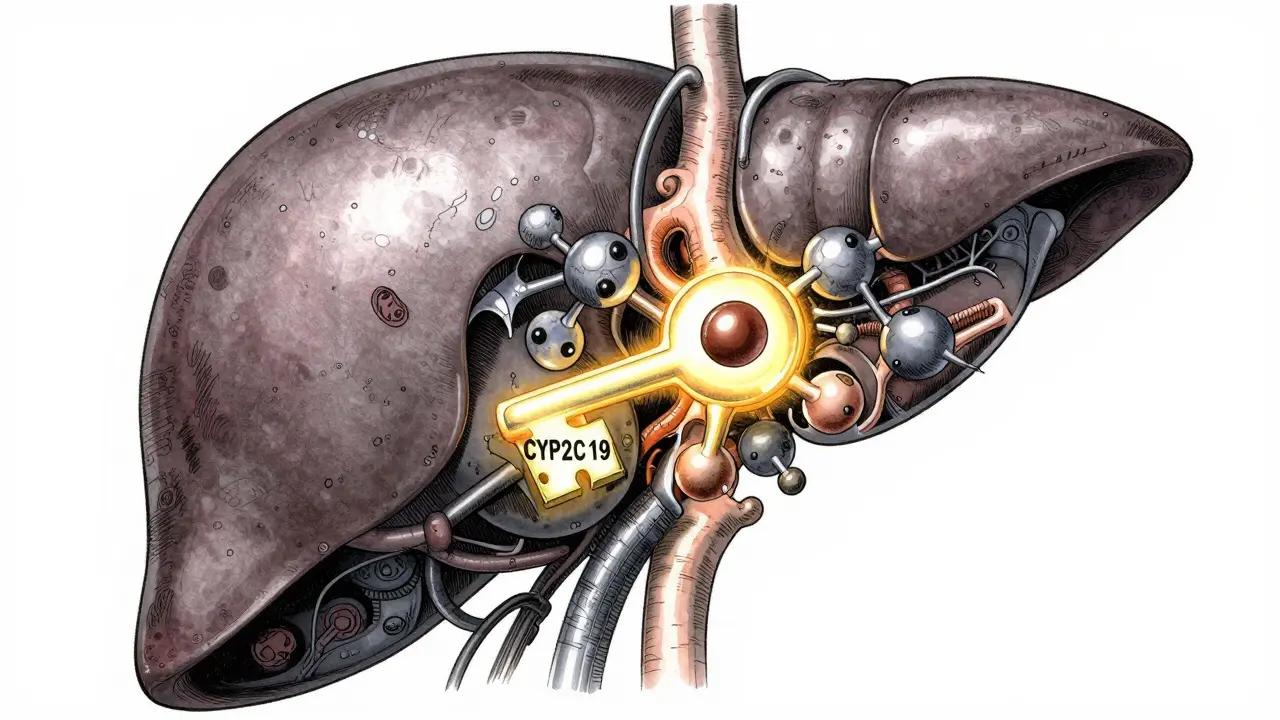
The problem starts in your liver. Certain anticonvulsants - like carbamazepine (Tegretol), phenytoin (Dilantin), oxcarbazepine (Trileptal), and topiramate (Topamax) - are called enzyme-inducing antiepileptic drugs (EIAEDs). These drugs crank up the activity of liver enzymes, specifically the CYP450 system, which is responsible for breaking down chemicals in your body.That’s great if you’re trying to clear toxins. But when those same enzymes start chewing up the hormones in your birth control pill, patch, or ring, the result is simple: your body never gets enough estrogen or progestin to stop ovulation. Studies show these drugs can slash ethinyl estradiol levels by up to 60% and progestin by as much as 50%. That’s not a small drop - it’s enough to make hormonal birth control useless.
Topiramate is especially tricky. At doses above 200 mg per day, it reduces estrogen levels by 23%. At 400 mg, that jumps to 43%. And most women don’t even realize their dose has crossed that threshold. They’re just taking what their neurologist prescribed.
Which Birth Control Methods Are Most at Risk?
If you’re using a pill, patch, or vaginal ring - all of which rely on liver-metabolized hormones - you’re in the danger zone. The patch and ring are especially risky because they’re designed to release steady doses, and even a 30% drop in hormone levels can throw off the entire system.Emergency contraception isn’t safe either. Levonorgestrel (Plan B) loses about half its effectiveness when taken with enzyme-inducing anticonvulsants. Ulipristal acetate (Ella) may not work at all. That means if you need emergency contraception after unprotected sex, you can’t rely on what’s in your medicine cabinet.
What about the IUD? That’s where things get better. The levonorgestrel IUDs - Mirena and Kyleena - still work. Their progestin is released directly into the uterus, bypassing the liver entirely. The copper IUD (ParaGard) is completely unaffected because it doesn’t use hormones at all. These are the two safest, most reliable options for women on enzyme-inducing anticonvulsants.
Depo-Provera Is Still an Option
The shot - depot medroxyprogesterone acetate (DMPA) - also remains effective. Even though it’s a hormone, it’s given as a 150 mg injection every 12 to 13 weeks. That high, slow-release dose overwhelms the liver’s ability to break it down. Women on carbamazepine or phenytoin who use Depo-Provera have pregnancy rates under 1% per year, matching the general population.But there’s a catch: Depo-Provera can cause bone density loss with long-term use. It’s not ideal for younger women who plan to have children in the next few years. Still, for those who need a low-maintenance, reliable method, it’s a solid choice - if you’re okay with the side effects.

The Lamotrigine Problem
Lamotrigine (Lamictal) is one of the most common anticonvulsants used today. But here’s the twist: it doesn’t reduce birth control effectiveness. Instead, birth control reduces lamotrigine’s effectiveness.Combined hormonal contraceptives can cut lamotrigine levels in half. That’s dangerous. If your seizure medication drops too low, you could have a breakthrough seizure - even if you’ve been stable for years. And when you stop taking the pill during your placebo week, lamotrigine levels spike by 30-40%, raising the risk of dizziness, rash, or worse.
This bidirectional interaction makes lamotrigine one of the trickiest combinations to manage. The solution? Avoid estrogen-containing birth control. Use a progestin-only pill, IUD, or implant. Or, if you must use a combined method, your neurologist may need to increase your lamotrigine dose by 50-100%. But that requires close monitoring - blood tests, seizure logs, and regular check-ins.
Safe Alternatives for Women on Anticonvulsants
Not all anticonvulsants interfere with birth control. Valproate (Depakote), gabapentin (Neurontin), pregabalin (Lyrica), and levetiracetam (Keppra) don’t trigger liver enzyme changes. That means if you’re on one of these, standard birth control pills, patches, or rings are generally safe.But here’s the problem: most women aren’t told this. A 2022 survey by the Epilepsy Foundation found that only 35% of women with epilepsy received contraceptive counseling from their neurologist. Only 22% heard it from their gynecologist. That’s a massive gap. Many women are left guessing - and paying the price.
Real stories prove it. One woman on Reddit shared: “I got pregnant on Ortho Tri-Cyclen while taking Tegretol - my neurologist never warned me.” Another wrote: “Switched from pills to Mirena when I started Keppra. My periods became regular. No seizures changed.”
What the Experts Say
The American College of Obstetricians and Gynecologists (ACOG) calls combined hormonal contraceptives a Category 3 risk for women on enzyme-inducing anticonvulsants. That means the risks usually outweigh the benefits. The CDC agrees.ACOG’s official recommendation? Use a copper IUD or a levonorgestrel IUD. If you want a shot, go with Depo-Provera. If you’re set on pills, use one with at least 50 mcg of ethinyl estradiol - but know that even that isn’t foolproof. Always use condoms as backup.
For lamotrigine users: avoid estrogen. Use progestin-only methods. Adjust your dose under medical supervision. Don’t stop your seizure meds. Don’t stop your birth control without talking to both your neurologist and your gynecologist.

Why This Matters More Than You Think
Unplanned pregnancies in women with epilepsy come with extra risks. Many anticonvulsants - especially carbamazepine and phenytoin - are linked to birth defects. The risk of major congenital malformations is 30-40% higher than in the general population. That’s why preventing pregnancy isn’t just about avoiding an unplanned baby - it’s about protecting a future child from serious health problems.And it’s not just about pregnancy. Women who have seizures during pregnancy are more likely to have complications: preterm labor, low birth weight, even maternal death. Stable seizure control before and during pregnancy saves lives.
What You Should Do Right Now
If you’re on any anticonvulsant and using hormonal birth control, here’s what to do:- Check which drug you’re taking. Is it carbamazepine, phenytoin, oxcarbazepine, topiramate, phenobarbital, felbamate, or primidone? If yes, your birth control is likely compromised.
- Don’t panic. Switching methods is safe and effective.
- Ask your neurologist: “Is my seizure medication known to interfere with birth control?”
- Ask your gynecologist: “What’s the safest birth control option for me right now?”
- Consider a copper IUD or levonorgestrel IUD. They’re the most reliable.
- If you’re on lamotrigine, avoid estrogen-containing methods unless your dose is adjusted and monitored.
- Use condoms as backup if you’re still using pills, patches, or rings.
Don’t wait for your next appointment. If you’ve had breakthrough bleeding, missed a period, or had unprotected sex, get tested. And if you’re planning to get pregnant - talk to your doctors now. Preconception counseling can change everything.
What’s Changing in the Future
Newer anticonvulsants like perampanel (Fycompa) and brivaracetam (Briviact) don’t trigger liver enzyme changes. They’re becoming popular choices for women of childbearing age - not just because they’re effective for seizures, but because they play nice with birth control.Research is also moving toward non-hormonal options. The Bill & Melinda Gates Foundation is funding a new contraceptive gel that works without hormones and showed 99% effectiveness in animal trials. If it works in humans, it could be a game-changer.
But for now, the safest, most proven path is simple: know your drugs. Know your options. Talk to both your neurologist and your gynecologist. And never assume your birth control is working just because you’ve never missed a pill.
Can I still use the birth control pill if I take carbamazepine?
It’s not recommended. Carbamazepine reduces hormone levels in birth control pills by up to 60%, making them unreliable. Even high-dose pills (50 mcg ethinyl estradiol) aren’t fully effective. Use an IUD, Depo-Provera, or condoms with the pill as backup.
Does the birth control patch work with anticonvulsants?
No. The patch delivers hormones through the skin, but they still go through the liver. Enzyme-inducing anticonvulsants break them down just like pills. Studies show the patch fails at similar rates to oral contraceptives in women taking carbamazepine or phenytoin.
Is the IUD safe if I take lamotrigine?
Yes. Both the copper IUD and the levonorgestrel IUD (Mirena, Kyleena) are safe. They don’t interfere with lamotrigine levels. In fact, switching to an IUD is often the best choice for women on lamotrigine because it removes the risk of hormonal fluctuations that can trigger seizures.
Can I use Plan B if I’m on Tegretol?
Plan B (levonorgestrel) is only about half as effective when taken with enzyme-inducing anticonvulsants like Tegretol. It’s not reliable. If you need emergency contraception, talk to your doctor about a higher-dose option or a copper IUD, which is the most effective emergency method.
Why didn’t my doctor tell me about this?
Many doctors don’t know the details. A 2022 survey found only 35% of neurologists routinely discuss birth control with female patients. It’s not negligence - it’s a gap in training. Don’t wait for them to bring it up. Ask. Be your own advocate.
What if I want to get pregnant someday?
Talk to your neurologist and OB-GYN now. Some anticonvulsants increase the risk of birth defects. Planning ahead lets you switch to safer medications before conception. Folic acid supplements, seizure control, and medication adjustments can reduce risks dramatically.






sagar patel
December 25, 2025 AT 13:04Anticonvulsants and birth control interactions are a systemic failure in medical education
Bailey Adkison
December 26, 2025 AT 11:05So what you're saying is women on seizure meds should just not have sex
Linda B.
December 28, 2025 AT 03:44Of course the pharmaceutical industry doesn't want you to know this - they profit more from failed pregnancies and emergency interventions
Ben Harris
December 29, 2025 AT 06:20My neurologist told me to just use condoms and stop being dramatic about my birth control
Meanwhile my OB-GYN said the same thing
So now I'm pregnant and both of them are acting like it's my fault
Also I'm on topiramate and it's 400mg so yeah I guess I'm just dumb for thinking my pill would work
Why is it always the woman's job to remember every single interaction
Why is there no app for this
Why do we have to Google this at 2am after a breakthrough bleed
Why does my insurance cover 10 different antidepressants but not a copper IUD
And why is it considered "responsible" to take lamotrigine but "irresponsible" to want to not get pregnant
Also I'm not mad I'm just disappointed
Rick Kimberly
December 31, 2025 AT 02:45It is imperative to underscore that the pharmacokinetic interactions between enzyme-inducing antiepileptic drugs and hormonal contraceptives are not merely theoretical but are empirically validated through multiple peer-reviewed clinical studies
The CYP450 enzyme induction mechanism, particularly involving CYP3A4, significantly accelerates the hepatic metabolism of ethinyl estradiol and progestins, thereby reducing serum concentrations below the therapeutic threshold required for ovulation inhibition
Moreover, the clinical implications extend beyond contraceptive failure to include increased risk of teratogenic exposure during early gestation, particularly with valproate and carbamazepine exposure in the first trimester
The recommendation for copper or levonorgestrel-releasing IUDs is not merely prudent but represents the current standard of care as endorsed by both ACOG and the CDC
Furthermore, the bidirectional interaction between lamotrigine and estrogen-containing contraceptives necessitates individualized pharmacologic management, including therapeutic drug monitoring and dose titration
It is lamentable that this critical intersection of neurology and reproductive health remains under-addressed in primary care and specialist training curricula
Systemic change requires mandatory interdisciplinary counseling protocols and electronic health record alerts for patients prescribed enzyme-inducing AEDs
Until such infrastructure is implemented, patient advocacy and self-education remain indispensable
It is not sufficient to assume that either provider will initiate this conversation
Patients must be empowered to demand clarity, and clinicians must be held accountable for providing it
Carlos Narvaez
January 1, 2026 AT 07:28Most women don't even know what CYP450 means
So telling them to "use an IUD" is useless if they don't understand why
Also the fact that you need two doctors to coordinate this is a joke
It's 2025 and we still treat women's health like a side quest
Christopher King
January 3, 2026 AT 01:27They're hiding this because population control is the real agenda
Think about it
Why would Big Pharma want women to have control over their bodies if they can just pump them full of seizure meds and then profit from the resulting unplanned pregnancies
It's all connected
Bill Gates funding a non-hormonal gel? That's not philanthropy
That's a Trojan horse for mandatory contraception
And don't get me started on how the FDA is just a puppet of the pharmaceutical lobby
They want you to think IUDs are safe but what they're really doing is implanting tracking devices
Ever notice how your period stops after the Mirena? That's not just hormones
That's mind control
Wake up
Terry Free
January 3, 2026 AT 21:39So you're telling me I can't use the pill with carbamazepine
But I can use Depo-Provera
Which causes osteoporosis
And then I'm supposed to just wait 2 years to get pregnant
Meanwhile my neurologist says "just take more lamotrigine"
But my OB says "no estrogen"
And my pharmacist says "here's a condom"
So what am I supposed to do
Live in a convent
Or just let the seizures win
Because apparently my reproductive rights are a pharmacokinetic afterthought
And yeah I'm mad
Gary Hartung
January 5, 2026 AT 20:36Look I've been on Tegretol for 12 years
I've been on birth control since I was 16
I got pregnant twice
Both times I lost the baby
Not because of the meds
But because the doctors didn't tell me
Now I'm 34 and I can't get pregnant again
So now I'm supposed to be grateful for the copper IUD
But I don't want an IUD
I want to take a pill like everyone else
Why is my body so complicated
Why can't they just make a pill that works
And why do I have to be the one who has to read every study
And why do I have to be the one who has to ask
And why does it feel like I'm begging for the right to not get pregnant
And why does it feel like my neurologist thinks I'm being dramatic
And why does it feel like my gynecologist thinks I'm just being paranoid
And why does it feel like I'm the only one who cares