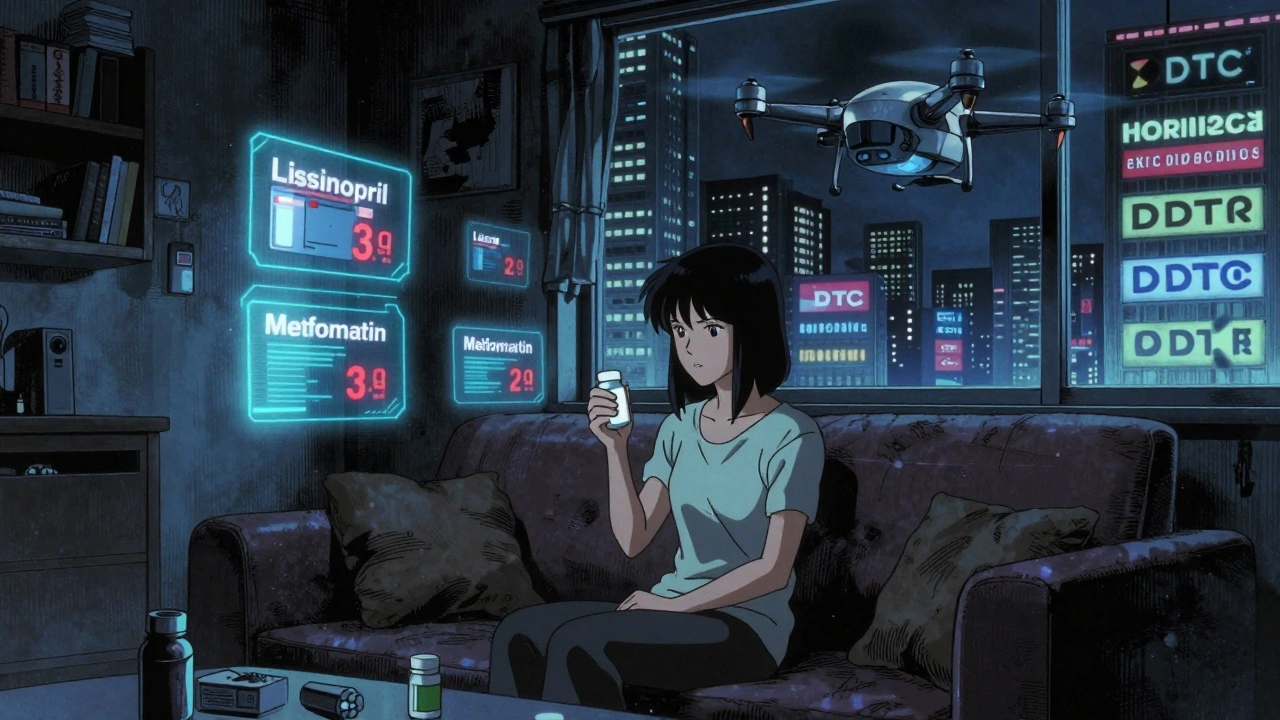
For years, getting your generic medication meant driving to a pharmacy, waiting in line, and paying whatever price the system handed you. But now, a quiet revolution is happening right in your mailbox. Direct-to-consumer generic pharmacies are cutting out the middlemen-pharmacy benefit managers, wholesalers, brick-and-mortar stores-and delivering your pills directly to your door, often at a fraction of the cost. This isn’t science fiction. It’s happening now, and it’s changing how millions of people manage their health.
How DTC Generic Pharmacies Work (And Why They’re Different)
Traditional pharmacy chains rely on a tangled supply chain: drugmaker → wholesaler → PBM → retail pharmacy → patient. Each step adds cost, complexity, and opacity. PBMs negotiate rebates behind closed doors, and what you pay at the counter rarely reflects what the manufacturer actually received. That’s why a 30-day supply of generic lisinopril might cost $15 at your local CVS but only $5 online through a DTC platform.
Direct-to-consumer generic pharmacies skip most of that. Companies like Ro, Hims & Hers, and Honeybee Health partner directly with manufacturers or wholesalers to source generic drugs. They handle everything: telehealth consultation, e-prescribing, secure payment, and home delivery. No pharmacy counter. No insurance paperwork. Just a simple app or website, a quick health questionnaire, and your meds arrive in 2-5 days.
These platforms focus almost entirely on chronic condition meds-blood pressure, cholesterol, thyroid, antidepressants, birth control-where generics dominate. That’s smart. Generics make up 90% of prescriptions in the U.S. but only 20% of spending. DTC platforms thrive by targeting this high-volume, low-margin segment and turning it into a high-volume, low-overhead business.
Why Prices Are So Much Lower
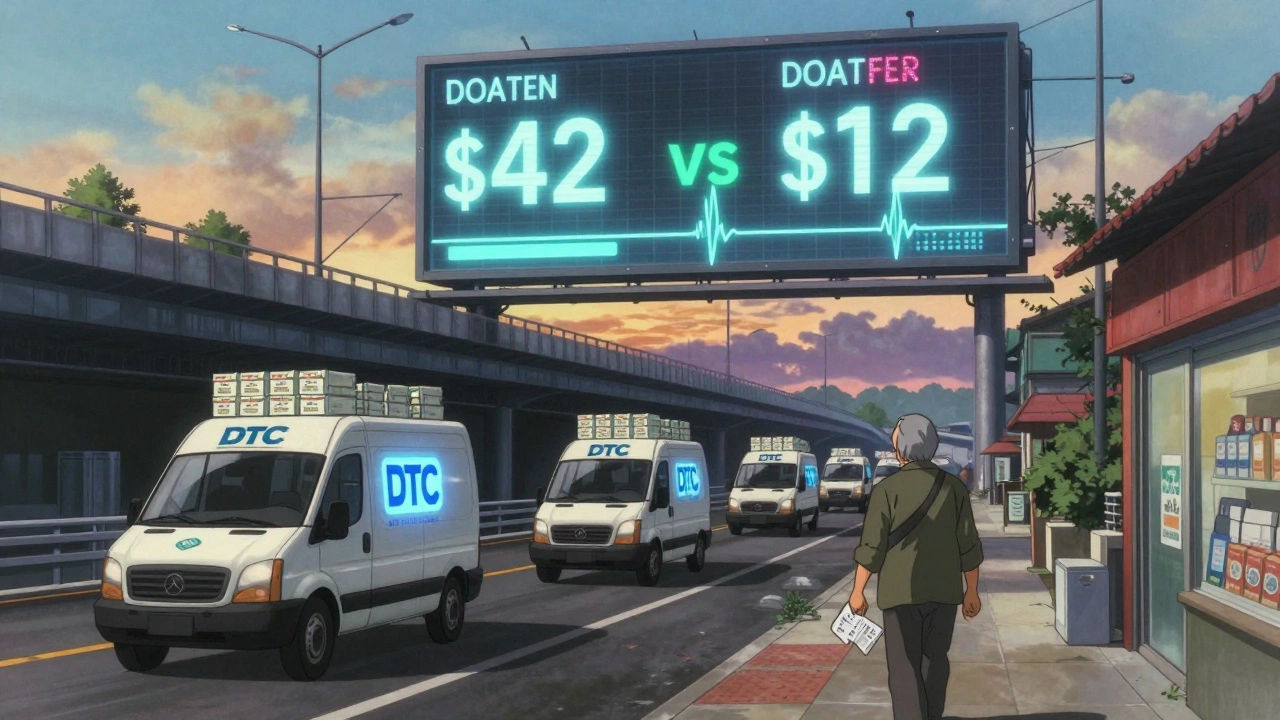
Let’s say your local pharmacy charges $42 for a 30-day supply of generic metformin. The same pill, ordered through Ro or Honeybee Health, costs $12. Where does the rest go?
In the traditional model, the $42 doesn’t all go to the manufacturer. A big chunk gets absorbed by PBMs as rebates, then by pharmacies as markup, then by insurance processors as administrative fees. According to Techspert’s June 2025 analysis, the top three PBMs made $28 billion in gross profit last year-not from selling drugs, but from manipulating the pricing system.
DTC platforms cut that out. They buy in bulk directly from manufacturers or authorized distributors. They don’t pay for expensive retail space. They don’t negotiate with insurers. They pass the savings directly to you. And because they operate on a cash-pay model, they avoid the billing delays and denials that plague insurance-based systems.
Some platforms even offer subscription plans. For $15/month, you get your generic blood pressure pill delivered every 30 days, automatically refilled, with no extra fees. That’s predictable, affordable, and stress-free.
Who’s Leading the Charge?
Two types of players dominate the DTC generic space: tech-first telehealth companies and pharmaceutical giants testing the waters.
Ro, Hims & Hers, and Honeybee Health are the pioneers. Ro alone processed over 2.1 million prescription orders in Q1 2025, the vast majority being generics. Their strength? Simplicity. You answer a few questions online, get reviewed by a licensed provider, and your prescription is sent electronically to their in-house pharmacy. Delivery is fast, packaging is discreet, and refill reminders are built into the app.
Meanwhile, big pharma companies like Eli Lilly and Pfizer are launching their own DTC platforms-but they’re focused on brand-name drugs. LillyDirect and PfizerForAll are designed to sell expensive new medications directly, cutting out PBMs entirely. They’re not competing with Ro on price. They’re competing on data, control, and loyalty.
For generic meds, the real competition is between the tech platforms. Honeybee Health offers lower prices on thyroid meds. Ro has the best user interface. Hims & Hers excels at mental health prescriptions. Each has carved out a niche.
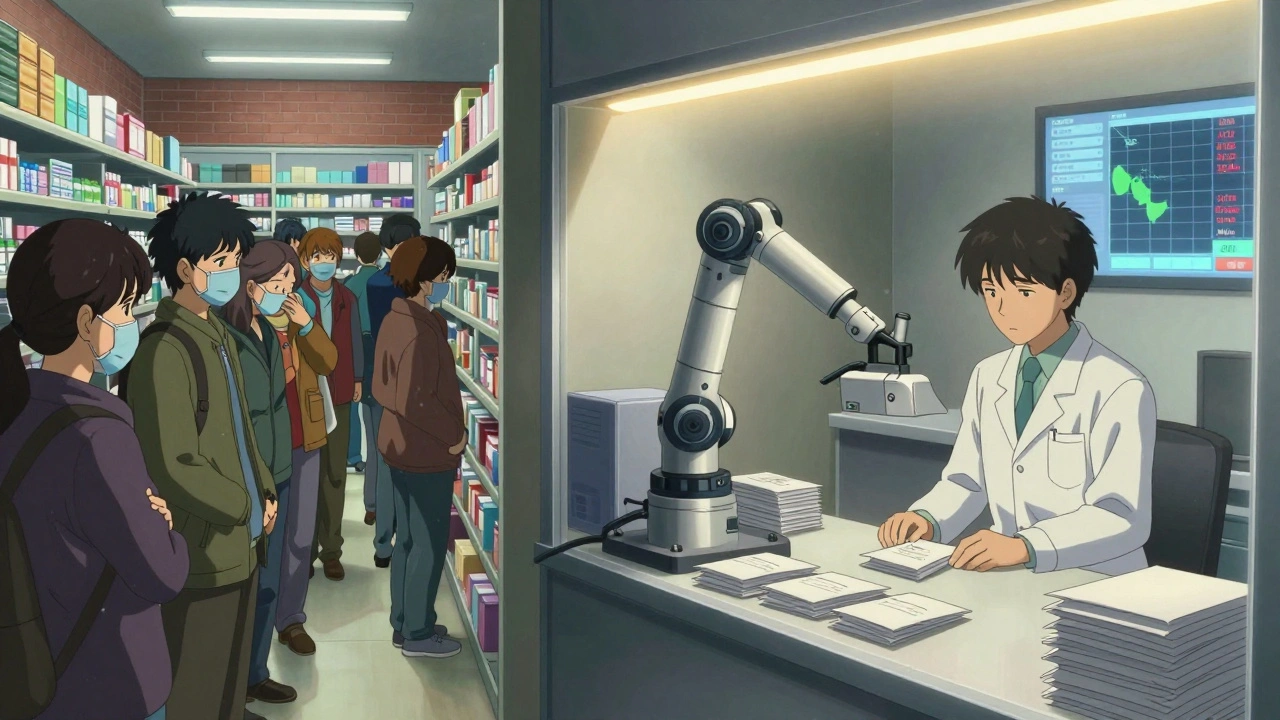
The Real Benefits: Convenience, Transparency, and Adherence
Price isn’t the only win. People are sticking with their meds more often.
A Drug Channels survey in May 2025 found that 73% of patients using DTC services for chronic conditions reported better adherence. Why? Because forgetting to refill your pill bottle isn’t an option when it arrives automatically every month. No more driving to the pharmacy when you’re sick. No more arguing with your insurance over a $3 co-pay.
Transparency is huge too. You see the price upfront. No surprise bills. No hidden fees. You know exactly what you’re paying and why. That’s a radical shift from the old system, where you’d get a $200 bill for a $15 drug and have no idea how it got there.
And for people with high-deductible plans or no insurance? DTC pharmacies are a lifeline. A 2025 survey showed 38% of users had high-deductible plans. Without these platforms, many would skip doses or go without.
The Downsides: What’s Missing
It’s not perfect. There are real concerns.
First, limited selection. These platforms don’t carry every generic. If you need a rare or newly approved drug, you’re still stuck with your local pharmacy. Most focus on 50-100 common generics-enough for chronic conditions, not enough for complex regimens.
Second, pharmacist access. In a traditional pharmacy, you can ask the pharmacist about side effects, interactions, or how to take your meds with food. DTC platforms offer chat support, but it’s often automated or handled by nurses, not pharmacists. Drug Topics reported 17 cases in 2025 where potential drug interactions might have been caught by a pharmacist but went unnoticed in DTC models.
Third, delivery delays. While most orders arrive in 2-5 days, some users report waiting up to a week. If you’re running out of medication and need it today, this isn’t ideal. Trustpilot reviews show 42% of complaints are about delivery times.
And insurance? Still a mess. Most DTC platforms don’t accept insurance. You pay out of pocket. That’s fine if you’re saving money-but if your insurance already covers your generic for $5, you might be worse off switching.
Regulatory Hurdles Are Real
Running a pharmacy isn’t like running an online store. You need a license in every state. That’s 51 licenses-50 states plus D.C. Each one requires background checks, facility inspections, and compliance audits. It takes 14-18 months and over $2 million to get them all.
Plus, federal rules like HIPAA for data privacy, FDA rules for shipping controlled substances, and state laws about telehealth prescribing all add layers of complexity. One misstep, and you’re looking at fines, lawsuits, or worse.
That’s why only a handful of companies have succeeded. It’s not just about technology. It’s about legal infrastructure. Companies like Ro spent years building compliance teams before they even launched their first order.
Is This the Future?
Yes-but not as a replacement. It’s becoming a parallel system.
Most experts agree: DTC pharmacies won’t kill brick-and-mortar pharmacies. But they’re forcing them to change. Pharmacies are now offering online refills, home delivery, and price matching. CVS and Walgreens have launched their own low-cost generic programs.
The bigger shift? Data. For the first time, drug manufacturers and DTC platforms are seeing exactly who’s taking what, when, and how often. That’s information PBMs and insurers never had. And it’s changing how drugs are developed, marketed, and prescribed.
By 2026, expect more hybrid models. Imagine your doctor prescribes your generic blood pressure pill. You get a QR code. Scan it, order from your preferred DTC platform, and get it delivered. No insurance hassle. No pharmacy trip. Just better care, simpler and cheaper.
What Should You Do?
If you take generic meds for a chronic condition-like high blood pressure, cholesterol, diabetes, or depression-try a DTC pharmacy. Compare prices. Ro, Honeybee Health, and Blink Health all have price checkers on their sites. Plug in your drug and see what you’d pay.
Don’t switch if:
- You rely on insurance to cover your meds and your co-pay is already low
- You take multiple complex medications that require close pharmacist monitoring
- You need your meds the same day
Do switch if:
- You pay cash or have a high deductible
- You’re tired of driving to the pharmacy
- You want to know exactly what you’re paying
Start with one medication. Try it for a month. See if the convenience and savings are worth it. If they are, make the switch. If not, go back. No penalty.
This isn’t about rejecting traditional care. It’s about giving patients more control. More transparency. More choice. And in a system that’s long been confusing and expensive, that’s a win.
Are DTC generic pharmacies safe?
Yes, if they’re licensed and compliant. Reputable platforms like Ro and Honeybee Health are licensed in all 50 states, use FDA-approved suppliers, and follow strict packaging and shipping rules. Always check that the website has a valid pharmacy license listed (usually in the footer) and that you’re ordering from a U.S.-based pharmacy. Avoid sites that sell without a prescription or ship from overseas.
Can I use insurance with DTC pharmacies?
Most don’t accept insurance. They operate on a cash-pay model to avoid insurance billing delays and rebates. But that’s also why prices are lower. If your insurance already covers your generic for $5 or less, sticking with your local pharmacy might be cheaper. However, if you have a high deductible or no insurance, DTC is often the better deal.
How fast do DTC pharmacies deliver?
Most deliver in 2-5 business days via standard shipping. Expedited options (1-2 days) are sometimes available for an extra fee. This is slower than walking into a local pharmacy, but faster than waiting for a traditional mail-order pharmacy to process your refill. If you need medication urgently, keep a small backup supply on hand.
Do DTC pharmacies have pharmacists I can talk to?
Yes, but access varies. Top platforms like Ro and Honeybee Health offer 24/7 pharmacist chat lines, staffed at a ratio of 1 pharmacist per 5,000 patients. You can ask about side effects, drug interactions, or how to take your meds. But it’s not the same as walking up to a pharmacist in person. If you have complex health issues or take multiple medications, consider keeping a relationship with your local pharmacist for consultations.
What if I need a medication that’s not on the platform?
DTC platforms focus on the most common generic medications-usually under 100 drugs. If your prescription isn’t listed, you’ll need to get it through a traditional pharmacy. Some platforms are expanding their formularies, but rare or newly approved generics still aren’t available. Always check the platform’s drug list before signing up.
Are DTC pharmacies legal in all states?
Yes, if they’re properly licensed. Reputable platforms hold licenses in all 50 states and D.C., which is required by law. However, state rules vary on telehealth prescribing and refill limits. For example, some states don’t allow online refills for controlled substances. Always make sure the platform complies with your state’s pharmacy board regulations.
What’s Next?
The next wave will be integration. Imagine your EHR system (like Epic or Cerner) suggesting a DTC option when your doctor prescribes a generic. Or your smart pillbox auto-ordering refills through a DTC platform when it detects you’re running low. That’s coming-fast.
For now, the choice is yours. You don’t have to wait for the system to fix itself. You can take control. Compare prices. Try a platform. See if it works for you. The old way isn’t gone-but the new way is here, and it’s simpler, cheaper, and more transparent than ever before.
Jimmy Kärnfeldt
December 11, 2025 AT 07:27It’s wild to think that for decades we just accepted this broken system like it was fate. Now we can just order pills like we order coffee-no drama, no hidden fees, no waiting in line. It’s not just cheaper, it’s dignity-restoring.
People who say ‘but what about the pharmacist?’-yeah, I get it. But I’ve had pharmacists who couldn’t spell my name, let alone explain why my blood pressure med cost $40. This isn’t perfect, but it’s a damn sight better than what we had.
And honestly? The fact that we’re even having this conversation means the system is cracking. Good.
john damon
December 11, 2025 AT 08:45OMG YES 😍 I switched my metformin to Ro last month and now I’m saving $30 a month 😭 I didn’t even know I was getting scammed before. Also, the packaging is so cute I showed my mom and she cried. She’s 72 and now wants to switch her lisinopril too 🥹
Monica Evan
December 11, 2025 AT 18:55Been using Honeybee for my levothyroxine for a year now and I cant imagine going back. Price was $18 at CVS, $6 with them. No more driving across town when I’m sick or forgot to refill. The app reminds me when to order and I get a little note in the box sometimes like ‘you got this’ 🥺
One thing though-dont trust those ‘free shipping’ deals if they dont list their license. Saw a sketchy site on Reddit last week selling generics from India. Dont be that person. Check the footer. Always.
Also if you take more than 3 meds or have kidney issues-still talk to your local pharmacist. They know your history. DTC is great for routine stuff, not complex regimens. Just saying.
And yes I typed this on my phone so sorry if its messy. Im tired. But this matters.
Katherine Liu-Bevan
December 13, 2025 AT 09:44The structural inefficiencies in the U.S. pharmaceutical supply chain are well-documented, yet consumer-facing solutions like direct-to-consumer generic pharmacies represent one of the few genuinely disruptive innovations in healthcare delivery since the advent of electronic prescribing. By eliminating pharmacy benefit managers, reducing overhead through digital-only operations, and leveraging bulk purchasing power, these platforms achieve cost savings that are both statistically significant and ethically defensible.
Moreover, the data collected through adherence tracking enables longitudinal analysis of patient behavior-information previously inaccessible to prescribers and manufacturers alike. This transparency has the potential to reshape clinical guidelines, reduce waste, and improve outcomes at scale.
That said, the limitations are non-trivial: regulatory fragmentation across 50 state pharmacy boards, lack of real-time pharmacist consultation, and delivery latency during emergencies remain meaningful barriers to universal adoption. These are not dealbreakers, but they do necessitate a hybrid model rather than full displacement of traditional pharmacies.
Patients with high-deductible plans, the uninsured, and those managing stable chronic conditions stand to benefit most. Those with polypharmacy or cognitive impairments should proceed cautiously. Informed choice, not ideological opposition, should guide adoption.
Lisa Stringfellow
December 14, 2025 AT 00:10Oh great. So now we’re outsourcing healthcare to tech bros who think ‘app’ solves everything. You know what’s missing? Human contact. You know what else is missing? Accountability. What happens when you get the wrong dosage? Who do you sue? The guy in India who printed the label? The app that auto-refilled because you clicked ‘yes’ without reading?
And don’t even get me started on ‘convenience.’ I’m supposed to be fine waiting a week for my blood pressure pills because some startup saved $2 on shipping? What if I have a stroke? Oh wait, I’ll just call 911. Thanks for the convenience, Ro.
And the ‘transparency’? Yeah right. You think they’re not still marking things up? They just hide it better. I’ve seen their ‘$5’ pills-same generic, same manufacturer, same packaging. They’re just cutting out the middleman so they can be the new middleman. And they charge you for ‘customer support’ that’s just a chatbot.
It’s capitalism with a smiley face. And it’s dangerous.
Kristi Pope
December 14, 2025 AT 14:40I love this so much. I used to skip my antidepressant because the co-pay was $12 and I was just scraping by. Now I pay $8 a month and it just shows up. No guilt. No shame. No driving through rain to get it.
And the fact that you can see the price before you click? That’s revolutionary. I didn’t know I was being ripped off until I saw the difference.
Also-shoutout to the people who say ‘but what about the pharmacist?’-I used to go to mine and she’d be busy with three other people and a crying kid. I’d leave with a bottle and zero answers. Now I get a real human pharmacist on video call if I need one. No waiting.
This isn’t about replacing pharmacies. It’s about giving people like me-low income, chronically ill, tired of the system-a way to breathe. Thank you to everyone building this.
Also-yes, the delivery can be slow. But I keep a two-week backup now. Small price to pay for peace of mind.
Aman deep
December 14, 2025 AT 17:42From India here and I just want to say-this is beautiful. We have no idea how broken the system is in the US. Here, generics are cheap because the government controls prices. But you? You fought your way to make it affordable without waiting for permission. That’s inspiring.
I tried Ro last year for my dad’s cholesterol meds-he’s 70, doesn’t use tech. I did it for him. He cried when the box came. Said it felt like someone cared.
Just please-don’t forget the elderly. Not everyone has a smartphone. Make phone orders easy. Offer printed instructions. Don’t let innovation leave people behind.
Also-your website is way prettier than ours. Just saying 😊
Sylvia Frenzel
December 15, 2025 AT 07:18Let’s be real. This is just another way for Silicon Valley to profit off sick people. You think these companies care about you? They care about your data. They’re selling your health info to Big Pharma. They’re building profiles. They’re tracking when you refill. They’re predicting when you’ll die so they can upsell you something else.
And you’re celebrating because you saved $10 on lisinopril?
Wake up. This isn’t freedom. It’s surveillance with a side of pills.
Doris Lee
December 17, 2025 AT 01:51Just switched my birth control to Honeybee. Paid $15 at CVS. Paid $3 here. Got it in 3 days. No insurance hassle. No awkward conversation with the pharmacist. I’m never going back.
Also-my period is on time for the first time in years. Coincidence? Maybe. But I feel better. And that counts.