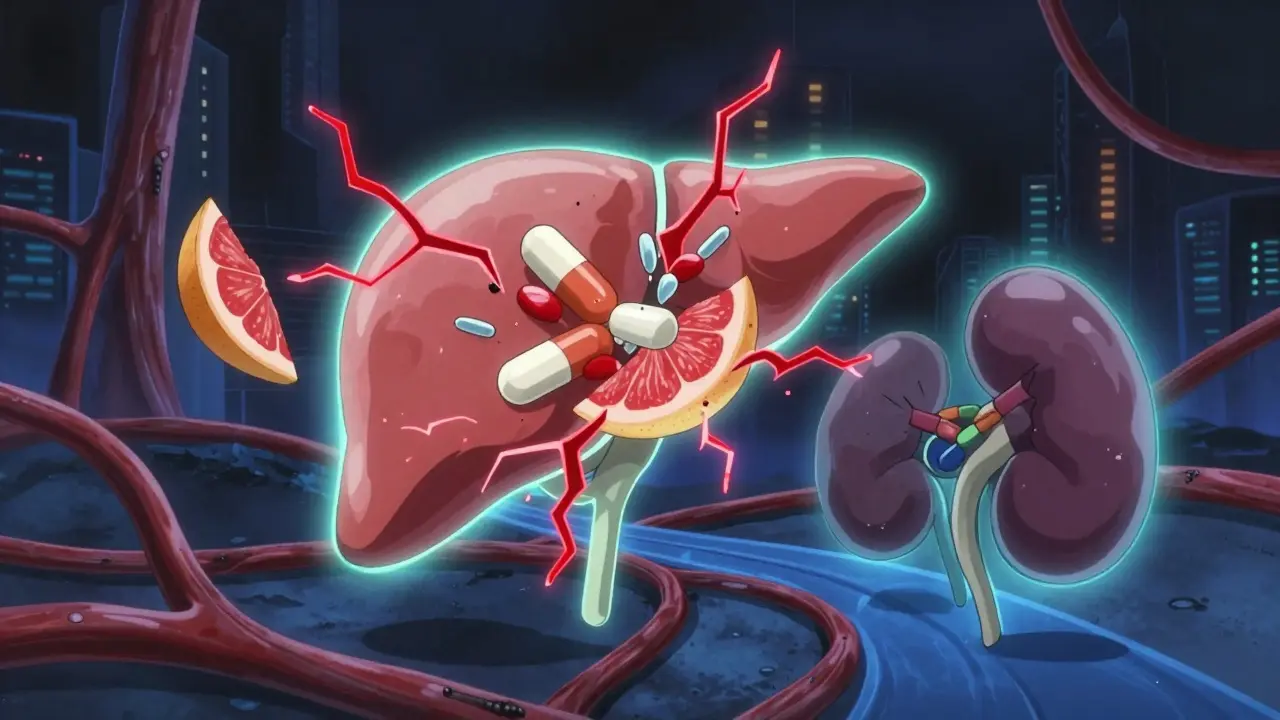
Statins save lives. Millions of people take them every day to lower bad cholesterol and prevent heart attacks and strokes. But not all statins are the same when it comes to how they react with other medications. Some can become dangerously strong when mixed with common drugs, while others barely notice them. Knowing which statin is safer with your other meds isn’t just helpful-it can prevent muscle damage, kidney failure, or even death.
Why Statin Interactions Matter
Statins work by blocking an enzyme called HMG-CoA reductase, which your liver uses to make cholesterol. The result? LDL cholesterol drops by 30% to 60%, depending on the drug and dose. That translates to a 25% to 35% drop in heart attacks and strokes over time. But these drugs don’t just float around in your bloodstream. They’re processed by your liver using specific enzyme systems-and that’s where trouble starts.
When two drugs use the same liver pathway, one can block the other from being broken down. That causes the statin to build up in your blood. Too much of it? Muscle pain, weakness, or worse-rhabdomyolysis, a condition where muscle tissue breaks down and floods your kidneys with toxic proteins. It’s rare, but it’s deadly when it happens.
Which Statins Are Most at Risk?
Not all statins are created equal. Seven are approved in the U.S., but their interaction risks vary wildly. The biggest red flags are simvastatin and lovastatin. Both are heavily processed by CYP3A4, a liver enzyme that’s targeted by dozens of common drugs.
Take clarithromycin, a common antibiotic. When taken with simvastatin, it can spike simvastatin levels by 10 times. With lovastatin? Up to 16 times. That’s why the FDA says you should never combine these two with certain antibiotics, antifungals, or HIV drugs like ritonavir. Even grapefruit juice can interfere-it blocks CYP3A4 too. One grapefruit in the morning can cause problems all day.
Atorvastatin is next in line for risk. It’s also metabolized by CYP3A4, but not as intensely. Clarithromycin still bumps its levels by about 4 times, so caution is needed. But unlike simvastatin and lovastatin, atorvastatin can still be used with many drugs if the dose is kept low-usually under 10 mg per day when combined with cyclosporine or other immunosuppressants.
The Safer Statins: Pravastatin, Rosuvastatin, Pitavastatin
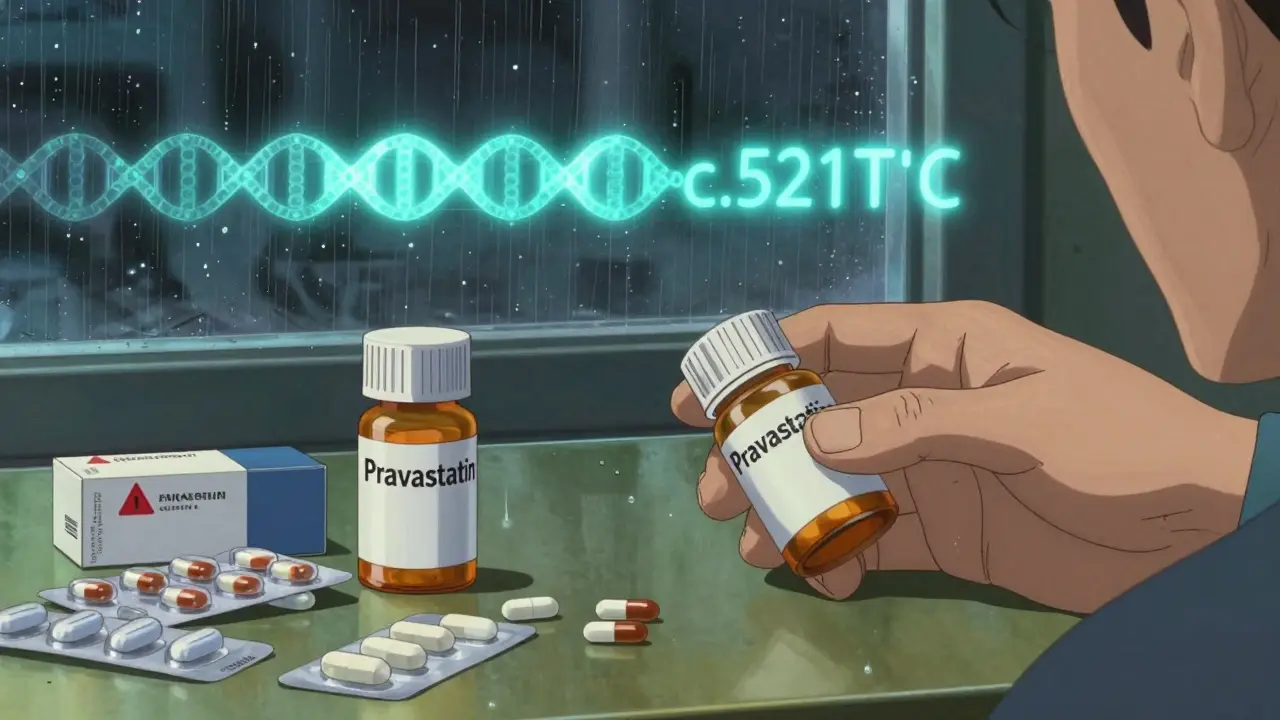
Here’s where things get better. Pravastatin barely touches CYP enzymes at all. It’s mostly cleared by the kidneys and doesn’t rely on liver metabolism. That makes it the safest choice if you’re on multiple meds-especially for people with HIV, organ transplants, or those taking cyclosporine. In fact, cyclosporine is explicitly approved for use with pravastatin up to 40 mg daily, while it’s completely banned with simvastatin and lovastatin.
Rosuvastatin is metabolized mostly by CYP2C9, which means it avoids many of the common CYP3A4 interactions. But it has its own vulnerability: the OATP1B1 transporter. This is how rosuvastatin gets into liver cells. If something blocks it-like cyclosporine-rosuvastatin levels can jump by 7.1 times. That’s worse than atorvastatin. So while rosuvastatin avoids antibiotic interactions, it’s still risky with immunosuppressants.
Pitavastatin is similar. It’s mainly broken down by glucuronidation, not CYP enzymes. But like rosuvastatin, it’s strongly affected by OATP1B1 blockers. Cyclosporine increases pitavastatin levels by 7.1 times too. That’s why pitavastatin carries the same black box warning as simvastatin when taken with cyclosporine.
Other Dangerous Combinations
It’s not just antibiotics and HIV drugs. Other common medications can also turn safe statins into risky ones.
- Gemfibrozil (a fibrate for triglycerides) is a major problem. It blocks the same liver pathways used by most statins and increases muscle toxicity risk by up to 2 times. The only statin that handles gemfibrozil well is pravastatin. If you need both, switch to fenofibrate instead-it doesn’t interfere.
- Colchicine, used for gout, can raise the risk of muscle damage when taken with any statin. Your doctor might lower your statin dose or monitor you more closely.
- Diltiazem and verapamil (blood pressure pills) can increase simvastatin and lovastatin levels by 3 to 8 times. Even atorvastatin isn’t completely safe. If you’re on these, stick to lower statin doses and watch for muscle pain.
- Ticagrelor (an antiplatelet drug) can slightly raise atorvastatin levels, but not enough to be dangerous. The American College of Cardiology says it’s okay to use together, as long as you’re not on high-dose simvastatin or lovastatin.
Genetics Play a Role Too
Some people are naturally more vulnerable. A common gene variation called SLCO1B1 c.521T>C makes your body less able to clear statins from your blood. If you have this variant, your risk of muscle damage from simvastatin jumps by 4.5 times. It doesn’t affect pravastatin as much. The FDA even added this genetic info to simvastatin’s label in 2011.
That’s why some clinics now test for this gene before prescribing high-dose statins. It’s not routine everywhere yet-but if you’ve had muscle pain on statins before, or if your family has a history of statin side effects, ask your doctor about genetic testing.

What Should You Do?
Don’t stop your statin. The benefits far outweigh the risks-for most people. But you need to be smart.
- Know your statin. If you’re on simvastatin or lovastatin, review every new medication with your pharmacist or doctor. Even over-the-counter supplements like red yeast rice (which contains natural statins) can be dangerous.
- Ask about alternatives. If you’re on multiple meds, ask if switching to pravastatin or rosuvastatin makes sense. Both are safer with complex drug regimens.
- Watch for symptoms. Muscle pain, tenderness, or weakness-especially in the thighs or shoulders-could be early signs of muscle damage. Dark urine? That’s a red flag. Call your doctor immediately.
- Get baseline tests. Before starting any statin, get a creatine kinase (CK) blood test. It’s a simple way to check your muscle health. Liver enzymes should also be checked at baseline and after 12 weeks.
- Don’t skip doses. If you miss a dose, don’t double up. That can spike levels and increase risk. Stick to your schedule.
The Bottom Line
Statins are among the most effective drugs ever developed for heart disease. But their safety depends on which one you take-and what else you’re taking. Simvastatin and lovastatin are powerful but fragile. They break easily when mixed with common drugs. Pravastatin is the quiet survivor-low risk, reliable, and forgiving. Rosuvastatin is strong and effective, but watch out for cyclosporine and similar drugs.
The goal isn’t to avoid statins. It’s to pick the right one for your life. If you’re on five or more medications, have kidney issues, or are older than 75, your statin choice matters more than ever. Talk to your doctor. Bring your pill bottle. Ask: ‘Is this the safest statin for me?’
There’s no one-size-fits-all answer. But with the right information, you can keep your heart healthy without putting your muscles at risk.
Which statin has the least drug interactions?
Pravastatin has the lowest risk of drug interactions. It’s not metabolized by the main liver enzymes (CYP3A4 or CYP2C9) and is cleared mostly by the kidneys. That makes it safer than simvastatin, lovastatin, or atorvastatin when taken with antibiotics, HIV meds, or immunosuppressants. It’s often the go-to choice for patients on multiple medications.
Can I drink grapefruit juice with statins?
Avoid grapefruit juice with simvastatin, lovastatin, and atorvastatin. Grapefruit blocks the CYP3A4 enzyme, causing these statins to build up in your blood and raising your risk of muscle damage. Rosuvastatin, pravastatin, and pitavastatin are not affected by grapefruit juice and are safe to take with it.
Why is simvastatin 80 mg no longer recommended?
The FDA and American Heart Association stopped recommending simvastatin 80 mg because studies showed it increased the risk of rhabdomyolysis without offering extra heart protection. Even without other drugs, this high dose is dangerous. If you’re on it, talk to your doctor about switching to a safer statin or lower dose.
Is rosuvastatin safe with cyclosporine?
No. Cyclosporine blocks the OATP1B1 transporter, which rosuvastatin needs to enter liver cells. This causes rosuvastatin levels to spike by up to 7.1 times, greatly increasing the risk of muscle damage. The combination is not recommended. Pravastatin is the preferred statin if you’re taking cyclosporine.
What should I do if I start feeling muscle pain on a statin?
Stop taking the statin and call your doctor right away. Muscle pain, weakness, or dark urine could mean rhabdomyolysis-a serious condition. Your doctor will check your creatine kinase (CK) levels and may switch you to a different statin or lower your dose. Never ignore these symptoms.
Can I take statins with fish oil or supplements?
Most fish oil supplements are safe with statins. However, red yeast rice contains natural statins and can cause the same side effects as prescription statins-especially when combined with them. Avoid it unless your doctor approves. Always tell your doctor about every supplement you take, even if you think it’s harmless.
What’s Next?
Research is moving fast. Scientists are now testing drugs like bempedoic acid (Nexletol), which lowers cholesterol without relying on the liver’s CYP system-making it a promising alternative for people with complex drug regimens. Clinical trials in 2023 showed it cut heart events by 17% with almost no drug interactions.
Meanwhile, genetic testing for SLCO1B1 is becoming more common. In the future, your doctor might run a simple blood test before prescribing a statin to see which one your body handles best. Until then, the best tool you have is knowledge. Know your meds. Know your risks. Talk to your doctor. Your heart will thank you.





Laura Rice
January 23, 2026 AT 20:27I had no idea grapefruit juice could wreck your statin like that. My grandma drinks a glass every morning and she’s on simvastatin-now I’m gonna make her switch to orange juice. I swear, the little things kill you.
Also, pravastatin is the MVP. My aunt switched to it after her muscle pain got bad, and now she’s hiking again. No drama, no ER trips. Just quiet, reliable heart protection.
Also-why is no one talking about how weird it is that we’re still using simvastatin 80mg in some places? That’s like driving a Ferrari with the brakes taped down.
charley lopez
January 24, 2026 AT 11:34The pharmacokinetic profiles of statins exhibit significant heterogeneity with respect to cytochrome P450 isoenzyme metabolism and transporter-mediated hepatic uptake. Simvastatin and lovastatin, as substrates of CYP3A4, demonstrate elevated plasma concentrations when co-administered with potent inhibitors such as clarithromycin or cyclosporine, thereby increasing the risk of myotoxicity.
Pravastatin, being non-CYP metabolized and primarily renally excreted, presents a more favorable interaction profile. Rosuvastatin, while less dependent on CYP3A4, is subject to OATP1B1 inhibition, which may elevate plasma AUC by up to 7.1-fold in the presence of cyclosporine, necessitating dose adjustment or avoidance.
Kerry Evans
January 25, 2026 AT 09:16People still don’t get it. If you’re on more than three meds, you’re basically playing Russian roulette with your muscles. I’ve seen it too many times-older folks on simvastatin and antibiotics, then they show up in the ER with CK levels through the roof. It’s not ‘rare.’ It’s predictable. And it’s avoidable.
And don’t even get me started on red yeast rice. That’s just a legal loophole for people who think ‘natural’ means ‘safe.’ It’s simvastatin. Same molecule. Same risks. Stop pretending supplements are magic.
And yes, grapefruit juice? Don’t be a dumbass. One grapefruit isn’t ‘just one.’ It lingers. Your liver doesn’t forget.
Kerry Moore
January 26, 2026 AT 05:12Thank you for this comprehensive and clinically nuanced overview. I am particularly appreciative of the emphasis on genetic polymorphisms, specifically the SLCO1B1 c.521T>C variant, which has been demonstrated in multiple cohort studies to significantly modulate statin-induced myopathy risk. In clinical practice, pre-prescription genotyping remains underutilized despite its cost-effectiveness in high-risk populations.
Furthermore, the distinction between OATP1B1-mediated transport and CYP-mediated metabolism is critical for rational polypharmacy management. I would respectfully suggest that future guidelines consider stratifying statin recommendations not only by drug class but also by patient-specific transporter and enzyme phenotypes.
Janet King
January 27, 2026 AT 00:27Pravastatin is the safest. If you’re on other meds, just ask for it. No fancy science needed. No grapefruit. No weird supplements. No guessing. Just take it, get your blood checked, and keep going.
My doctor said it like that. I believed her. I’m still here.
Don’t overthink it. Pick pravastatin. You’ll thank yourself later.
Andrew Smirnykh
January 27, 2026 AT 09:43This is such an important post. I’m from Nigeria, and statins aren’t always easy to get here-but when they are, the interactions are still the same. I’ve seen patients on HIV meds and simvastatin, and the muscle pain was brutal. No one knew why.
It’s wild how a simple switch to pravastatin can make all the difference. We need more of this kind of info in low-resource settings. Not everyone has a pharmacist down the street. Sometimes, the only person who knows about drug interactions is the patient.
Thanks for writing this. It’s the kind of thing that saves lives outside the US too.
Oladeji Omobolaji
January 28, 2026 AT 00:37Bro, I took simvastatin for a year and never knew about grapefruit. I drank it every day. I thought it was healthy. Now I’m scared.
My leg muscles felt weird last month but I thought I just lifted too hard. Now I’m thinking… was it the juice? Should I get checked?
Anyway, pravastatin sounds like the chill one. I’m gonna ask my doc. No cap.
Vanessa Barber
January 28, 2026 AT 10:19Pravastatin is the safest? Please. That’s just what the big pharma reps told your doctor. They don’t want you switching because it’s cheaper. Rosuvastatin is just as good, and it’s stronger. You’re just being paranoid.
Also, grapefruit juice? It’s not poison. My cousin drinks it with her statin and she’s fine. Stop fearmongering.