Have you ever opened a bottle of old medicine only to find the tablets stuck together in a hard lump? Or maybe a capsule feels soft and mushy instead of firm. That is moisture damage, and it is far more than just an annoyance. It means your medication might not work as intended. In fact, quality issues linked to environmental factors like humidity are a leading cause of drug shortages and recalls. For instance, aspirin breaks down into salicylic acid and acetic acid (which smells like vinegar) when exposed to damp air. This degradation reduces efficacy and can even create irritating byproducts.
Keeping your pills potent requires understanding how moisture attacks them and using the right defenses. Whether you are a patient storing meds at home or a formulator designing a new dosage form, the principles remain the same: block the water vapor, absorb what gets in, and maintain a stable environment. Let’s look at exactly how this works and what you can do about it.
The Science of Moisture Degradation
To stop moisture damage, you first need to know how it happens. Water molecules are tiny and sneaky. They penetrate packaging materials through microscopic pores-a process called vapor transmission. Once inside, they trigger chemical reactions that destroy the active pharmaceutical ingredient (API).
The two main culprits are hydrolysis and a chemical reaction where water splits the molecular bonds of the drug and oxidation and a reaction with oxygen that is often accelerated by the presence of moisture. Hydrolysis is particularly common in antibiotics like amoxicillin and pain relievers like aspirin. When these drugs react with water, their structure changes. The result? A pill that looks fine but has lost its therapeutic power. Vitamin C is another victim; moisture speeds up its reaction with oxygen, turning it ineffective much faster than expected.
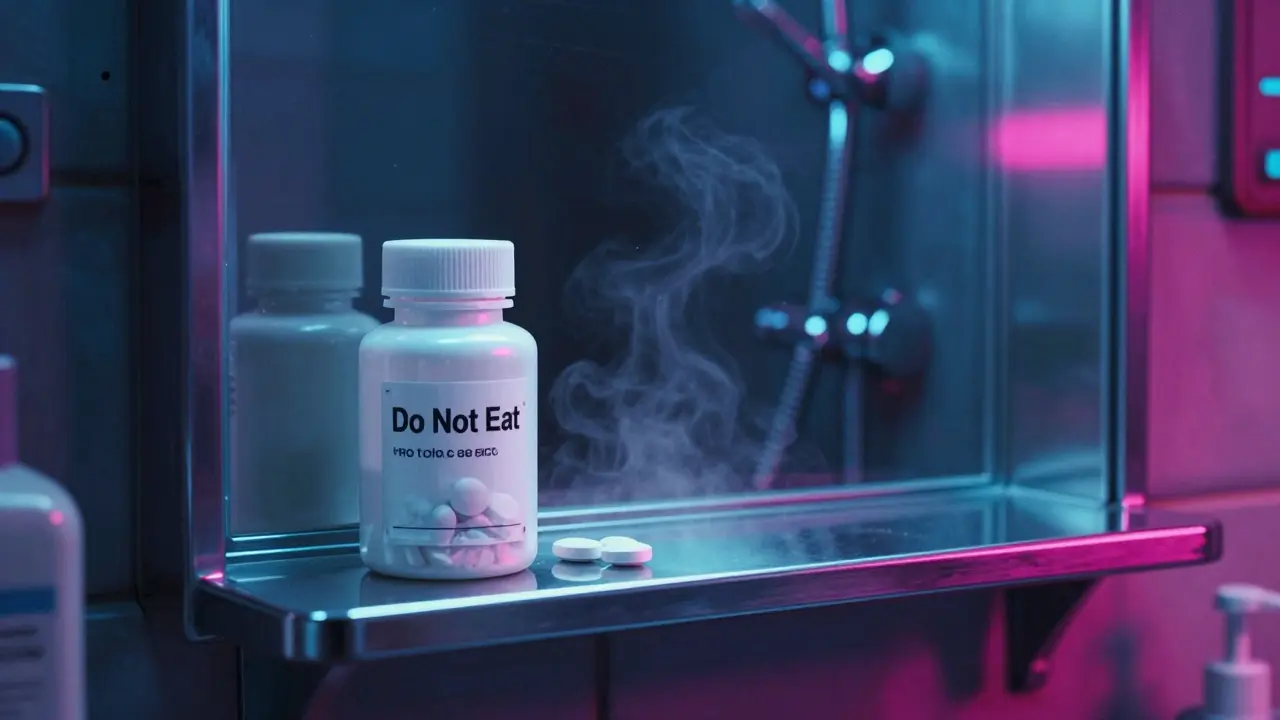
This is why shelf life matters. Manufacturers test drugs under specific conditions-usually 25°C with 60% relative humidity-to ensure stability. But once you take the bottle out of the pharmacy, real-world conditions take over. Humidity varies wildly depending on where you live. If you store meds in a bathroom cabinet near a shower, you are exposing them to high heat and steam daily. This accelerates degradation significantly compared to a cool, dry bedroom drawer.
Primary Defense: Film Coating Technologies
Before you even see the pill, manufacturers have likely applied a protective shield. This is known as film coating and a thin polymer layer applied to tablets to protect against moisture, improve taste, or control release. Think of it as waterproof paint for your medicine. Not all coatings are created equal, however.
Traditional coatings often use hydroxypropyl methylcellulose (HPMC). While HPMC helps with appearance and swallowing, it offers moderate protection against water vapor. Newer technologies rely on polyvinyl alcohol (PVA)-based systems, such as Opadry® amb II. Research shows PVA coatings provide approximately three times better moisture barrier properties than standard HPMC. In tests involving amoxicillin/clavulanic acid, uncoated tablets lost all their clavulanic acid after just 10 days outside packaging. Tablets with PVA coating maintained acceptable levels of both ingredients throughout the same period.
| Coating Type | Moisture Barrier Strength | Common Use Case | Cost Implication |
|---|---|---|---|
| Uncoated | Poor | Generic supplements, short-shelf-life drugs | Lowest |
| HPMC-Based | Moderate | Standard tablets, flavor masking | Low |
| PVA-Based (e.g., Opadry) | High | Moisture-sensitive APIs, antibiotics | 15-20% higher than HPMC |
If you are choosing between medications, knowing whether a product uses advanced coating can be a clue to its stability. However, as a consumer, you cannot change the coating. You must focus on the next layers of defense: packaging and storage.
The Role of Packaging and Desiccants
Packaging is the second line of defense. Most prescription pills come in high-density polyethylene (HDPE) bottles or aluminum blister packs. Blister packs are excellent because each tablet is sealed individually in foil and plastic, creating a hermetic seal. HDPE bottles are convenient but permeable. They block liquid water but allow water vapor to pass through slowly over time.
This is where silica gel desiccants and small packets containing porous silica beads that adsorb moisture from the air become critical. You have seen those little "Do Not Eat" packets in shoe boxes and vitamin bottles. In pharmaceuticals, they are scientifically calculated. Silica gel can adsorb up to 40% of its weight in moisture. In long-term testing, properly sized silica gel packs limited moisture content increases in medication containers to less than 0.3 percentage points over two years.
Why do we need them if the bottle is closed? Because every time you open the cap, you let humid air in. In a typical 500-pill bottle, opening it twice a day creates hundreds of "headspace replacements." As the bottle empties, the empty space (headspace) grows, holding more moist air. The desiccant soaks up this incoming humidity, keeping the internal environment dry. Without it, the vapor permeating the plastic walls and entering through the cap would eventually degrade the pills.
Practical Tips for Home Storage
You cannot install industrial desiccants in your medicine cabinet, but you can mimic the principles. Here is how to prevent moisture damage to your personal supply of pills and capsules:
- Avoid the Bathroom: This is the number one mistake. Bathrooms experience rapid temperature swings and high humidity from showers. Store medicines in a cool, dry place like a bedroom closet or kitchen cupboard away from the sink.
- Keep Original Containers: Transferring pills to weekly sorters exposes them to air every time you fill the sorter. If you must use a sorter, fill it only for the week ahead and keep the rest in the original bottle with the desiccant packet intact.
- Don’t Remove the Desiccant: Those silica gel packets are there for a reason. Keep them in the bottle unless the label explicitly says otherwise. Do not throw them away.
- Check for Signs of Damage: Look for discoloration, crumbling, sticking, or a strange smell. If aspirin smells like vinegar, discard it. If capsules are soft or leaking, they are compromised.
- Use Tight-Lid Jars for Supplements: Large supplement tubs often have loose lids. Consider transferring bulk vitamins to airtight glass jars with rubber gaskets if you live in a humid climate.
Understanding Shelf Life and Expiration Dates
Expiration dates are not arbitrary. They represent the guaranteed period during which the manufacturer ensures the drug retains full potency and safety under specified storage conditions. Moisture exposure effectively shortens this window. A pill stored in a humid garage may degrade in six months, while the same pill in a cool, dry room lasts two years.
Regulatory bodies like the FDA and EMA require manufacturers to prove their packaging maintains quality throughout the shelf life. This is why you see storage instructions on labels, such as "Store below 25°C" or "Protect from moisture." Ignoring these instructions voids that guarantee. If you suspect your medication has been exposed to excessive moisture before reaching you-for example, if the box was crushed or the bottle felt wet upon purchase-contact the pharmacist immediately.
Future Trends in Moisture Protection
The industry is constantly innovating. We are seeing a shift toward sustainable solutions, with biodegradable desiccants gaining market share. There is also research into "smart packaging" that includes color-changing indicators to signal if a package has been exposed to harmful levels of humidity. These innovations aim to give patients clearer feedback on whether their medication is still safe to take.
For now, the best strategy remains a combination of robust manufacturing practices (like PVA coatings) and careful consumer habits. By respecting the sensitivity of your medications to moisture, you ensure they work exactly as prescribed when you need them most.
Can I put my medicine in the refrigerator to prevent moisture?
Generally, no. Refrigerators are humid environments due to condensation. Unless the label specifically instructs refrigeration (common for insulin or certain liquids), storing pills in the fridge can introduce moisture when you take them out and they warm up. A cool, dry cupboard is usually better.
What should I do with the silica gel packet in my pill bottle?
Leave it in the bottle. Silica gel is a desiccant designed to absorb excess moisture from the air inside the container. Removing it removes a key layer of protection for your medication's stability.
How can I tell if my pills have been damaged by moisture?
Look for physical changes: tablets that are cracked, discolored, or sticking together in a mass. Capsules may feel soft, sticky, or leak powder. Some drugs, like aspirin, will develop a distinct vinegar-like odor if they have degraded due to hydrolysis.
Are blister packs better than bottles for moisture protection?
Yes. Blister packs seal each individual dose in aluminum foil and plastic, providing a hermetic barrier against moisture and oxygen. Bottles, especially plastic ones, allow some vapor transmission and expose remaining pills to air every time the cap is opened.
Does the type of coating on a pill affect its moisture resistance?
Yes. Modern polyvinyl alcohol (PVA) coatings offer significantly better moisture barriers than traditional hydroxypropyl methylcellulose (HPMC) coatings. PVA coatings can reduce water vapor transmission rates substantially, protecting sensitive ingredients longer.