Falls Risk vs. Blood Thinner Benefit Calculator
Enter your details to estimate whether staying on a blood thinner is worth it despite fall concerns. This tool reflects the math described in the article — it is educational, not a diagnosis.
Your fall count is far below the threshold where bleeding risk would exceed the benefit.
If you have adequate kidney function, a DOAC (apixaban, rivaroxaban, edoxaban, dabigatran) is generally preferred over warfarin for patients worried about falls.
Educational estimate based on published ranges from the European Geriatric Medicine review and Cleveland Clinic Journal of Medicine. Always confirm decisions with your healthcare provider.
Imagine this: You are a 78-year-old with atrial fibrillation. Your doctor prescribes a blood thinner to prevent a potentially devastating stroke. But then you trip over a rug at home, or your legs give way in the grocery store. Suddenly, that medication feels like a liability rather than a shield. This is the exact dilemma facing millions of older adults today. The fear is real, but the math often doesn't add up the way we think it does.
The core problem isn't whether to take the medicine; it's how to manage the environment and health factors that cause falls in the first place. For decades, clinicians have sometimes stopped anticoagulation therapy simply because a patient was "a fall risk." Recent evidence suggests this approach is not only outdated but dangerous. By withholding these drugs, we often expose patients to a higher risk of stroke than they would face from a fall-related bleed. The goal here is simple: keep the protection against stroke while actively reducing the chance of hitting the ground hard enough to cause harm.
Key Takeaways
- Fall risk alone should not stop you from taking prescribed anticoagulants if your stroke risk is moderate to high.
- You would need to fall roughly 300 times in a year for the bleeding risk to outweigh the stroke prevention benefits of warfarin.
- Direct oral anticoagulants (DOACs) offer a lower risk of brain bleeds compared to traditional warfarin, making them safer for those concerned about falls.
- A systematic approach to assessing vision, medications, and home hazards is more effective than guessing what might make you stumble.
- Shared decision-making with your healthcare provider is crucial, especially if you are frail or have limited life expectancy.
The Real Numbers: Why Fear Often Outweighs Fact
To understand why doctors are pushing back against stopping these meds, we have to look at the actual probabilities. Many people assume that if they take a blood thinner and fall, they will likely suffer a fatal brain hemorrhage. While serious, this outcome is statistically rare. According to data reviewed in the European Geriatric Medicine, the absolute risk of an intracranial hemorrhage (ICH) from a fall while on anticoagulants is estimated at just 0.2% to 0.5% per year. That is less than one in two hundred people per year.
Compare that to the risk of having a stroke without treatment. For patients with atrial fibrillation and a CHA2DS2-VASc score of 2 or higher, the annual stroke risk sits between 1.5% and 3.0%. In other words, the threat of a stroke is three to ten times more likely than a severe bleed caused by a fall. A landmark calculation published in the Cleveland Clinic Journal of Medicine highlighted this disparity starkly: a person would need to fall 295 times in a single year for the risk of major bleeding to exceed the benefit of stroke prevention provided by warfarin. Most people fall once or twice a year, if that. The math strongly favors keeping the medication on board.
Choosing the Right Medication: DOACs vs. Warfarin
Not all blood thinners are created equal when it comes to fall safety. The landscape has shifted significantly toward Direct oral anticoagulants (DOACs), which include apixaban, rivaroxaban, edoxaban, and dabigatran. These newer agents have become the first-line recommendation for most patients with non-valvular atrial fibrillation, according to the 2023 American College of Cardiology guidelines. Why? Primarily because they carry a 30% to 50% lower risk of intracranial hemorrhage compared to warfarin.
Warfarin requires frequent blood tests to monitor its intensity (measured by INR), and small fluctuations can lead to either clotting or bleeding risks. DOACs work at a fixed dose, providing more predictable protection. However, kidney function matters. If your creatinine clearance drops below certain thresholds (typically 15-30 mL/min depending on the specific drug), DOACs may not be suitable, and warfarin might be the better choice. This is where regular monitoring becomes essential. It is not about avoiding the drug, but choosing the right one for your specific physiology.
| Feature | Warfarin | DOACs (Apixaban, Rivaroxaban, etc.) |
|---|---|---|
| Intracranial Hemorrhage Risk | Higher baseline risk | 30-50% lower than warfarin |
| Monitoring Requirements | Frequent INR blood tests | Routine kidney function checks; no INR needed |
| Dosing Consistency | Adjusts based on diet/drugs | Fixed dose (unless renal impairment) |
| Reversal Agents | Vitamin K, PCC | Specific reversal agents available (e.g., idarucizumab for dabigatran) |
| Best For | Severe renal insufficiency, mechanical heart valves | Most patients with non-valvular AF, including those with fall concerns |

Systematic Fall Prevention: Beyond Just "Be Careful"
Telling an older adult to "be careful" is vague and rarely effective. True prevention requires a structured, multifactorial assessment. The American Medical Directors Association (AMDA) outlines a four-phase process: recognition, assessment, treatment, and monitoring. This isn't a one-time check; it's an ongoing conversation with your healthcare team.
The initial comprehensive assessment takes about 30 to 60 minutes and covers several critical areas:
- Medication Review: This is often the biggest culprit. Sedatives, antihypertensives, and psychotropic drugs can cause dizziness or low blood pressure upon standing. Deprescribing unnecessary medications can drastically reduce fall frequency.
- Gait and Balance Testing: Tools like the Timed Up and Go test measure how long it takes you to stand from a chair, walk three meters, turn around, and sit back down. A time over 12 seconds indicates a higher fall risk.
- Vision Evaluation: Poor eyesight or outdated glasses contribute significantly to misjudging steps and obstacles.
- Home Safety Audit: Loose rugs, poor lighting, and lack of grab bars in bathrooms are environmental hazards that can be easily fixed.
- Orthostatic Hypotension Check: Measuring blood pressure while lying down and immediately after standing helps identify drops that cause lightheadedness.
Implementing this approach isn't always easy. Clinicians often cite the time required as a barrier in busy practices. However, the payoff is clear: when interdisciplinary teams-including nurses, pharmacists, and physical therapists-collaborate on these interventions, patient outcomes improve markedly. It shifts the focus from fearing the medication to managing the lifestyle factors that increase vulnerability.
When Should You Actually Stop? The Exceptions
So, when is it okay to stop? The guidelines are strict. Fall risk *alone* is not a reason to discontinue anticoagulation. Contraindications are specific and medical in nature. You should generally avoid or pause anticoagulation if you have:
- Active pathological bleeding (e.g., a current gastrointestinal bleed).
- A known bleeding disorder (like hemophilia).
- Uncontrolled hypertension, specifically systolic blood pressure consistently above 180 mmHg.
There is also a nuanced exception for extremely frail patients approaching end-of-life. If life expectancy is very short (less than 1-2 years), the long-term benefit of stroke prevention may not justify the immediate burden of medication management and potential side effects. In these cases, shared decision-making is vital. The European Geriatric Medicine review emphasizes that patient preferences and goals should guide this choice. It is not a black-and-white rule; it is a personal calculation of quality of life versus risk mitigation.
Practical Monitoring and Daily Habits
If you are staying on your medication, how do you monitor yourself? First, know your numbers. Understand your CHA2DS2-VASc score (stroke risk) and HAS-BLED score (bleeding risk). A HAS-BLED score of 3 or higher indicates high bleeding risk, which warrants extra caution but not necessarily discontinuation. It means you need tighter control of modifiable factors like blood pressure and alcohol intake.
For daily life, consider these concrete actions:
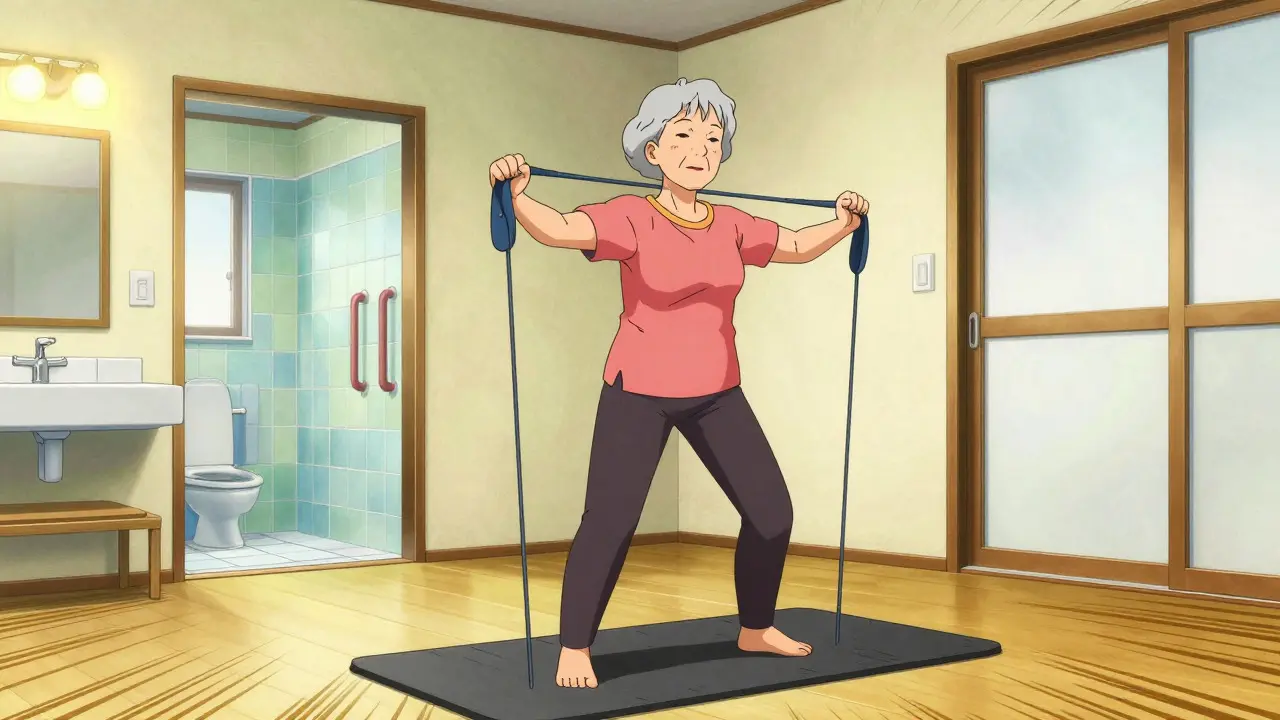
- Strength Training: Simple exercises to strengthen leg muscles can improve stability. Physical therapy referrals are highly effective.
- Footwear Check: Wear shoes with non-slip soles. Avoid slippers or socks on smooth floors.
- Lighting: Use nightlights in hallways and bathrooms to prevent tripping in the dark.
- Hydration: Dehydration can worsen orthostatic hypotension. Drink enough water throughout the day.
Remember, the aim is not to eliminate all movement, but to make movement safer. Staying active actually reduces fall risk in the long run by maintaining muscle mass and balance. Complete inactivity leads to weakness, which increases the likelihood of stumbling.
Frequently Asked Questions
Should I stop my blood thinner if I am afraid of falling?
Generally, no. Unless you have active bleeding or uncontrolled high blood pressure, the risk of stroke from atrial fibrillation usually outweighs the risk of a serious bleed from a fall. Talk to your doctor about switching to a DOAC, which has a lower risk of brain bleeds, and implement fall prevention strategies instead of stopping the medication.
Which blood thinner is safest for someone who falls often?
Direct oral anticoagulants (DOACs) like apixaban or rivaroxaban are typically preferred over warfarin for patients with fall concerns because they have a 30-50% lower risk of intracranial hemorrhage. However, your kidney function must be adequate for these drugs to work effectively.
How many times do I need to fall before the bleeding risk becomes too high?
Studies suggest you would need to fall approximately 295 times in a year for the bleeding risk of warfarin to outweigh the stroke prevention benefits. Since most people fall far fewer times, the medication remains beneficial for the vast majority of patients.
What is the CHA2DS2-VASc score and why does it matter?
The CHA2DS2-VASc score estimates your annual risk of stroke due to atrial fibrillation. Factors include age, history of stroke, diabetes, and heart failure. A score of 2 or higher in men (or 3 in women) indicates a moderate to high risk, meaning anticoagulation is recommended regardless of fall risk.
Can I just lower my dose to reduce bleeding risk?
No, off-label dose reduction is not recommended. Reducing the dose of DOACs or targeting a lower INR with warfarin tends to reduce their effectiveness in preventing clots without significantly lowering the bleeding risk. Stick to the prescribed dose unless your doctor advises otherwise based on kidney function changes.
What specific steps can I take at home to prevent falls?
Remove loose rugs, install grab bars in the bathroom, ensure good lighting (including nightlights), wear non-slip footwear, and review your medications with a pharmacist to see if any cause dizziness. Regular strength training and balance exercises are also highly effective.