
Gout Risk Calculator
Understand Your Risk
Based on thiazide diuretic use, uric acid levels, and other factors from the article.
Many people take thiazide diuretics to control high blood pressure. One of the most common drugs in this class is hydrochlorothiazide (HCTZ). It’s cheap, effective, and prescribed millions of times a year. But if you’ve ever had gout-or if your uric acid levels are already high-this medication might be making things worse without you even realizing it.
How Thiazide Diuretics Work (and Why They Raise Uric Acid)
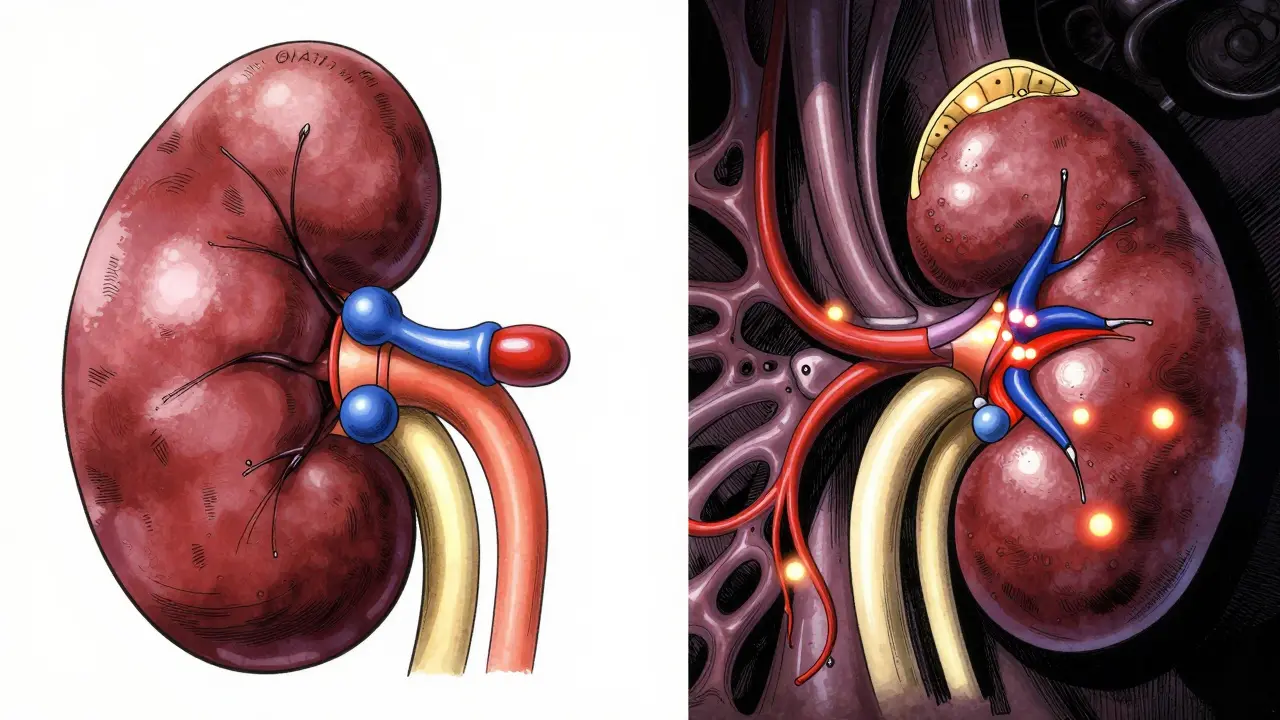
Thiazide diuretics like HCTZ and chlorthalidone help lower blood pressure by making your kidneys get rid of extra salt and water. They do this by blocking sodium reabsorption in a specific part of the kidney called the distal convoluted tubule. Less sodium means less fluid in your blood vessels, which brings down pressure.
But here’s the catch: these same drugs interfere with how your kidneys handle uric acid. Uric acid is a waste product that comes from breaking down purines in food and your own cells. Normally, your kidneys filter it out and flush it through urine. But thiazides mess with that process.
Research shows thiazides compete with uric acid for transporters in the kidney, especially one called OAT1. When HCTZ enters the kidney cells, it pushes uric acid back into the bloodstream instead of letting it leave. At the same time, another transporter called OAT4 swaps thiazide molecules for uric acid in the urine, trapping even more of it inside the kidney. The result? Uric acid builds up in your blood.
This isn’t a slow, gradual effect. Studies show uric acid levels can rise within just 3 to 7 days after starting a thiazide. And the higher the dose, the worse it gets. A 2017 review found that thiazide use can increase serum uric acid by 6% to 21% compared to baseline levels.
The Link Between Thiazides and Gout Flares
When uric acid levels climb above 6.8 mg/dL, it starts forming sharp, needle-like crystals in your joints. That’s gout. And thiazide diuretics are one of the most common triggers for new cases.
A large 2024 study tracking over 247,000 people found that the longer someone took thiazides, the higher their risk of needing gout medication. After 30 days, the risk went up by 18%. After 180 days, it jumped to 32%. After more than a year? The risk was 41% higher than in people taking other blood pressure meds.
Even if you’ve never had gout before, this doesn’t mean you’ll definitely get it. About 12% to 15% of people on thiazides develop high uric acid, but only 1% to 2% end up with actual gout attacks. Still, that’s enough to matter-especially if you already have other risk factors like obesity, drinking alcohol, eating red meat or shellfish, or having kidney problems.
And here’s something many doctors overlook: gout caused by thiazides looks exactly like gout from any other cause. It usually hits the big toe joint first, with sudden pain, swelling, redness, and heat. You can’t tell just by looking whether it’s from the medication or from your diet.
Who’s Most at Risk?
If you’re taking a thiazide diuretic, here’s who should be extra careful:
- Men with serum uric acid above 7.0 mg/dL
- Women with uric acid above 6.0 mg/dL
- Anyone with a past history of gout
- People with chronic kidney disease
- Those who drink alcohol regularly or eat a lot of purine-rich foods
One study found that people with both high blood pressure and high uric acid are nearly twice as likely to develop gout than those with just one condition. And here’s the twist: high blood pressure itself raises your gout risk, and high uric acid raises your blood pressure risk. So it’s a cycle-and thiazides can feed into it.
What Should You Do?
Don’t stop taking your medication without talking to your doctor. But do ask these questions:
- Have my uric acid levels been checked since I started this drug?
- Do I have any history of gout, even if it was years ago?
- Is there a better alternative for my blood pressure?
The American College of Cardiology and the European Society of Cardiology both recommend checking your uric acid level before starting a thiazide-especially if you have risk factors. If your levels are already high (over 8.0 mg/dL), they advise against using thiazides alone unless you’re also on a urate-lowering drug like allopurinol.
If you need to keep taking a diuretic, there are better options. Spironolactone, a potassium-sparing diuretic, doesn’t raise uric acid at all. It’s often used in heart failure, but it can work for some people with high blood pressure too.
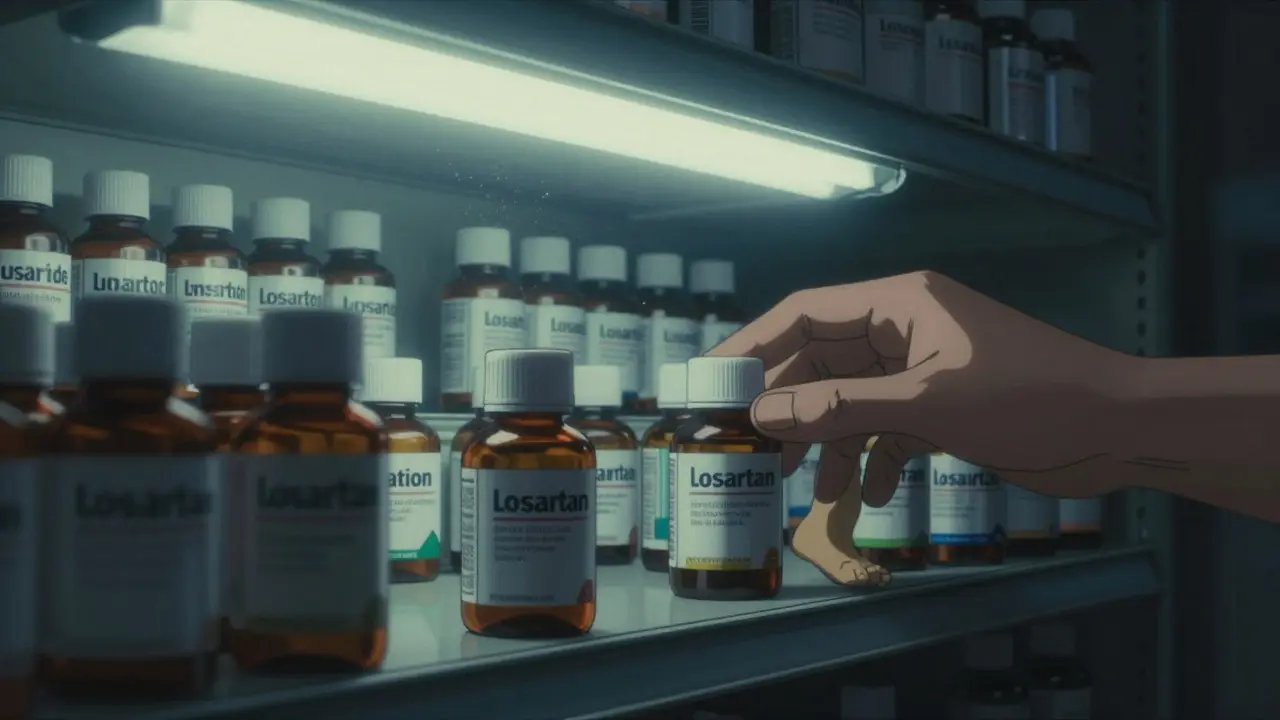
Another good alternative is losartan, an ARB blood pressure drug that actually helps your kidneys get rid of uric acid. It’s not always first-line, but if you have both hypertension and gout, it’s a smart combo.
Calcium channel blockers like amlodipine also don’t affect uric acid levels. They’re a bit more expensive than generic thiazides, but for some people, the trade-off is worth it.
What About Chlorthalidone vs. Hydrochlorothiazide?
You might hear that chlorthalidone is worse than HCTZ. That used to be the assumption. But a 2019 study found they’re about equal when it comes to gout risk. Both raise uric acid similarly. So if your doctor switches you from HCTZ to chlorthalidone thinking it’s safer-you’re not getting any benefit.
Chlorthalidone does last longer in your body and may be more effective for blood pressure control. But if you’re prone to gout, that doesn’t matter. The uric acid risk stays the same.
What Happens When You Stop?
Good news: if you stop taking thiazides, your uric acid levels usually go back to normal. Most studies show it takes about 2 to 3 months. Some people see improvement within weeks. But if you’ve had gout attacks already, your joints may still be sensitive. That’s why doctors often recommend continuing urate-lowering therapy (like allopurinol) even after stopping the diuretic, especially if your levels were very high.
What Else Can Help?
Lifestyle changes make a big difference:
- Reduce alcohol-especially beer and spirits
- Avoid organ meats, shellfish, and sugary drinks
- Drink more water-aim for at least 2 liters a day
- Maintain a healthy weight
- Consider cherries or cherry extract-some studies show they may reduce flare frequency
These aren’t just "nice to have" tips. For people on thiazides, they can be the difference between staying symptom-free and ending up in the ER with a swollen toe.
The Bigger Picture
Thiazide diuretics aren’t going away. They’re still one of the most prescribed blood pressure drugs in the world. In 2022, HCTZ alone had over 35 million prescriptions in the U.S., mostly because it costs less than $5 for a 90-day supply.
But awareness is growing. In 2015, only about half of cardiologists asked about gout history before prescribing. By 2021, that number jumped to 78%. More doctors are now checking uric acid levels, considering alternatives, or prescribing allopurinol alongside thiazides for high-risk patients.
And there’s hope on the horizon. A new class of diuretics is being tested in clinical trials-ones that lower blood pressure without touching uric acid transporters. Results aren’t expected until late 2025. Until then, the best defense is awareness, monitoring, and smart choices.



Erin Pinheiro
February 25, 2026 AT 11:53Also, typo: it’s 'chlorothiazide' not 'chlo***r***thiazide' lol.
Ashley Johnson
February 25, 2026 AT 15:36Lillian Knezek
February 27, 2026 AT 08:26Maranda Najar
March 1, 2026 AT 08:19Lisandra Lautert
March 2, 2026 AT 03:52lela izzani
March 2, 2026 AT 13:08And yes, chlorthalidone is just as bad. Don’t fall for the myth that it’s 'stronger so it must be better.' Same mechanism. Same risk.
kirti juneja
March 4, 2026 AT 07:52Also - cherries? Yes! He eats a cup every day. No attacks in 8 months. Simple changes, big results. Don’t overthink it!
Gabrielle Conroy
March 4, 2026 AT 23:14Spenser Bickett
March 6, 2026 AT 07:29