When two drugs are taken together, they don’t just sit side by side in your body. They interact - sometimes in ways that are harmless, sometimes in ways that can be deadly. This isn’t about how your body processes each drug individually. It’s about what happens when those drugs meet at the pharmacodynamic level: at the site of action, where they talk to your cells, receptors, and organs.
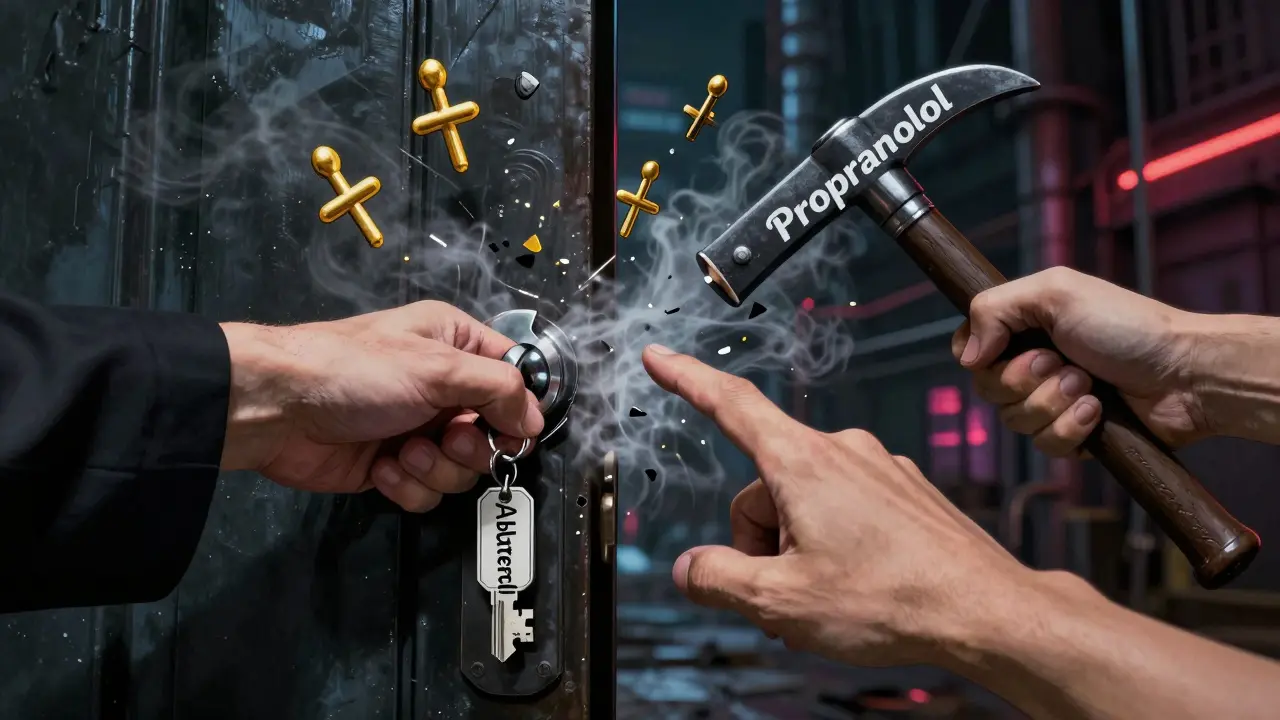
Think of it like two people trying to open the same door. One has a key, the other has a crowbar. If they both try at the same time, one might block the other. Or, if they work together, the door might fly open. That’s pharmacodynamic interaction in a nutshell. It doesn’t change how much drug is in your blood. It changes what the drug does when it gets there.
How Pharmacodynamic Interactions Work (And Why They’re Different)
Most people know about drug interactions that involve the liver. Like when grapefruit juice slows down how fast your body breaks down a statin. That’s pharmacokinetic - about absorption, metabolism, or excretion. Pharmacodynamic is different. It’s about what happens after the drug reaches its target. The concentration stays the same, but the effect doesn’t.
Imagine you’re taking a beta-blocker like propranolol for high blood pressure. Now you get an asthma attack and use your inhaler, albuterol. Albuterol works by opening up your airways. But propranolol blocks the same receptors. So instead of helping, it cancels out the inhaler. No matter how much albuterol you use, it won’t work if propranolol is already there. That’s not a dosage issue. That’s a direct fight at the receptor level.
Studies show that about 40% of serious drug interactions in hospitals are pharmacodynamic. That’s not a small number. It’s one in every two or three cases where something goes wrong because two drugs were combined - not because one was too strong, but because they clashed at the cellular level.
The Three Main Types of Pharmacodynamic Interactions
These interactions fall into three clear categories. Each has real-world consequences.
- Additive: The total effect is the sum of both drugs. Take two painkillers that both reduce inflammation - like ibuprofen and naproxen. Together, they do what you’d expect: more pain relief. But they also double the risk of stomach bleeding.
- Synergistic: Together, they do more than the sum. This is often used on purpose. Trimethoprim and sulfamethoxazole (Bactrim) block two steps in bacterial folic acid production. Alone, each barely works. Together, they kill bacteria 75% more effectively. That’s why they’re sold as a combo.
- Antagonistic: One drug blocks the other. This is where things get dangerous. Beta-blockers and bronchodilators are one example. Another is opioid antagonists like naloxone used to reverse overdoses. If someone is dependent on opioids and naloxone is given, it can trigger sudden, violent withdrawal - even if the opioid dose was low.
These aren’t theoretical. A 2021 meta-analysis found that combining SSRIs with MAOIs increases the risk of serotonin syndrome - a life-threatening condition - by 24 times. That’s not a rare fluke. It’s a predictable, preventable disaster.
Where the Real Danger Lies: Receptor Competition and Physiological Interference
At the molecular level, drugs bind to receptors like keys in locks. The strength of that bond is called affinity. The drug with higher affinity wins. Propranolol has a higher affinity for beta receptors than albuterol. So even if you take more albuterol, propranolol holds the lock tighter.
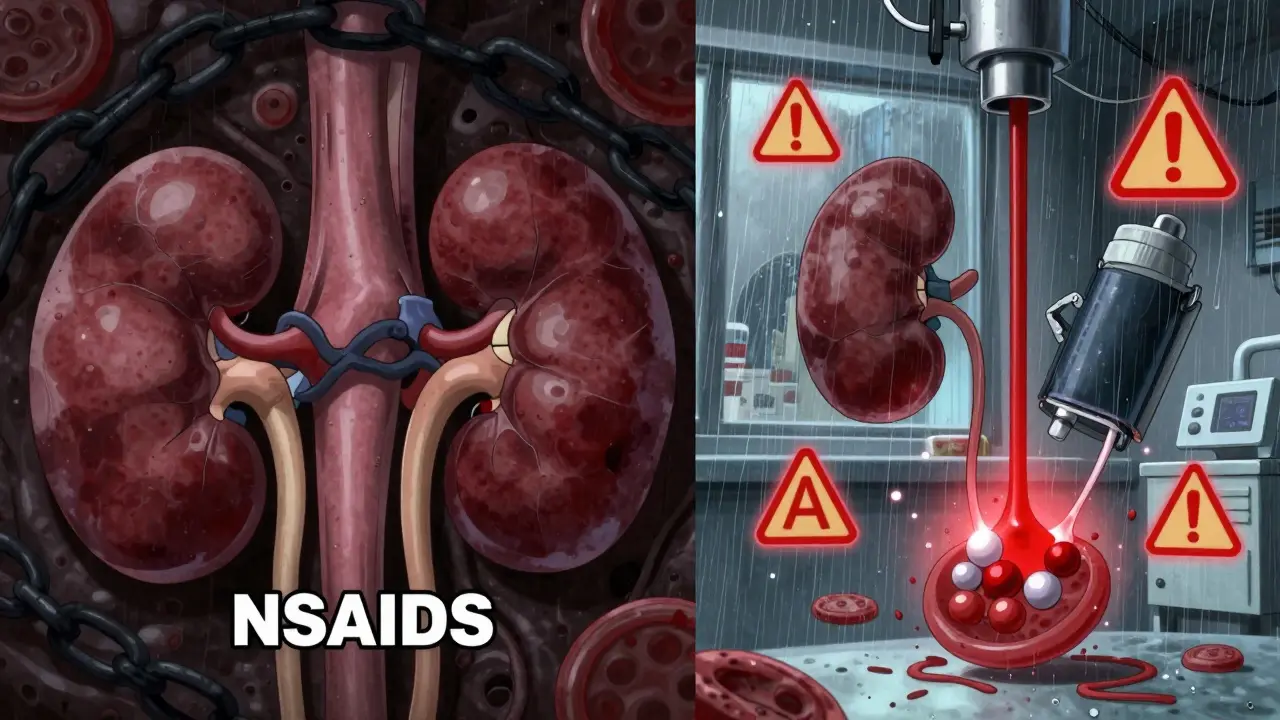
But not all interactions happen at receptors. Sometimes, drugs interfere with body systems. NSAIDs like ibuprofen block prostaglandins, which help keep blood flowing to your kidneys. ACE inhibitors like lisinopril rely on those same prostaglandins to lower blood pressure. When you take both, your kidneys get less blood flow - about 25% less, according to a 2019 NIH study. Your blood pressure doesn’t drop. And your kidneys start to struggle. This isn’t a coincidence. It’s a physiological tug-of-war.
Even more subtle: Noradrenaline, used in emergencies to raise blood pressure, constricts blood vessels in the gut. That reduces how well oral drugs are absorbed. So if you’re on a pill for anxiety or epilepsy and get a noradrenaline drip, the pill might as well be water.
The Most Dangerous Combinations You Need to Know
Some combinations are so risky they’re labeled contraindicated - meaning you should never mix them.
- SSRIs + MAOIs: Serotonin syndrome. Symptoms: high fever, seizures, muscle rigidity. Death can occur within hours.
- NSAIDs + ACE inhibitors or diuretics: Kidney failure. Especially dangerous in older adults or those with existing kidney issues.
- Opioids + benzodiazepines: Respiratory depression. This combo killed over 11,000 people in the U.S. in 2020 alone.
- Anticoagulants + antiplatelets: Uncontrolled bleeding. A common mix in heart patients - but 38% of dangerous interactions in doctors’ practices involve this combo.
And here’s the twist: sometimes the danger isn’t obvious. A 2023 Reddit thread from pharmacists described a near-fatal case where linezolid (an antibiotic) and sertraline (an antidepressant) caused serotonin syndrome in an elderly man. Neither drug was new. Neither was prescribed recklessly. But together, they crossed a line no one expected.
When Interactions Are a Good Thing
Not all pharmacodynamic interactions are bad. Medicine uses them on purpose.
The combo of sulfamethoxazole and trimethoprim is a classic. Each blocks a different step in bacterial folic acid production. Alone, they’re weak. Together, they’re powerful. That’s synergy - and it’s why this combo is still used worldwide.
Even more surprising: low-dose naltrexone (LDN), usually used to block opioid receptors, has been studied with antidepressants. In a 2021 trial, 68% of patients with treatment-resistant depression improved when LDN was added - compared to 42% on antidepressants alone. How? It may reduce inflammation in the brain. That’s not a side effect. It’s a targeted, intentional pharmacodynamic interaction.
Why Doctors Miss These Interactions
You’d think computer systems would catch all this. They don’t. A 2020 study in Drug Safety found that clinical decision tools miss 22% of serious pharmacodynamic interactions. Why? Because they’re built to flag pharmacokinetic issues - like “this drug is metabolized by CYP3A4.” But they can’t easily model receptor competition or prostaglandin inhibition.
Doctors are overwhelmed. A 2022 survey of over 1,200 physicians found that 63% encountered at least one dangerous drug interaction every month. The most common? Anticoagulants with antiplatelets. Or multiple CNS depressants - like gabapentin, benzodiazepines, and opioids - all given to elderly patients for pain, anxiety, and sleep.
And here’s the kicker: drugs with narrow therapeutic indexes are the worst offenders. These are drugs where the difference between a cure and a poison is tiny. Think digoxin, warfarin, lithium. If a pharmacodynamic interaction shifts the effect even slightly, you’re in trouble. And 83% of life-threatening interactions involve at least one of these drugs.
How to Stay Safe
There’s no magic app that will catch everything. But there are practical steps.
- Know your high-risk drugs: If you’re on warfarin, lithium, digoxin, or insulin, be extra careful with new prescriptions.
- Ask about drug classes: Not just “does this interact?” but “does this affect my blood pressure, kidneys, or brain?”
- Use pharmacist reviews: A 2021 review in BMJ found pharmacist-led medication checks reduced harmful interactions by 58% in older adults.
- Track your meds: Keep a list - including OTC drugs, supplements, and even alcohol. Many interactions start with something you think is harmless.
There’s no excuse for guessing. The data is clear. The risks are known. The solutions exist. The real problem? We still treat drug interactions like an afterthought - not a core part of prescribing.
What’s Next?
Researchers are building smarter tools. A team at UCSF developed a machine learning model that predicts serotonin syndrome risk with 89% accuracy. The UK is testing real-time alerts in electronic health records. The FDA now requires pharmacodynamic interaction studies for all new CNS drugs. And with over 1.5 billion people expected to be over 65 by 2050 - most taking 4-5 medications daily - this isn’t going away.
The future isn’t just about better software. It’s about better training. Medical schools still teach pharmacokinetics in depth. Pharmacodynamics? Often glossed over. But if you’re going to prescribe drugs, you need to understand how they talk to each other - not just how they’re broken down.
Because in the end, it’s not about the dose. It’s about the effect. And sometimes, when two drugs combine, the effect is more than you ever expected - for better or worse.
What’s the difference between pharmacodynamic and pharmacokinetic drug interactions?
Pharmacokinetic interactions change how your body absorbs, breaks down, or removes a drug - like when grapefruit juice slows liver metabolism. Pharmacodynamic interactions change what the drug does at its target site - like when one drug blocks another from binding to a receptor. The drug levels stay the same in pharmacodynamic cases; the effect changes.
Can pharmacodynamic interactions be intentional?
Yes. Some drug combinations are designed to work together. For example, trimethoprim and sulfamethoxazole (Bactrim) block two different steps in bacterial folic acid production, making the combo far more effective than either drug alone. Low-dose naltrexone with antidepressants is another example - used to enhance mood regulation in treatment-resistant depression.
Why are NSAIDs dangerous with blood pressure medications?
NSAIDs like ibuprofen block prostaglandins, which help maintain blood flow to the kidneys. ACE inhibitors and diuretics rely on those same prostaglandins to lower blood pressure. When NSAIDs are added, kidney blood flow drops by about 25%, making the blood pressure drug less effective and increasing the risk of kidney damage - especially in older adults.
Which drug combinations are most likely to cause death?
The deadliest combinations include opioids with benzodiazepines (causing respiratory failure), SSRIs with MAOIs (causing serotonin syndrome), and anticoagulants with antiplatelet drugs (causing uncontrolled bleeding). These are not rare. They’re among the top causes of preventable drug-related deaths in hospitals.
Do over-the-counter drugs cause pharmacodynamic interactions?
Absolutely. Even common OTC meds like ibuprofen, melatonin, or herbal supplements like St. John’s Wort can interfere with prescription drugs. Ibuprofen can reduce the effect of blood pressure meds. Melatonin can enhance sedation when taken with sleep aids. St. John’s Wort can reduce the effectiveness of antidepressants and birth control pills by altering receptor activity.
Understanding pharmacodynamic interactions isn’t just for pharmacologists. It’s for anyone taking more than one medication. Because when drugs combine, the outcome isn’t random - it’s predictable. And if you know how to look for it, you can avoid the danger - or even harness the power.




Robin bremer
February 17, 2026 AT 19:16Tommy Chapman
February 18, 2026 AT 01:55Jana Eiffel
February 18, 2026 AT 21:39aine power
February 20, 2026 AT 10:03Irish Council
February 21, 2026 AT 09:44Freddy King
February 23, 2026 AT 07:59Hariom Sharma
February 23, 2026 AT 09:36John Cena
February 24, 2026 AT 14:26Laura B
February 26, 2026 AT 07:49Jayanta Boruah
February 28, 2026 AT 02:20Nina Catherine
March 1, 2026 AT 20:39Taylor Mead
March 3, 2026 AT 10:35Maddi Barnes
March 4, 2026 AT 19:01