Your heart beats because of electrical signals. These signals tell your heart muscle when to squeeze and when to relax. When that rhythm gets messed up, it can be dangerous. One specific problem is QT prolongation, which is an abnormal lengthening of the QT interval on an electrocardiogram (ECG). This sounds like medical jargon, but it’s actually a critical safety issue for anyone taking prescription drugs. It means your heart takes longer than usual to recharge between beats. If it takes too long, the next beat might come at the wrong time, triggering a chaotic rhythm called Torsades de Pointes (TdP). This isn’t just a minor glitch; TdP can turn into ventricular fibrillation and cause sudden cardiac death.
You don’t need to have a pre-existing heart condition to be at risk. In fact, many people who develop this issue are otherwise healthy. The culprit is often the medication they are taking. From common antibiotics to powerful anti-cancer drugs, hundreds of medicines can interfere with the heart’s electrical system. Understanding which drugs carry this risk, how to spot the warning signs, and what steps you can take to stay safe is essential knowledge for patients and caregivers alike.
How Medications Disrupt Heart Rhythm
To understand why certain drugs cause QT prolongation, we have to look at the cellular level. Your heart cells use tiny channels to move ions in and out, creating the electrical charge needed for a heartbeat. One specific channel, known as the hERG potassium channel, located on chromosome 7, plays a starring role. This channel helps the heart cell reset after each contraction. Many medications accidentally block this channel. When the channel is blocked, the heart cell stays charged longer than it should. This delays the repolarization phase, which shows up on an ECG as a prolonged QT interval.
It’s not just about one drug doing this. The risk spikes when multiple factors collide. Think of it like a storm forming. You need wind, moisture, and instability. For TdP, you need a drug that blocks the hERG channel, plus other triggers like low potassium or magnesium levels, a slow heart rate, or genetic predisposition. According to data from Medsafe, New Zealand’s medicines safety authority, women make up about 70% of documented TdP cases. This suggests that female biology adds another layer of risk, possibly due to hormonal influences on heart ion channels.
High-Risk Medications You Should Know About
Not all drugs are created equal when it comes to heart risk. Some are designed to affect the heart’s electricity directly, while others do it as an unintended side effect. Here is a breakdown of the major categories.
| Medication Class | Common Examples | Risk Level | Key Considerations |
|---|---|---|---|
| Antiarrhythmics | Sotalol, Dofetilide, Quinidine | Very High | Designed to change heart rhythm; Sotalol has 2-5% TdP incidence in trials. |
| Antibiotics | Erythromycin, Clarithromycin, Azithromycin | Moderate to High | Risk increases significantly if combined with other QT-prolonging drugs. |
| Antipsychotics | Haloperidol, Ziprasidone | High | Ziprasidone carries a black box warning for ventricular arrhythmias. |
| Antidepressants | Citalopram, Escitalopram | Dose-Dependent | FDA limits Citalopram to 40mg/day (20mg for over 60s) due to QT risk. |
| Antiemetics | Ondansetron | Moderate | Commonly used for nausea; frequent culprit in hospital-acquired TdP cases. |
| Pain Management | Methadone | High | Risk rises sharply at doses above 100mg daily; requires regular ECG monitoring. |
Among antiarrhythmics, there is a paradox. Drugs like amiodarone strongly prolong the QT interval but have a surprisingly low risk of causing TdP (less than 1%). This is because amiodarone affects multiple ion channels, stabilizing the heart despite the longer QT. In contrast, sotalol blocks the hERG channel more selectively, leading to a higher incidence of dangerous rhythms. Even non-cardiac drugs like methadone pose significant threats. Methadone is widely used for pain management and opioid use disorder, but studies show it can trigger TdP, especially at higher doses. A 2013 FDA review found that 22% of the drugs they tested caused measurable QT prolongation, highlighting how widespread this issue is across different therapeutic classes.

The Danger Zone: Interpreting QTc Values
Doctors measure the QT interval on an ECG and then correct it for your heart rate. This corrected value is called the QTc. The most common formula used is Bazett’s formula, though it has limitations if your heart rate is very slow (below 50 bpm) or very fast (above 90 bpm). So, what numbers should you worry about?
- Normal QTc: Generally under 450 ms for men and under 460 ms for women.
- Warning Zone: A QTc between 450-500 ms requires caution and monitoring.
- Danger Zone: A QTc exceeding 500 milliseconds is the critical threshold. Studies show the risk of TdP increases 3- to 5-fold once you cross this line.
- Rapid Change: An increase of more than 60 milliseconds from your baseline is also considered highly risky, even if the absolute number hasn't hit 500 ms yet.
If your QTc hits these danger zones, medical guidelines typically recommend stopping the offending drug immediately unless there are compelling clinical reasons to continue. For example, if you are on a life-saving antibiotic, your doctor might switch you to a safer alternative or aggressively correct electrolyte imbalances while continuing treatment under close supervision.
Hidden Risks: Drug Interactions and Genetics
One of the biggest dangers isn’t a single drug, but the combination of two. Many QT-prolonging drugs are metabolized by the liver enzyme CYP3A4. If you take two drugs that compete for this enzyme, levels of one or both can rise to toxic concentrations. For instance, taking erythromycin (an antibiotic) with simvastatin (a cholesterol drug) or certain antifungals can dramatically increase the risk of arrhythmia. A 2017 study by Meid et al. showed that concurrent use of multiple QT-prolonging drugs significantly raises risk, with pairings like haloperidol plus ondansetron being particularly volatile.
Genetics also play a surprising role. Research indicates that about 30% of drug-induced TdP cases are linked to genetic predisposition. Variations in the genes that code for the hERG channel can make some people naturally more sensitive to these drugs. The QTGEN study, published in Nature Medicine in 2023, identified 23 genetic variants that explain nearly 20% of the variability in how people respond to QT-prolonging medications. This means two people could take the same dose of citalopram, but only one develops a dangerous heart rhythm due to their DNA.
Practical Steps for Patient Safety
So, how do you protect yourself? You don’t need to become a cardiologist, but you should be proactive. First, always keep an updated list of all your medications, including over-the-counter drugs and supplements. Share this list with every doctor and pharmacist you see. Ask specifically: "Does this new medication interact with my current drugs regarding heart rhythm?"
If you fall into a high-risk category-such as having structural heart disease, being over 65, or taking multiple QT-prolonging drugs-you should expect a baseline ECG before starting new therapy. The European Society of Cardiology recommends repeat monitoring within 3-7 days of initiating high-risk drugs or increasing doses. Don’t skip these appointments. They are your early warning system.
Also, watch your electrolytes. Low potassium (hypokalemia) and low magnesium (hypomagnesemia) are major triggers for TdP. If you are vomiting, diarrhea, or taking diuretics (water pills), your electrolyte levels can drop quickly. Ensure you are eating a balanced diet rich in potassium (like bananas, spinach, and avocados) and discuss magnesium supplementation with your doctor if needed.
The Future of Cardiac Safety Testing
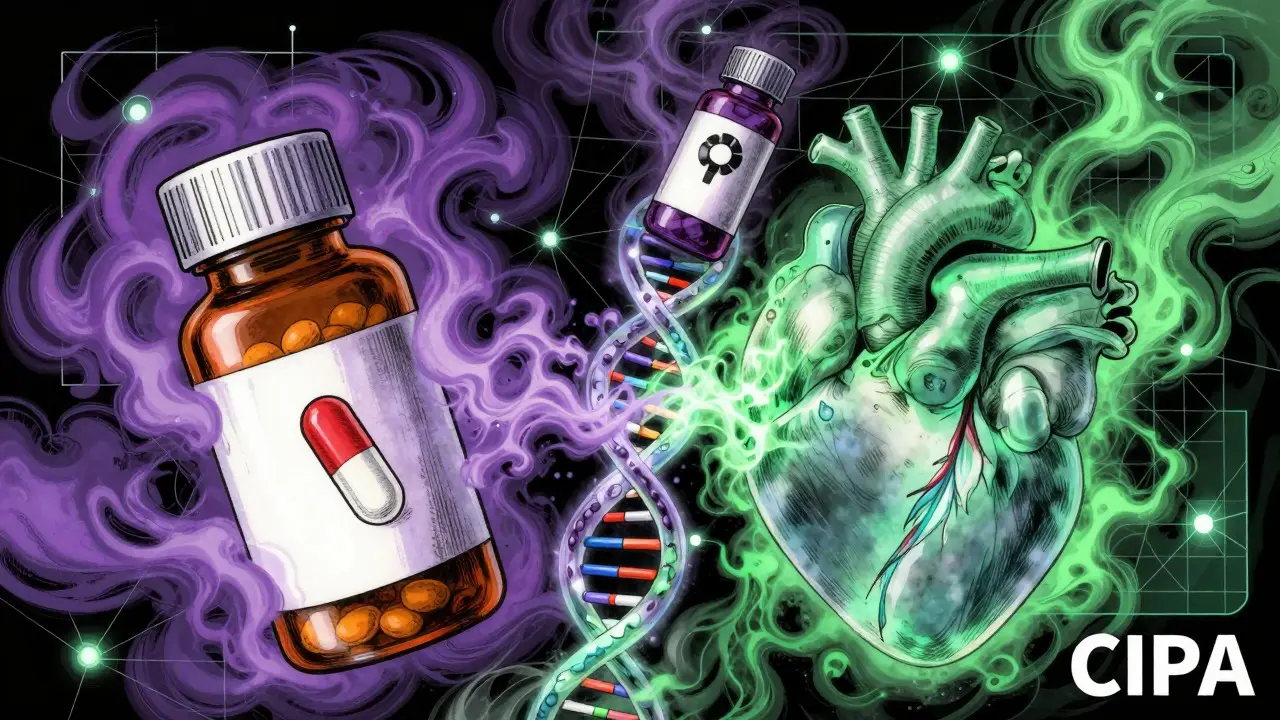
The pharmaceutical industry is changing how it tests drugs for heart safety. For decades, the standard was simply measuring the QT interval in lab animals and humans. But this approach missed some risks and flagged false positives. Enter the Comprehensive in vitro Proarrhythmia Assay (CiPA) initiative. Launched in 2013 by the FDA, European Medicines Agency, and Japanese regulators, CiPA uses advanced computer modeling and multi-channel screening to predict proarrhythmia risk more accurately. By 2025, new drug applications will be required to include this multi-channel data. This shift aims to catch dangerous drugs earlier in development, saving billions in failed late-stage trials and, more importantly, protecting patients from unsafe medications.
Artificial intelligence is also stepping in. Recent studies show AI algorithms can predict drug-induced TdP risk with up to 89% accuracy by analyzing subtle waveform features on an ECG that human eyes might miss. As these tools become integrated into electronic health records, doctors will get real-time alerts if a prescribed combination poses a threat, potentially reducing inappropriate prescribing by nearly 60%, as seen in recent hospital system evaluations.
What are the symptoms of QT prolongation?
QT prolongation itself usually has no symptoms. However, if it leads to Torsades de Pointes, you may experience dizziness, lightheadedness, fainting (syncope), palpitations, or seizures. In severe cases, it can lead to sudden cardiac arrest. If you feel suddenly dizzy or faint after starting a new medication, seek emergency care immediately.
Can I stop my medication if I’m worried about QT prolongation?
Never stop prescribed medication without consulting your doctor first. Abruptly stopping certain drugs, like beta-blockers or antidepressants, can cause withdrawal effects or rebound conditions that are equally dangerous. Instead, contact your healthcare provider to discuss your concerns. They may order an ECG or adjust your dosage safely.
Is azithromycin safe for everyone?
Azithromycin is generally safe for most people, but it does carry a moderate risk of QT prolongation. The risk is higher if you are already taking other QT-prolonging drugs, have existing heart disease, or have electrolyte imbalances. If you have a history of arrhythmias, ask your doctor about alternative antibiotics like doxycycline, which does not affect the QT interval.
Why are women at higher risk for drug-induced TdP?
Women naturally have slightly longer QT intervals than men. Additionally, estrogen may influence the function of cardiac ion channels, making them more susceptible to blockade by certain drugs. Post-menopausal women and those in the postpartum period are particularly vulnerable. This biological difference explains why women account for approximately 70% of reported TdP cases.
How often should I get an ECG if I’m on methadone?
Guidelines recommend a baseline ECG before starting methadone, another one within 3-7 days of initiation or dose escalation, and periodic monitoring thereafter (e.g., annually or with significant dose changes). If your dose exceeds 100 mg daily, more frequent monitoring is advised due to the increased risk of QT prolongation.