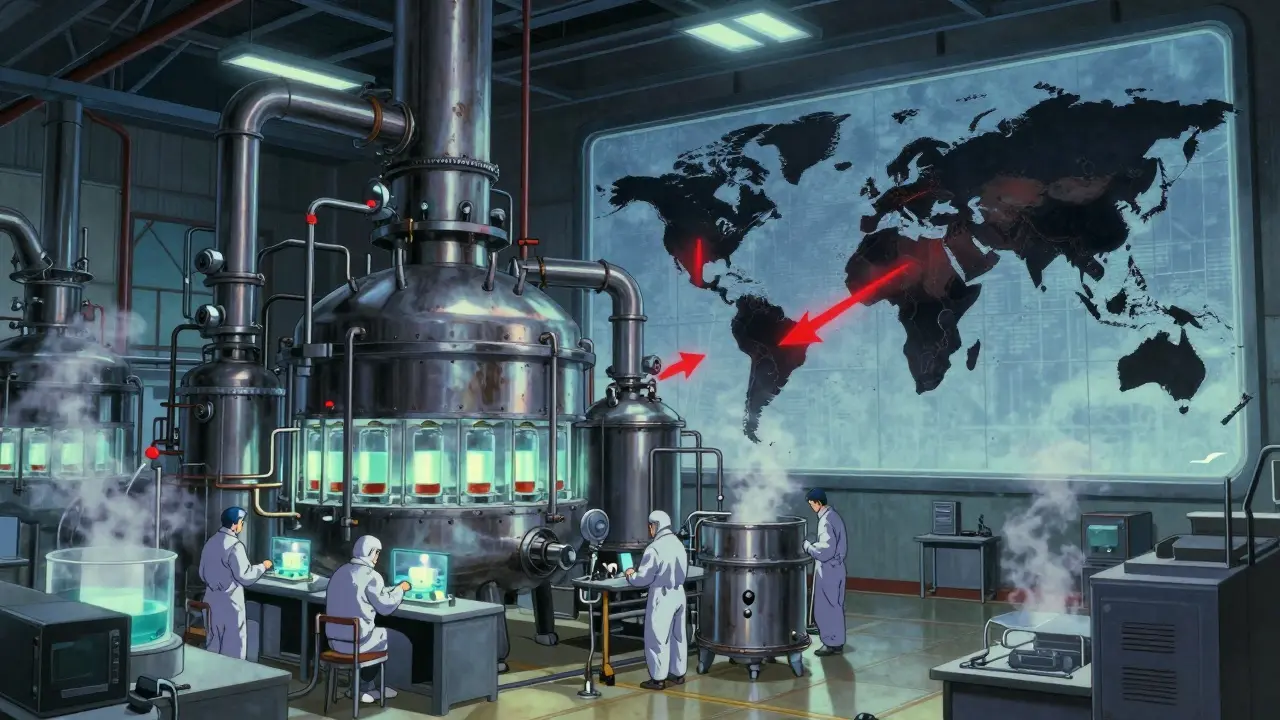
There’s no such thing as a "generic vaccine" in the way there’s a generic aspirin or generic antibiotics. That’s not a technicality-it’s the core reason billions of people in low-income countries still wait months, sometimes years, for vaccines that wealthier nations received within weeks.
Unlike pills made from simple chemical formulas, vaccines are living systems. They’re grown in cells, purified with precision, and often frozen at -70°C. You can’t just copy the recipe. You need the right labs, the right machines, the right raw materials, and years of training to make them. Even if a company in India or South Africa gets the technical blueprint from Pfizer or Moderna, they still can’t just start producing. The supply chain for just one ingredient-lipid nanoparticles used in mRNA vaccines-has only five or seven suppliers worldwide. If one of them runs out, or if the U.S. blocks exports during a crisis, global production halts.
Why "Generic" Doesn’t Work for Vaccines
For small-molecule drugs, regulators like the FDA can approve generics by proving they’re "bioequivalent"-meaning they work the same way in the body. That process takes months. For vaccines? It takes years. You can’t test bioequivalence because vaccines don’t just release a chemical into the bloodstream. They trigger complex immune responses. So every new vaccine, even if it’s nearly identical to one already approved, needs a full new application. That means new clinical trials, new safety data, new manufacturing validation. It’s not a shortcut. It’s a full rebuild.
This isn’t just bureaucracy. It’s cost. Building a single vaccine production line can cost more than $500 million. That’s not a startup expense. That’s a national investment. And the return? Thin margins. The Serum Institute of India makes the AstraZeneca COVID-19 vaccine for $3-$4 per dose. Western companies sold theirs for $15-$20. But after factoring in cold storage, quality control, and compliance with international standards, the profit is barely there. No private company will risk half a billion dollars on that unless they’re guaranteed buyers.
Who Makes the World’s Vaccines-and Who Gets Them
India produces 60% of the world’s vaccines by volume. It supplies 90% of the WHO’s measles vaccines and 70% of its diphtheria, pertussis, and tetanus shots. Yet, 99% of the vaccines used in Africa are imported. That’s not a mistake. It’s a system.
India’s factories churn out billions of doses every year. But most of them are shipped to wealthy countries that pay more. When India faced its own COVID-19 surge in April 2021, it stopped exports to protect its people. Global supply dropped by nearly half overnight. Meanwhile, African nations that had been counting on those doses saw their vaccination campaigns stall. The same thing happened in 2022 when U.S. export controls on key raw materials disrupted production in India and elsewhere.
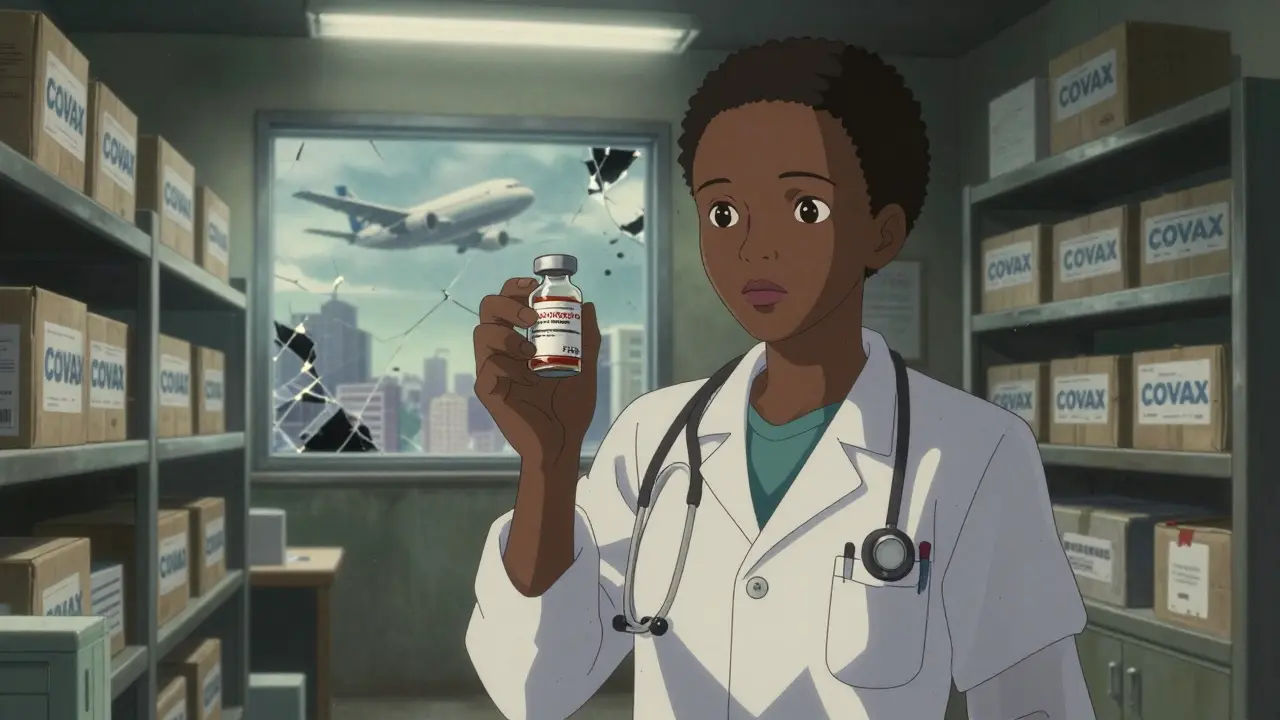
It’s not just about supply. It’s about access. In April 2021, 83% of all COVID-19 vaccine doses delivered to Africa through COVAX were administered in just 10 countries. Twenty-three African nations had vaccinated less than 2% of their populations. Health workers in the Democratic Republic of Congo received doses that would expire in two weeks-because they had no reliable cold chain to store or transport them.
The Manufacturing Gap: Years, Not Months
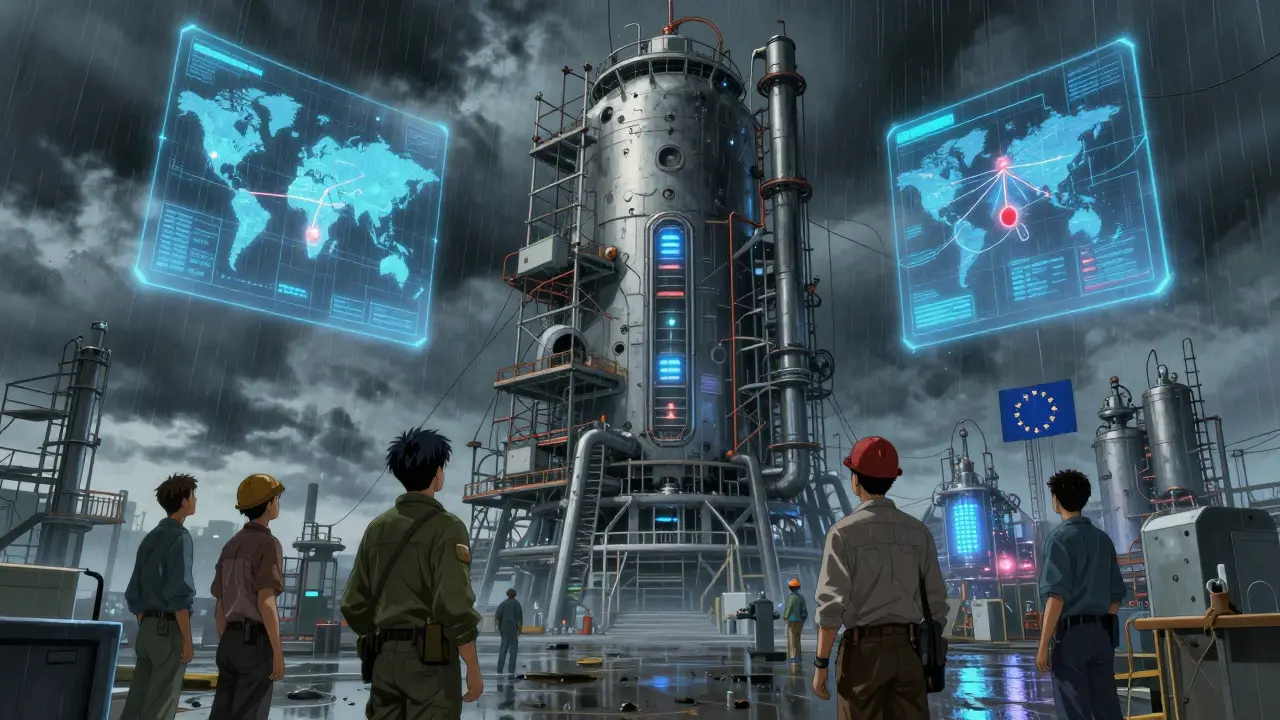
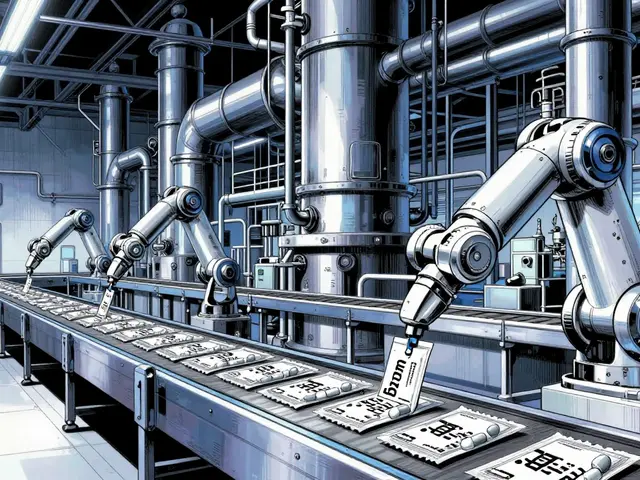
Setting up a vaccine factory isn’t like opening a drug packaging plant. It takes five to seven years. Even with technology transfer from a big company like BioNTech, it took South Africa’s WHO-supported hub 18 months just to get its first mRNA doses off the line. And that’s with direct support, training, and funding. Most countries don’t get that help.
Why so long? Because it’s not just about the machines. It’s about the people. You need engineers who understand bioreactors, technicians trained in sterile handling, quality control teams who can detect microscopic contamination. You need a local supplier base for cell culture media, filters, and specialized glass vials. Most countries don’t have any of that. They import 70% of their vaccine raw materials from China. If China slows down, so does the world.
The African Union estimates it will take $4 billion and 10 years to get Africa producing 60% of its own vaccines. That’s a massive investment. And it’s not happening fast enough. Right now, Africa manufactures less than 2% of the vaccines it uses. Meanwhile, the U.S. and EU are pushing to bring production home-not to help low-income countries, but to reduce their own supply risks. The FDA’s 2025 pilot program prioritizes faster approvals for generic drugs made in the U.S., not in India or Nigeria.
Who Pays? Who Decides?
Price isn’t the only barrier. It’s control. Gavi, the Vaccine Alliance, negotiates bulk deals with manufacturers to get lower prices for poor countries. But even then, the pneumococcal vaccine still costs over $10 per dose for the poorest nations. That’s more than many families earn in a month. And there’s no competition to drive prices down. Only five companies control 70% of the global market. They set the price. You take it or leave it.
Compare that to generic drugs. In the U.S., once a patent expires, dozens of companies jump in. Prices drop 80-90%. That’s what happens with pills. Not with vaccines. There’s no race to the bottom because the barriers to entry are too high. No new player can afford the factory. No investor will fund it without a guarantee of buyers. And those buyers? Mostly rich countries with deep pockets.
The Real Problem Isn’t Production-It’s Prioritization
India has the capacity. It has the expertise. It has the factories. But it doesn’t have the power to decide who gets what. When the U.S. imposed export bans on vaccine materials in 2021, India couldn’t override it. When wealthy nations bought up 86% of the first COVID-19 doses, no one forced them to share. The system isn’t broken. It’s working exactly as designed-for profit, not for equity.
There are glimmers of change. The mRNA hub in South Africa is producing vaccines. The Serum Institute is expanding. Some countries are starting to build local capacity. But these are exceptions, not systems. Without binding agreements to share technology, without funding for infrastructure in low-income countries, without rules that force manufacturers to prioritize global need over profit, we’ll keep seeing the same pattern: the rich get vaccinated first. The rest wait.
And when the next pandemic comes? We’ll be right back here-waiting for doses that were made, but never sent.


Betty Bomber
January 25, 2026 AT 03:06Wow. I knew vaccines were complicated, but I had no idea it was this much like building a spaceship instead of a toaster. The lipid nanoparticle supply chain thing? Mind blown. We treat vaccines like they’re just pills with needles, but it’s a whole global ecosystem that’s barely holding together.
And the fact that India makes 60% of the world’s vaccines but can’t even keep its own people safe when a crisis hits? That’s not just unfair-it’s terrifying.
Next time someone says ‘just produce more,’ I’m gonna show them this post.
Renia Pyles
January 26, 2026 AT 07:08Oh please. It’s not about equity-it’s about competence. If these countries can’t even run a proper cold chain, why should we hand them billion-dollar factories? They can’t even distribute flu shots without losing half of them. This isn’t racism, it’s reality.
George Rahn
January 27, 2026 AT 13:34Let us not mistake the architecture of global capital for the architecture of human need. The vaccine regime is not a failure of logistics-it is a triumph of neoliberal logic. The West does not hoard vaccines out of malice, but out of metaphysical necessity: the market must be sovereign, even when the people are dying.
And yet, in the temple of progress, the gods of profit demand sacrifice-and the altar is built with vials of mRNA and the bones of African children who never got their second dose.
Do we mourn the absence of equity? Or do we celebrate the elegance of a system that turns life into a commodity with a 90% markup?
Ashley Karanja
January 29, 2026 AT 05:06Okay, let’s unpack this holistically-because the structural inequity here isn’t just economic, it’s epistemic. We’re operating under a paradigm where ‘bioequivalence’ is the gold standard for pharmaceutical regulation, but that framework was designed for small-molecule drugs, not immunologically complex biologics like mRNA vaccines.
So when we say ‘just copy the formula,’ we’re ignoring that vaccines are not just chemical entities-they’re dynamic biological systems that require context-specific validation. The regulatory burden isn’t bureaucracy-it’s *necessary* complexity.
But here’s the kicker: the same regulatory bodies that demand 5-year clinical trials for African-made vaccines approved Moderna’s in 72 days during the pandemic. That’s not science. That’s geopolitical privilege wrapped in a lab coat.
And the cold chain? It’s not just about freezers-it’s about infrastructure, training, and institutional trust. You can’t just ship a fridge to the DRC and call it a day. You need local technicians who understand lyophilization, data loggers, and emergency protocols. That’s capacity-building, not charity.
And yet, the global health architecture still treats low-income nations as passive recipients, not co-architects. The mRNA hub in South Africa? That’s the exception that proves the rule. We need to fund it like a moonshot, not a grant project.
Meanwhile, the U.S. and EU are doubling down on ‘reshoring’-not to fix global inequity, but to insulate themselves from future supply shocks. That’s not security. That’s selfishness with a PowerPoint.
And Gavi? It’s a band-aid on a hemorrhage. $10 for a pneumococcal dose? That’s a luxury tax on poverty. Where’s the antitrust action? Where’s the compulsory licensing? Where’s the global patent pool with teeth?
We’re not facing a vaccine shortage. We’re facing a moral failure disguised as a supply chain problem.
Karen Droege
January 29, 2026 AT 19:34As someone who’s worked with vaccine logistics in rural Kenya, I can tell you: the real crisis isn’t the factory-it’s the fridge that breaks down and no one has the parts to fix it.
India makes the doses. But if your village has no electricity, no trained nurses, no way to track expiration dates? You might as well be on Mars.
And let’s be real-when the U.S. blocks lipid exports, it’s not ‘national security.’ It’s ‘my people first.’ And guess what? Africa pays the price in dead children.
We need to stop pretending this is about science. It’s about power. And if we don’t redistribute power, we’ll keep having the same pandemic, over and over.
PS: The Serum Institute isn’t just a factory-it’s a miracle. They deserve more than pity. They deserve partnership. And funding. And patents shared like open-source code.
PPS: If you think this is ‘anti-Western,’ you haven’t been to a clinic where a nurse holds a vial for 3 hours because the fridge died and the baby’s life is in the balance.
🫶
Shweta Deshpande
January 31, 2026 AT 04:54I’m from India and I’ve seen this up close. We make vaccines for the world, but when our own hospitals were overflowing in 2021, the world didn’t send us masks or oxygen-they sent memes and pity.
Our factories are some of the most efficient on the planet-but we’re still treated like the cheap labor behind the curtain, not the engineers who kept the world alive.
And yes, the lipid nanoparticles? We import them from Europe and the U.S. Because no one here makes them. Why? Because no one invests here. They just want the finished product.
It’s not that we can’t do it-we’ve done it. We just need the tools, not the applause.
Let’s stop talking about ‘helping’ us. Let’s start talking about equity. And investment. And respect.
❤️
Simran Kaur
February 1, 2026 AT 04:39My uncle works at a vaccine plant in Hyderabad. He told me they ship 10 million doses a week to Europe and North America. But when the government asked them to hold back 2 million for rural India, they were told ‘no’-because the contracts were already locked in.
It’s not that we don’t care. It’s that the system doesn’t let us.
I’m proud of our scientists. But I’m angry at the world that treats us like a warehouse, not a partner.
Next time you get your booster, remember: someone in India made it. And they didn’t get to keep it for their own kids.
💔
Neil Thorogood
February 1, 2026 AT 09:07So let me get this straight-because you can’t just copy a vaccine like a PDF, we’re supposed to just… wait? 😂
Meanwhile, the U.S. is building a new biolab in Ohio with $2 billion in taxpayer money to ‘secure supply chains’… while African kids are getting expired doses because their fridge broke.
Classic. Just… classic.
At this point, I’m just waiting for the ‘Vaccine Nationalism’ Netflix docuseries. I’ll binge it with popcorn and a side of guilt.
Jessica Knuteson
February 1, 2026 AT 11:29