Imagine walking into your local pharmacy to pick up a routine prescription, only to be told the medication is unavailable. No one knows when the next shipment is coming. You aren't alone. Despite the fact that generic drug shortages are often framed as a failure of supply, the real culprit is often a paradox of competition. We want drugs to be cheap, but when they become too cheap, the very system designed to save us money starts to break.
The High Price of Low Prices
On the surface, the math seems simple: more companies selling the same drug equals lower prices. This is the core engine of the Generic Pharmaceuticals Market. When a brand-name drug loses its patent-a phenomenon known as the "patent cliff"-competitors rush in. According to data from the US Department of Health and Human Services, about 9 out of 10 prescriptions in the States are now filled with generics. This shift has saved the US healthcare system over $313 billion in a single year.
But there is a tipping point. When too many players fight for the same slice of the pie, we see a "race to the bottom." Prices collapse to levels where it barely costs enough to run the machines. For some essential medicines, the profit margins become so thin that manufacturers simply stop making them. This creates a dangerous vacuum. We end up with a market where the drug is technically "available" on paper, but no one is actually incentivized to produce it in volumes that meet patient needs.
The Illusion of Choice
It is easy to look at the industry and see giants like Sandoz or Teva Pharmaceuticals and assume there is plenty of competition. However, the level of competition varies wildly depending on what the drug actually does. While common pills might have a dozen makers, complex drugs-like sterile injectables used in hospitals-are a different story.
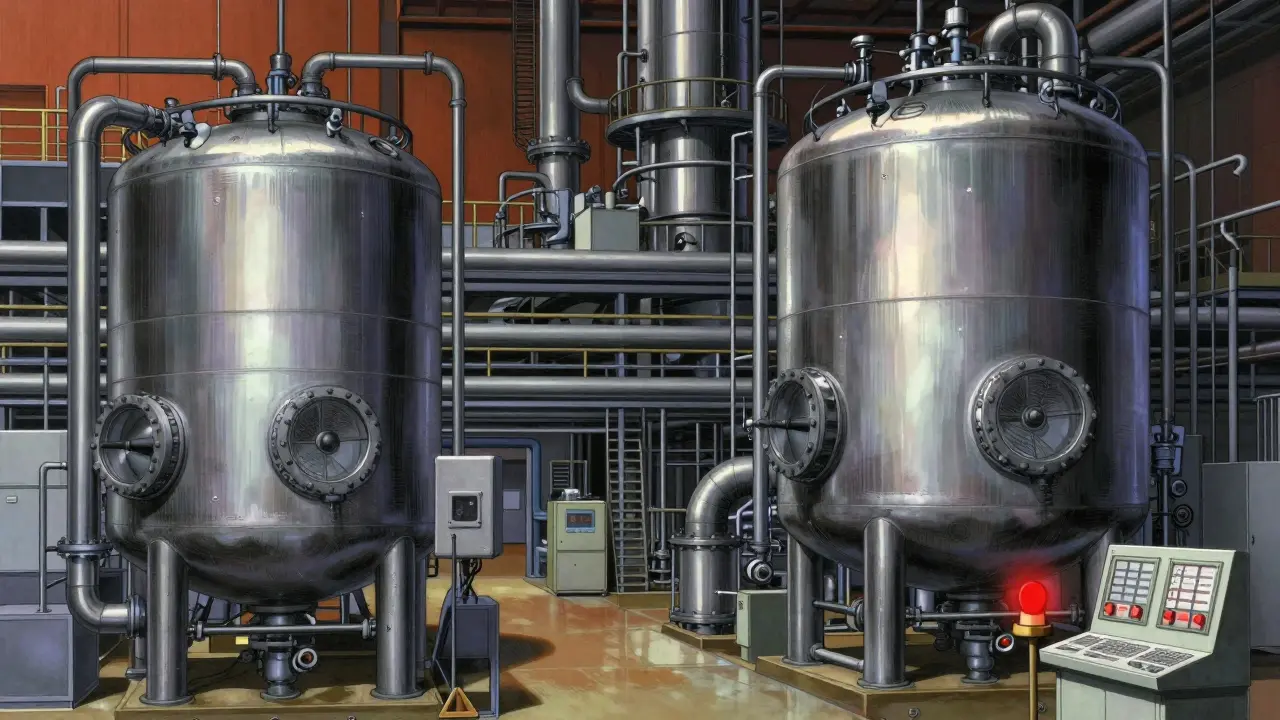
Producing these complex generics requires an Abbreviated New Drug Application (ANDA), but the paperwork is the easy part. The hard part is the hardware. Building a facility for sterile injectables can cost between $200 million and $500 million. Because the barrier to entry is so high, a handful of companies often control the majority of the supply. If one of those few factories has a quality control issue or a power failure, there is no "backup" manufacturer to pick up the slack. This is exactly what happened during the 2023 epinephrine auto-injector shortage; one facility shut down, and the rest of the market simply couldn't absorb the demand.
| Attribute | Simple Generics (e.g., Tablets) | Complex Generics (e.g., Injectables) |
|---|---|---|
| Entry Barrier | Low (lower capital investment) | High ($200M-$500M per facility) |
| Typical Manufacturer Count | High (Often 5-10+) | Low (Often 1-3) |
| Price Volatility | Rapid decline post-patent | More stable but higher floor |
| Shortage Risk | Low (unless margin-driven exit) | High (due to manufacturing fragility) |
Why Some Old Drugs are Getting More Expensive
You might expect that a drug which has been generic for 20 years would be pennies. In reality, some of the oldest generics are actually seeing price hikes. CMS data shows that prices for 50 commonly used older generics have increased by nearly 16% annually since 2018. Why? Because the "too many makers" problem eventually turns into a "too few makers" problem.
When a drug becomes a commodity and the price hits rock bottom, manufacturers exit the market to chase more profitable opportunities, like Biosimilars-the generic versions of complex biological drugs. When three companies leave the market and only one remains, that last company suddenly has a monopoly. They can raise prices, but they have no incentive to invest in better equipment or larger capacities. We are essentially paying more for a more fragile supply chain.
The Regulatory Tightrope
Regulators like the FDA are stuck in a difficult position. On one hand, they want to approve more generics to drive down costs. The Drug Competition Action Plan has successfully increased first-generic approvals by 40% since 2017. On the other hand, more players often mean more opportunities for mistakes.
In 2023, the FDA issued 147 warning letters for data integrity breaches. When a regulator shuts down a plant for safety reasons, they are doing their job to protect patients. But in a market with thin margins and few players, a single warning letter can trigger a national shortage. We are seeing a rise in post-approval compliance actions, which means that while there are more "approved" drugs, the number of "reliable" sources isn't necessarily growing at the same pace.
Finding the "Goldilocks" Zone of Supply
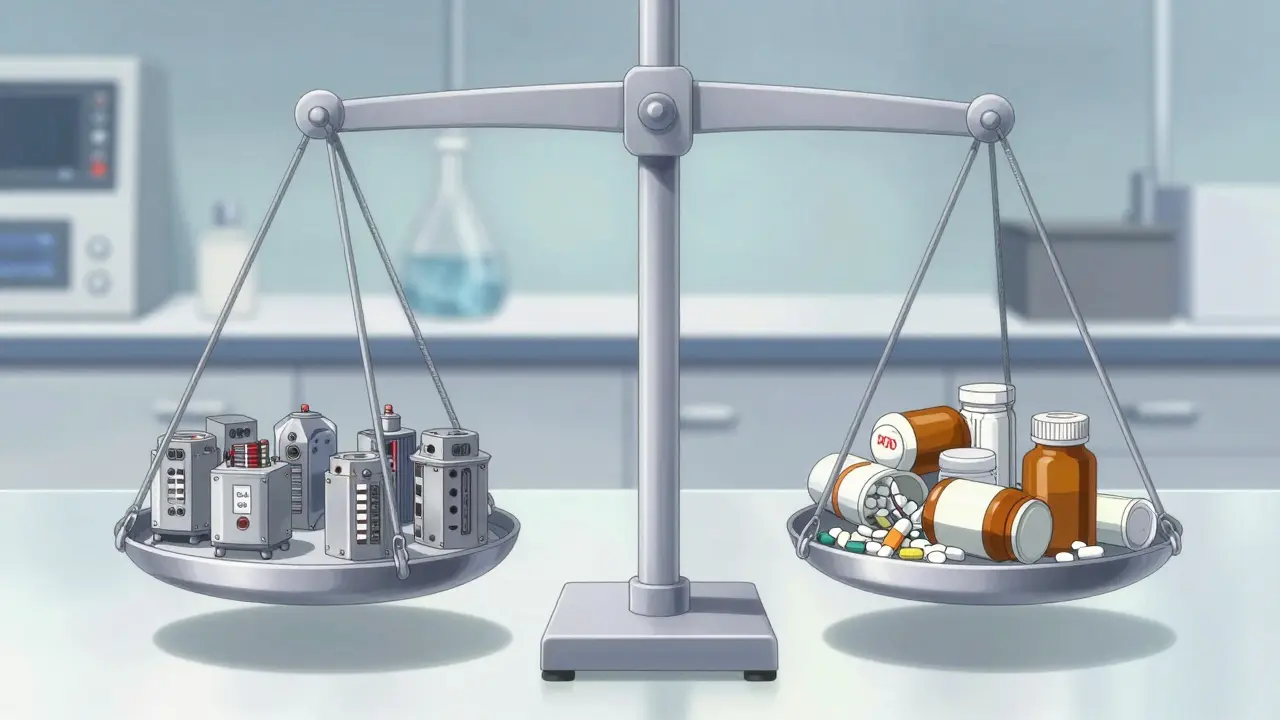
Is there a magic number of manufacturers that keeps prices low without risking shortages? The European Medicines Agency (EMA) thinks so. Their strategic review suggests that 4 to 6 manufacturers is the "sweet spot" for essential medicines. This provides enough competition to prevent monopolies and keep prices fair, but ensures each company makes enough profit to maintain a high-quality, resilient facility.
Currently, only about 65% of essential generics globally meet this benchmark. For the other 35%, we are either dealing with hyper-competition that threatens quality or dangerous concentration where one factory failure equals a healthcare crisis. As the Inflation Reduction Act begins to push down reference prices in 2026, we might see another wave of manufacturers exiting the market, potentially pushing more drugs out of the "Goldilocks" zone and into the danger zone.
Why do generic drugs go on shortage if there are so many companies?
It sounds contradictory, but "too much" competition can drive prices so low that companies stop producing the drug because it's no longer profitable. This leaves only one or two suppliers. If one of those few suppliers has a manufacturing error or facility shutdown, there is no backup capacity in the market to fill the gap.
What is the difference between a generic and a biosimilar?
A generic is a chemical copy of a small-molecule drug, which is relatively easy to replicate. A biosimilar is a version of a complex biological drug (made from living cells). Biosimilars are much harder and more expensive to produce, meaning they usually have fewer competitors and higher prices than traditional generics.
Do generic shortages affect all types of medicine?
Not equally. Simple pills are generally stable, though they suffer from margin-driven exits. The most frequent shortages occur in cardiovascular meds, antibiotics, and especially sterile injectables (like oncology drugs) because they require incredibly expensive specialized facilities that few companies own.
How does the ANDA process help lower costs?
The Abbreviated New Drug Application (ANDA) allows companies to skip the expensive clinical trials required for new drugs. They only have to prove "bioequivalence"-that the drug works the same way in the body as the original. This reduces investment costs by 80-90%, allowing the drug to be sold much cheaper.
Will new laws in 2026 make shortages worse?
There is a risk. Provisions in the Inflation Reduction Act may lower reference prices for certain drugs. While this is great for patients' wallets, it could squeeze manufacturer margins by 15-25%, potentially leading more companies to exit the market for those specific drugs, which could increase the risk of shortages.
Next Steps for Patients and Providers
If you are a healthcare provider, the best defense against these shortages is diversification. Don't rely on a single supplier for critical medications, even if they are the cheapest. For patients, it's worth having a conversation with your doctor about therapeutic alternatives before a shortage hits. Knowing if there is a similar, more stable drug in your class of medication can prevent a last-minute scramble when your usual script is unavailable.