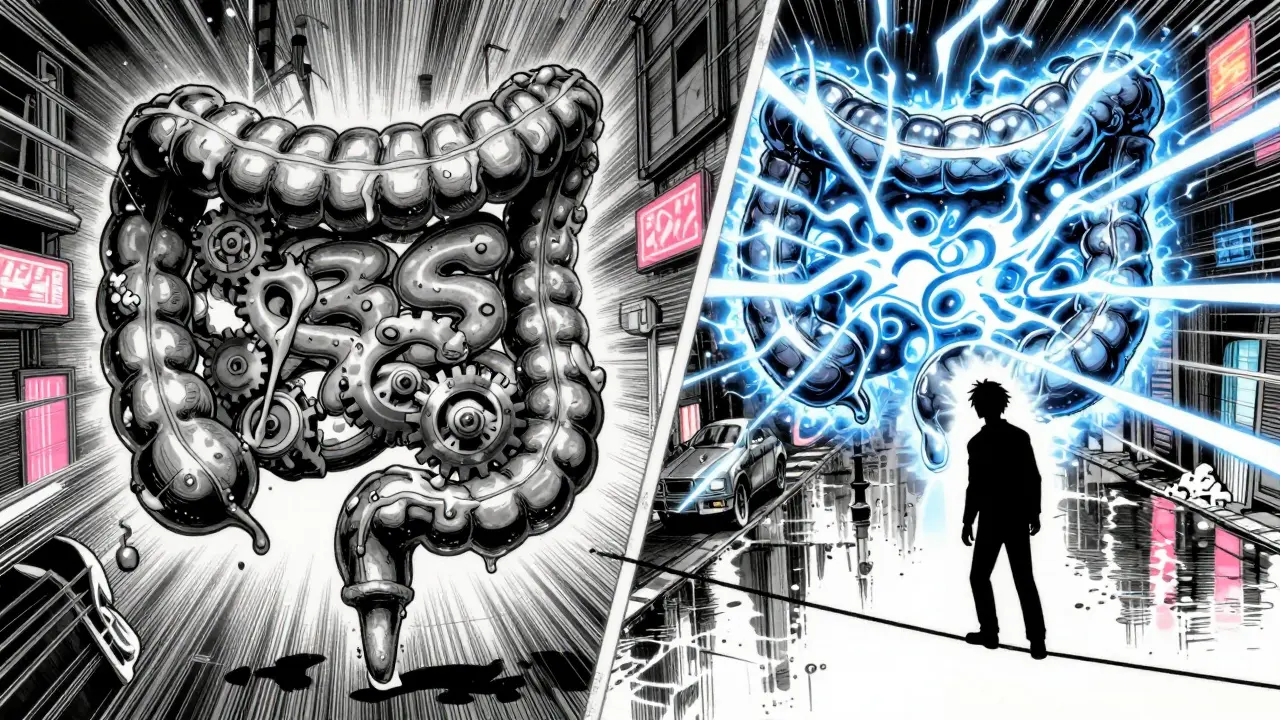
Imagine your digestive system playing both sides of the court. One day, you’re stuck with hard, difficult-to-pass stools. The next, you’re rushing to find a bathroom because everything is moving too fast. This isn’t just bad luck; it’s IBS-Mixed, or Irritable Bowel Syndrome with Mixed Bowel Habits. If you live with this condition, you know that standard advice for constipation or diarrhea alone often backfires. Taking a laxative might trigger a diarrhea flare-up, while an antidiarrheal could lock you up for days. It feels like walking a tightrope without a net.
You are not alone in this struggle. According to the American College of Gastroenterology (ACG), IBS affects roughly 10-15% of the global population, and about one-quarter of those cases are the mixed subtype. The challenge with IBS-M is that there is no single "off switch" for your symptoms. Instead, management requires a nuanced, multimodal approach that addresses pain, bloating, and unpredictable bowel movements simultaneously. The good news? With the right combination of dietary tweaks, stress management, and targeted medication, most people can significantly reduce their symptom days and regain control over their lives.
Understanding What IBS-Mixed Actually Is
To manage IBS-M, you first need to understand what’s happening inside your body. Unlike inflammatory bowel diseases (IBD) such as Crohn’s disease or ulcerative colitis, IBS does not cause visible damage or inflammation in your digestive tract. You won’t see ulcers or bleeding on a colonoscopy. Instead, IBS-M is a functional disorder. This means your gut looks normal but doesn’t work normally.
The core issues involve three main factors:
- Visceral Hypersensitivity: Your nerves in the gut are overly sensitive. Normal gas or muscle contractions feel like severe pain or urgency.
- Altered Gut Motility: The muscles in your intestines contract irregularly. Sometimes they squeeze too hard and too fast (diarrhea); other times they move too slowly (constipation).
- Gut Microbiome Dysbiosis: An imbalance in the bacteria living in your gut can produce excess gas and alter stool consistency.
Diagnosis follows the Rome IV criteria. To be classified as IBS-M, you must experience abdominal pain at least one day per week for the last three months. Crucially, at least 25% of your bowel movements must be hard or lumpy (Bristol Stool Scale types 1-2), and at least 25% must be loose or watery (types 6-7). This specific pattern distinguishes IBS-M from the constipation-predominant (IBS-C) or diarrhea-predominant (IBS-D) subtypes.
The Diagnostic Hurdle: Why It Takes So Long
If you’ve been bouncing between doctors for years, you’re part of a frustrating trend. A 2020 systematic review found that the average time to diagnosis for IBS-M is six to seven years from when symptoms first start. Patients typically see three to four different physicians before getting the correct label. Why so long?
Because IBS is a diagnosis of exclusion. Doctors must rule out more serious conditions first. Before confirming IBS-M, your provider should order basic tests including a complete blood count (CBC), C-reactive protein (CRP) to check for inflammation, and celiac serology to rule out gluten intolerance. In some cases, a colonoscopy may be recommended if you have "alarm features" like unexplained weight loss, rectal bleeding, or onset of symptoms after age 50.
Once these red flags are cleared, the focus shifts to symptom management. There is currently no cure for IBS-M, but effective treatment can dramatically improve your quality of life.
Dietary Strategies: More Than Just Avoiding Dairy
Food is often the biggest trigger for IBS-M sufferers. While many people instinctively cut out dairy or caffeine, a structured approach works far better than random elimination. The gold standard in clinical practice is the Low FODMAP Diet.
FODMAPs stand for Fermentable Oligosaccharides, Disaccharides, Monosaccharides, And Polyols. These are short-chain carbohydrates that your small intestine struggles to absorb. When they reach the large intestine, bacteria ferment them, producing gas and drawing water into the gut-which explains the bloating and alternating stool changes.
| Food Group | High-FODMAP Examples (Avoid) | Low-FODMAP Alternatives (Safe) |
|---|---|---|
| Grains | Wheat, rye, barley bread/pasta | Rice, quinoa, oats, corn tortillas |
| Vegetables | Onions, garlic, cauliflower, mushrooms | Carrots, spinach, zucchini, potatoes |
| Fruits | Apples, pears, mangoes, watermelon | Bananas, blueberries, oranges, kiwi |
| Dairy | Milk, soft cheeses, yogurt with milk solids | Lactose-free milk, cheddar, parmesan, almond milk |
| Sweeteners | Honey, high-fructose corn syrup, agave | Maple syrup, stevia, table sugar |
The low FODMAP diet is done in three phases. First, you eliminate all high-FODMAP foods for 2-6 weeks. If your symptoms improve, you enter the reintroduction phase, where you systematically add food groups back in to identify your personal triggers. Finally, you personalize your diet, keeping only the foods that cause problems off-limits. Studies show that while 70% of IBS patients see improvement with dietary changes, strict adherence forever isn’t necessary-and can lead to nutritional deficiencies. Work with a registered dietitian to ensure you’re eating enough fiber and nutrients during this process.
Medication Management: Balancing Opposing Symptoms
Treating IBS-M pharmacologically is tricky because medications designed for IBS-C or IBS-D often don’t fit well. For instance, linaclotide helps IBS-C by increasing fluid secretion, but this can worsen diarrhea in IBS-M patients. Similarly, eluxadoline slows gut movement for IBS-D, which might trigger constipation in IBS-M.
Instead, experts recommend a toolkit approach:
- Antispasmodics: Drugs like dicyclomine or hyoscyamine relax intestinal muscles. They are particularly useful for reducing abdominal pain and cramping. Taken 30 minutes before meals, they can prevent the post-meal urgency that many IBS-M patients experience.
- Soluble Fiber: Psyllium husk (such as Metamucil) is unique because it can help both constipation and diarrhea. It absorbs excess water when you have diarrhea and adds bulk to soften hard stools. Start with a low dose (e.g., half a teaspoon daily) and increase gradually to avoid initial bloating.
- Antidepressants: Don’t let the name scare you. Low-dose tricyclic antidepressants (TCAs) like amitriptyline or SSRIs like fluoxetine are used for their nerve-calming effects. They reduce visceral hypersensitivity and modulate gut-brain signaling. A Cochrane review found these provide significant benefit for abdominal pain in IBS patients, regardless of depression status.
- Rescue Medications: Keep loperamide (Imodium) on hand for sudden diarrhea flares and polyethylene glycol (Miralax) for constipation episodes. Use them sparingly and only as needed, rather than daily, to avoid dependency or worsening the opposite symptom.
Note: As of 2023, no medication is FDA-approved specifically for IBS-M. However, new therapies like ibodutant (a neurokinin-2 receptor antagonist) showed promise in phase 3 trials, offering hope for more targeted treatments in the near future.
The Gut-Brain Connection: Stress and Mental Health
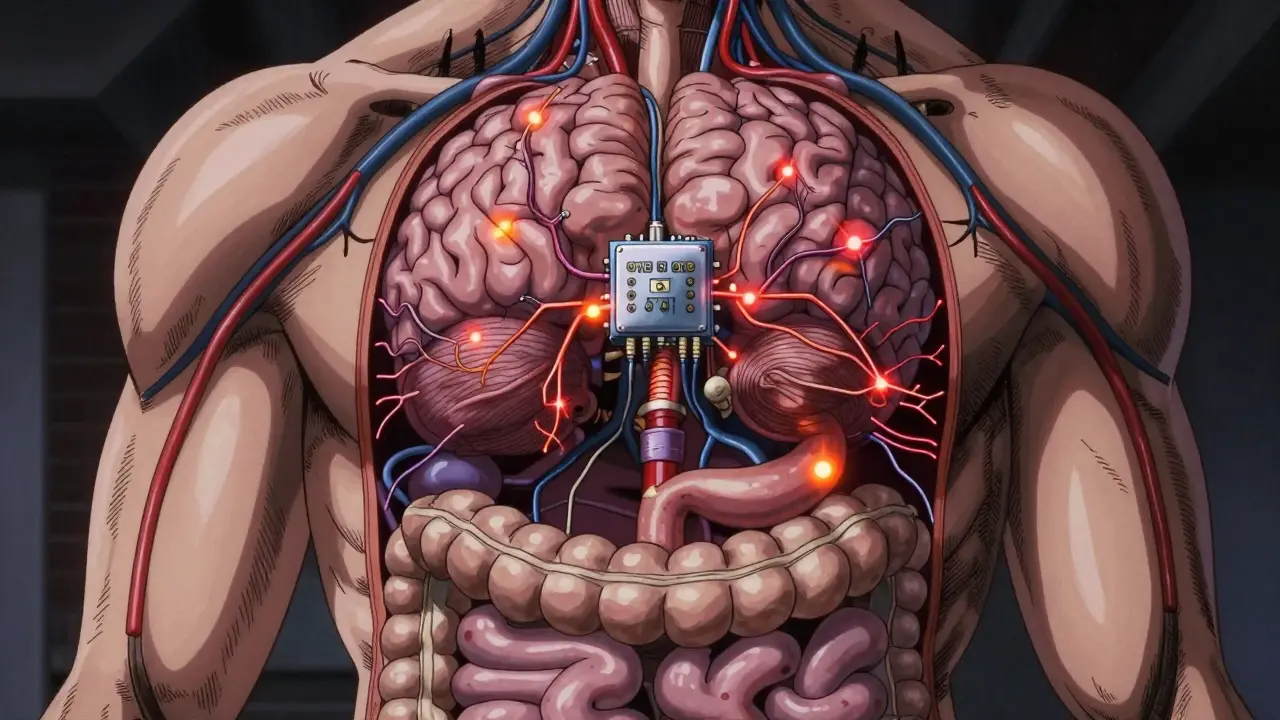
Your brain and your gut talk to each other constantly via the vagus nerve. This is why stress, anxiety, and even intense emotions can trigger an IBS flare-up. A 2019 study found that 68% of IBS-M patients report symptom worsening with stress. This isn’t "all in your head"-it’s a physiological response where stress hormones alter gut motility and sensitivity.
Managing stress isn’t just about feeling calm; it’s a medical intervention for IBS-M. Cognitive Behavioral Therapy (CBT) tailored for IBS has strong evidence behind it. The American Gastroenterological Association strongly recommends CBT for moderate to severe cases. Clinical trials show CBT can reduce symptom severity scores by 40-50%, compared to just 15-20% with education alone.
If therapy isn’t accessible, try these evidence-based techniques:
- Gut-Directed Hypnotherapy: Proven to reduce visceral pain and normalize bowel habits by retraining the brain’s response to gut signals.
- Mindfulness Meditation: Even 10 minutes a day can lower cortisol levels and reduce gut reactivity.
- Regular Exercise: Moderate aerobic activity (like brisk walking) stimulates healthy gut motility and reduces stress hormones.

Tracking Triggers: The Power of Data
Memory is unreliable when you’re in pain. You might swear that coffee caused your last flare-up, but it was actually the stress of a deadline or the onion in your lunch. To break the cycle, you need data.
Start a symptom diary for at least four weeks. Track:
- Bowel Movements: Use the Bristol Stool Scale (Type 1-2 = constipation, Type 6-7 = diarrhea). Note frequency and consistency.
- Pain Level: Rate abdominal pain on a scale of 0-10.
- Food and Drink: Log everything you eat, including snacks and beverages.
- Stress Levels: Note any major emotional events or stressors.
Apps like Cara Care or MySymptoms make this easier than paper journals. A 2022 study found that patients using structured tracking apps saw 35% greater symptom improvement than those using paper diaries, likely because digital tools provide visual patterns and reminders. Look for correlations. Do you get diarrhea every time you eat wheat? Does constipation follow high-stress days? Identifying these patterns allows you to make precise lifestyle adjustments rather than guessing.
When to See a Doctor Again
While IBS-M is manageable, certain signs warrant immediate medical attention. These "alarm symptoms" suggest something other than IBS may be going on:
- Unintentional weight loss
- Blood in your stool (bright red or black/tarry)
- Family history of colon cancer, Crohn’s disease, or ulcerative colitis
- Onset of symptoms after age 50
- Anemia or iron deficiency
- Waking up at night to pass stool (IBS rarely causes nighttime symptoms)
If you experience any of these, contact your gastroenterologist promptly. Early detection of other conditions is critical.
Is IBS-Mixed curable?
Currently, there is no cure for IBS-Mixed. It is a chronic functional disorder. However, it is highly manageable. Many patients achieve long-term remission or significant symptom reduction through a combination of dietary changes, stress management, and medication. The goal is improving quality of life, not eliminating the condition entirely.
Can probiotics help with IBS-M?
The evidence for probiotics in IBS is mixed. Some strains, like Bifidobacterium infantis, have shown modest benefits for bloating and overall symptoms in clinical trials. However, results vary greatly between individuals. It’s worth trying a high-quality, multi-strain probiotic for 4-8 weeks. If you don’t notice improvement, stop taking it. Avoid expensive brands with vague claims.
How long does the low FODMAP diet take to work?
Most people notice some improvement within 2-6 weeks of strictly following the elimination phase. However, the full process-including reintroduction to identify triggers-takes 8-12 weeks. Don’t stay on the strict elimination diet long-term, as it restricts too many nutrients and can negatively impact your gut microbiome diversity.
What is the best fiber for IBS-Mixed?
Soluble fiber is generally better tolerated than insoluble fiber for IBS-M. Psyllium husk (Metamucil) is the most studied and effective option. It absorbs water to soften hard stools and bulks up loose stools. Insoluble fiber (like wheat bran) can irritate the gut and worsen bloating or pain in many IBS patients.
Does stress really cause IBS symptoms?
Yes. Stress doesn’t "cause" IBS in the sense that it creates the disease, but it is a major trigger for flare-ups. The gut-brain axis means emotional stress directly impacts gut motility and sensitivity. Managing stress through therapy, meditation, or exercise is a core component of effective IBS-M treatment, not just optional self-care.