
Most people think if it’s natural, it’s safe. That’s why so many take turmeric for joint pain, St. John’s wort for low mood, or garlic pills to "cleanse" their blood-without ever telling their doctor. But here’s the truth: herbal remedies and supplements aren’t harmless snacks. They’re active substances that can interfere with your prescriptions, mess with lab tests, and even cause serious bleeding, heart rhythm problems, or organ damage. And if your doctor doesn’t know you’re taking them, they can’t protect you.
Why Disclosure Rates Are Shockingly Low
A 2018 study found that only 13% of people told their primary care doctor about their supplements. Even among patients with multiple chronic conditions-people on five or more medications-the rate barely cracked 50%. Why? Because most patients assume their doctor won’t care. Or worse, they think their doctor will judge them. The reality? Doctors rarely ask. A 2021 survey showed only 27% of physicians felt trained enough to talk about supplements. So patients stay silent. They don’t mention the ashwagandha they take for stress. They skip the fish oil they started after seeing a YouTube ad. They don’t bring up the green tea extract that’s helping their cholesterol-until they start bleeding during a routine procedure. One Reddit user shared how they took garlic pills for years and never mentioned them. When they went in for minor surgery, they bled uncontrollably. Their surgeon had to stop the procedure. Turns out, garlic thins the blood. Same as warfarin. And when you take both? The risk of internal bleeding jumps dramatically.What You’re Really Taking (And What It Can Do)
Let’s be specific. These aren’t just "vitamins." Here are common supplements and what they actually do in your body:- St. John’s wort: Used for mild depression. But it speeds up how your liver breaks down drugs. That means birth control pills, antidepressants, blood thinners, and even some cancer meds stop working. One study showed it cut the effectiveness of oral contraceptives by up to 60%.
- Turmeric (curcumin): Anti-inflammatory. Great, right? But it also acts like a blood thinner. If you’re on aspirin, clopidogrel, or apixaban, combining them with turmeric can lead to dangerous bleeding-especially before surgery.
- Ginkgo biloba: Marketed for memory. But it inhibits platelet aggregation. Used with NSAIDs like ibuprofen? Risk of brain or GI bleeding goes up.
- Green tea extract: Popular for weight loss. High doses can cause liver toxicity. The FDA has issued warnings about over 50 cases of acute liver injury linked to concentrated green tea supplements.
- Calcium and magnesium: Often taken for bones or sleep. But they can bind to antibiotics like ciprofloxacin or tetracycline, making them useless. You take the pill, the mineral binds to it in your gut-and you get zero benefit.
What Your Doctor Needs to Know
Your provider doesn’t need to approve your supplements. They need to know what you’re taking so they can spot dangerous overlaps. That’s it. They need to know:- The exact name of the product (not just "vitamin D"-is it D3? What dose?)
- How much you take and how often
- Why you started taking it
- When you take it (with food? On an empty stomach?)
- Whether you’ve noticed side effects (nausea, dizziness, unusual bruising)
How to Bring It Up-Without Feeling Awkward
You don’t need to wait for your doctor to ask. Most won’t. So lead with it. Try this script:"I’ve been taking [name of supplement] for [reason]. I’m not sure if it’s safe with my other meds, so I wanted to check with you."That’s it. No apology. No justification. Just facts. If your doctor brushes you off, say: "I’ve read that some supplements can interact with prescription drugs. I’d feel better knowing you’ve seen what I’m taking." Studies show that when providers ask directly during visits, disclosure rates jump from 33% to 78%. It’s not about trust-it’s about structure. If you’re asked, you’re more likely to answer.
What Happens When You Do Disclose?
A 2022 ConsumerLab survey found that 78% of people who told their provider got useful advice. Some were told to stop. Others were told to keep taking it but adjust the dose or timing. One woman taking blood pressure meds was advised to switch from licorice root to ginger-because licorice raised her sodium levels and countered her medication. She didn’t know that. Her doctor did. And here’s the bonus: disclosure builds trust. When you’re honest, your provider sees you as a partner. Not someone hiding things. That matters when you need referrals, tests, or adjustments to your treatment plan.
What to Do Right Now
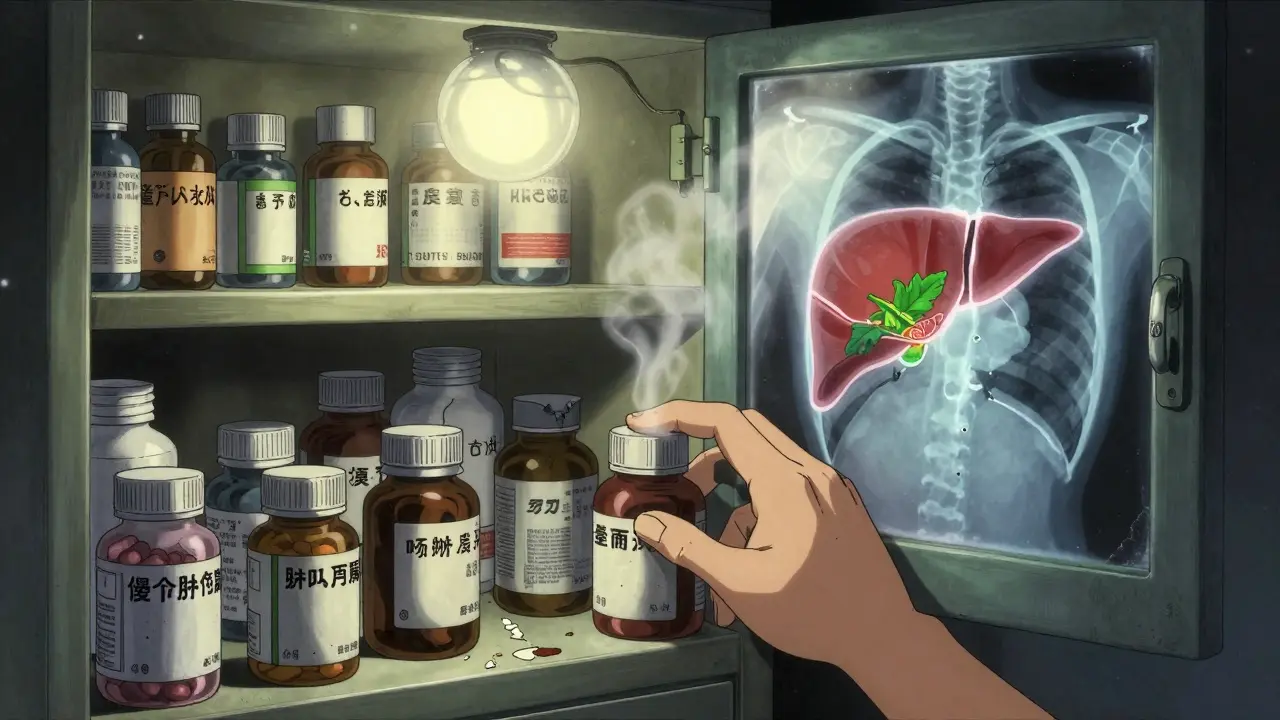
You don’t need to wait for your next appointment. Here’s what to do today:- Look through your medicine cabinet. Pull out every supplement, herb, tea, or powder you take regularly-even if you only use it once a week.
- Write down the exact product name, dose, and frequency.
- Bring the bottles to your next visit. Or take clear photos of the Supplement Facts panel.
- Ask: "Could any of these interact with my current medications?"
- If you’re on blood thinners, diabetes meds, antidepressants, or heart drugs-ask specifically about St. John’s wort, garlic, ginkgo, or green tea extract.
The Bigger Picture
The supplement industry made $55 billion in the U.S. last year. There are over 85,000 products on the market. Most are sold without any proof they work-or any warning about risks. The FDA can’t pull them off shelves unless someone dies or gets seriously hurt. And even then, only about 1% of adverse events are ever reported. That’s why the burden falls on you. You’re the only one who knows what’s in your body. Your doctor can’t guess. They can’t read your mind. They can’t see your pantry. The truth is simple: if you’re taking something that affects your biology, your doctor has a right-and a duty-to know. Not to judge you. Not to shame you. But to keep you safe. This isn’t about being perfect. It’s about being smart. One conversation. One bottle. One moment of honesty. It could prevent a hospital visit-or worse.Do I need to tell my doctor about vitamins and minerals?
Yes. Even common vitamins like vitamin K, vitamin E, and calcium can interfere with medications. Vitamin K reduces the effect of blood thinners like warfarin. High-dose vitamin E can act as a blood thinner itself. Calcium can block absorption of thyroid meds and antibiotics. Your doctor needs the full picture-even if you think it’s "just a vitamin."
What if my doctor doesn’t know much about supplements?
That’s common. Many doctors weren’t trained on supplements. But that doesn’t mean you shouldn’t tell them. Bring the label. Say: "I found this study about interactions-can you help me understand if this is safe?" Most providers will look it up or refer you to a pharmacist. Pharmacists are often better trained on herb-drug interactions than physicians.
Can supplements cause liver damage?
Yes. Green tea extract, kava, black cohosh, and some weight-loss supplements have been linked to acute liver injury. The FDA has issued warnings on over 50 cases tied to supplements. Symptoms include yellow skin, dark urine, nausea, and fatigue. If you’re taking any herbal product and feel unwell, stop it immediately and get your liver enzymes checked.
Should I stop my supplements before surgery?
Almost always, yes. Blood thinners like garlic, ginkgo, ginger, and fish oil can increase bleeding risk. Others like St. John’s wort can interfere with anesthesia. Most surgeons ask you to stop all supplements 1-2 weeks before surgery. Don’t assume they know you’re taking them-tell them, even if they don’t ask.
Is it safe to take supplements with my prescription drugs?
It depends. Some combinations are harmless. Others are dangerous. There’s no universal rule. The only way to know is to tell your doctor or pharmacist exactly what you’re taking. Never assume safety because something is "natural." Many deadly poisons are natural-like foxglove (digitalis) or ricin. Supplements aren’t regulated like drugs. You’re the only one who can protect yourself by being transparent.




Mike Rengifo
December 20, 2025 AT 17:35Just took a look at my supplement shelf. Turns out I’ve been taking turmeric with my blood thinner. Oops. Guess I’m calling my doctor tomorrow. Never thought about how ‘natural’ could mean ‘dangerous.’
Isabel Rábago
December 20, 2025 AT 22:06People think if it’s in a bottle with a pretty label, it’s safe. Newsflash: your grandma’s herbal tea could be killing you slowly. I’ve seen patients bleed out because they didn’t tell their doctor they were taking ‘just a little’ garlic. It’s not about judgment-it’s about survival.
Matt Davies
December 22, 2025 AT 06:54Love this post! 🌿💡 It’s like walking into a minefield of ‘natural’ goodies that could blow up your meds. I used to chug green tea extract like it was juice-until my liver enzymes went full alarm bells. Now I bring my bottles to every appointment. Doctors don’t know what they don’t know… but YOU do. Own it!
Dev Sawner
December 22, 2025 AT 18:41It is an empirical observation that the majority of laypersons exhibit a profound lack of pharmacological literacy. The absence of regulatory oversight in the dietary supplement industry constitutes a systemic failure of public health governance. One must not conflate botanical origin with pharmacological innocuousness. The data are unequivocal.
Moses Odumbe
December 23, 2025 AT 08:31Bro. I took ashwagandha for ‘stress’ and ended up in ER with a heart palpitation. 🤯 My doc said it was like mixing caffeine and cocaine. I didn’t even know it could do that. Now I show my labels like a badge of honor. 👊💊 #SupplementAwareness
bhushan telavane
December 23, 2025 AT 10:28In India, we’ve used turmeric and neem for centuries. But I see your point-modern extracts are concentrated. My uncle took ginkgo with aspirin after watching a YouTube video. Ended up in ICU. We need to respect tradition but adapt to science.
Mahammad Muradov
December 24, 2025 AT 08:05The 13% disclosure rate is statistically indefensible. Given the documented interactions between St. John’s wort and SSRIs, the failure to disclose constitutes gross negligence. One cannot ethically assume autonomy without accountability. The burden of proof lies with the consumer, not the physician.
mark shortus
December 25, 2025 AT 13:24MY DOCTOR NEVER ASKED. I DIDN’T TELL. I ALMOST DIED. 🩸 I had surgery. They didn’t know I took garlic. Blood everywhere. They stopped the procedure. I cried in the recovery room. I thought I was being ‘healthy.’ Turns out I was being stupid. Don’t be me.
Emily P
December 26, 2025 AT 13:11So… if I take magnesium for sleep and am on antibiotics, do I need to space them out? Or just stop one? I don’t want to mess up my meds but I really like my magnesium.
Vicki Belcher
December 27, 2025 AT 07:58This is so important ❤️ I used to think ‘natural’ = ‘safe.’ Then my mom had a stroke after mixing fish oil with warfarin. She’s okay now, but we’re all more careful. I bring my supplements to every visit-even my vitamin D. My doctor says it’s the best part of my appointment. 💬✨
Aboobakar Muhammedali
December 28, 2025 AT 12:08i just want to say thank you for writing this. i never thought to tell my doc about my ginger tea. i thought it was just for digestion. now i know. i feel bad i didn’t know sooner. but i’m gonna fix it. next appt i’m bringing the bottle. no excuses.
James Stearns
December 29, 2025 AT 20:15It is deeply concerning that the public perceives unregulated substances as benign. The FDA’s inability to preemptively vet these compounds reflects a catastrophic dereliction of duty by regulatory authorities. One cannot entrust one’s physiological integrity to the whims of a marketplace driven by marketing, not science.
Guillaume VanderEst
December 30, 2025 AT 21:06My cousin took kava for anxiety. Ended up in the hospital with liver failure. No one told her it could do that. She’s fine now, but she’s not taking anything without checking with her pharmacist first. Honestly? Pharmacists are the real MVPs here.
Dominic Suyo
December 31, 2025 AT 00:15Let’s be real-this is a $55B industry built on placebo and fear. People are scared of aging, stress, cancer. So they buy magic pills. Meanwhile, the only thing getting ‘treated’ is the supplement company’s bank account. And the doc? They’re just trying to keep you alive while you play Russian roulette with your liver.