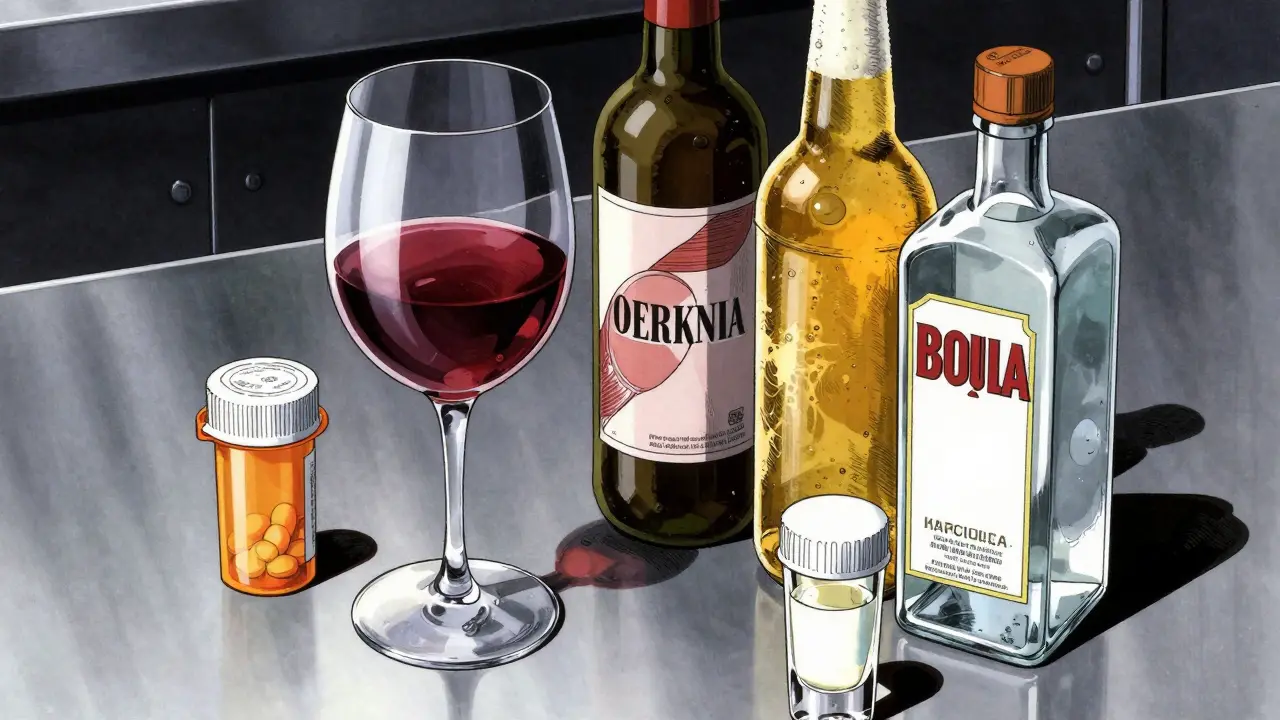
Alcohol Dose & Medication Risk Calculator
Convert your drinks into "Standard Units" to better assess how your liver processes ethanol alongside your medications.
Many of us have looked at a prescription bottle, seen the warning about alcohol, and wondered if it actually applies to everything. Does a glass of red wine really carry the same risk as a shot of tequila? Or is a light beer practically harmless? The truth is that while the beverages look and taste different, your liver sees them all as the same thing: ethanol. When you mix alcohol medication interactions with your prescriptions, you aren't just risking a hangover-you're potentially changing how your body processes medicine, which can lead to anything from a sudden drop in blood pressure to permanent liver damage.
The Science of the "Standard Drink"
To understand the risk, you first have to stop thinking about the type of drink and start thinking about the dose. In the medical world, experts use the concept of a "standard drink." This is a way to level the playing field across different types of alcohol. A standard drink contains roughly 14 grams of pure alcohol. Regardless of whether that alcohol comes from a Beer a fermented malt beverage typically containing 5% alcohol by volume, a glass of wine, or a distilled spirit, the pharmacological effect on your medication is nearly identical.
| Beverage Type | Amount for One Standard Drink | Typical Alcohol Content (ABV) |
|---|---|---|
| Beer | 12 ounces | ~5% |
| Wine | 5 ounces | ~12% |
| Distilled Spirits | 1.5 ounces | ~40% |
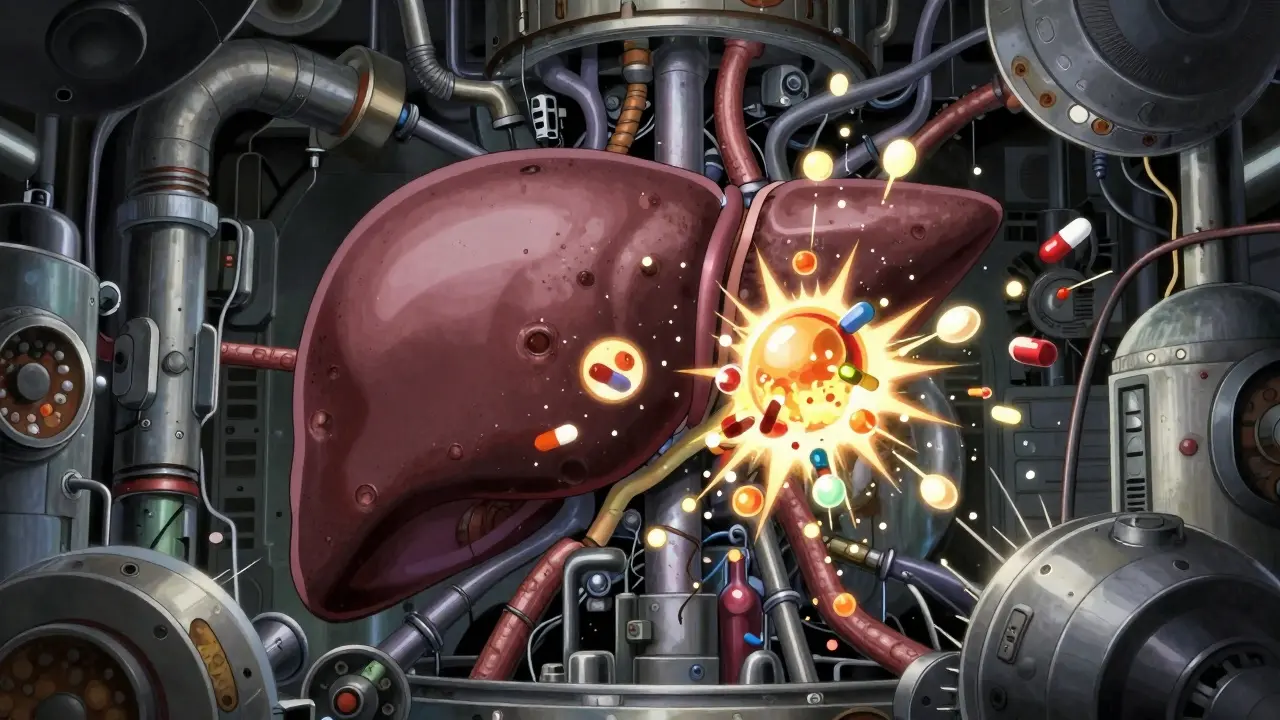
If you drink a 12-ounce beer or a 1.5-ounce shot of vodka, your blood alcohol concentration (BAC) will reach a similar peak. From a chemical standpoint, your liver doesn't distinguish between the two. It uses the same enzyme systems-specifically alcohol dehydrogenase (ADH) and aldehyde dehydrogenase (ALDH)-to break them down. Since many medications are processed by the same liver pathways (the cytochrome P450 system), alcohol and medicine essentially fight for the liver's attention. If the liver is busy processing a drink, your medication might stay in your system too long, leading to an overdose effect even if you took the correct dose.
Why Spirits Pose a Higher Immediate Risk
If the ethanol dose is the same, why do emergency rooms see so many more cases involving spirits than beer? It comes down to speed. You generally don't chug a 12-ounce beer in five seconds, but you can certainly knock back a shot of whiskey in one. This rapid delivery of ethanol causes a much sharper spike in your BAC.
Research shows that this rapid absorption can increase the severity of interactions by up to 40%, especially with Benzodiazepines a class of sedative-hypnotics used to treat anxiety and insomnia. When you combine a fast-acting spirit with a sedative, the central nervous system (CNS) can slow down to a dangerous level. This is why 68% of alcohol-medication overdose cases in emergency departments involve distilled spirits. The "one shot" mentality often masks the fact that you've just delivered a concentrated dose of a drug-interactor directly into your bloodstream.
The Hidden Dangers of Beer and Wine
On the flip side, beer and wine often create a false sense of security. Because a beer has a lower alcohol percentage, people tend to drink more of them, leading to a cumulative dose that can be far more dangerous than a single shot. For instance, those taking NSAIDs (like ibuprofen) often report unexpected stomach bleeding after "just a few beers," because the combined irritation of alcohol and the medication strips the stomach lining more aggressively over a longer period.
Wine brings its own set of specific issues. While most of the risk is still the ethanol, certain compounds like polyphenols and tannins can interfere with specific drugs. A study from the Mayo Clinic noted that red wine could increase the bleeding risk for people taking Warfarin an anticoagulant medication used to prevent blood clots by about 15% compared to other alcohols. Furthermore, wine is the primary culprit in "disulfiram-like reactions" when paired with antibiotics like metronidazole. This causes an intense physical reaction-flushing, racing heart, and vomiting-that can make you feel like you're having a medical emergency.
The "Silent" Danger: Acetaminophen and Liver Failure
One of the most critical interactions happens with Acetaminophen a common pain reliever and fever reducer, known as Paracetamol outside the US. Whether you're drinking a craft IPA, a crisp Chardonnay, or a gin and tonic, the result is the same: severe liver stress. Alcohol triggers the production of a toxic byproduct when processing acetaminophen. Even just two standard drinks can increase the risk of liver damage by 300%. Because this doesn't always cause an immediate "feeling" of sickness, many people continue the habit until the liver damage becomes irreversible.
Practical Safety Steps for Patients
If you are taking prescription medication, the safest bet is always total abstinence. However, since that isn't always the reality, you can reduce your risk by following a few rules of thumb. First, always ask your pharmacist specifically about the type of alcohol you plan to drink. Most labels just say "avoid alcohol," but a pharmacist can tell you if your specific drug has a narrow therapeutic index, meaning even a small amount of ethanol could be catastrophic.
- Track your units: Use the standard drink chart above rather than counting "glasses" or "bottles."
- Avoid carbonation: Bubbles in champagne or mixed drinks can increase the rate at which your stomach empties, potentially accelerating how fast a medication interaction hits your system.
- Check for "non-alcoholic" labels: Be careful with non-alcoholic beers. Some still contain up to 0.5% ABV, which can still trigger reactions in people taking highly sensitive medications.
- Timing matters: Don't assume that taking your pill in the morning makes it safe to drink at night. Many drugs have a "half-life" that keeps them active in your liver for 24 hours or more.
Is red wine safer than white wine or spirits with medication?
No. While red wine contains polyphenols, the primary driver of medication interactions is ethanol. A 5-ounce glass of red wine has the same amount of ethanol as a glass of white wine, and both will affect your liver's ability to process medication in the same way. In some cases, like with blood thinners, red wine may actually increase bleeding risks more than other types.
Why are spirits considered more dangerous for overdoses?
The danger isn't the liquid itself, but the speed of consumption. Because spirits are concentrated, you can reach a high blood alcohol concentration (BAC) much faster than you would drinking beer. This rapid spike can potentiate sedative medications (like benzodiazepines), leading to severe respiratory depression or loss of consciousness.
Can I drink alcohol if I'm taking antibiotics?
It depends on the antibiotic, but generally, it is discouraged. Some antibiotics, such as metronidazole, cause a "disulfiram-like reaction" where the body cannot break down alcohol, leading to nausea, vomiting, and palpitations. Additionally, alcohol can weaken your immune system, making the antibiotic less effective at fighting the infection.
Does non-alcoholic beer still pose a risk?
Yes, potentially. Many non-alcoholic beers still contain trace amounts of alcohol (around 0.5% ABV). For most people, this is negligible, but for those taking medications with a very narrow therapeutic index or those recovering from severe alcohol dependency, even this small amount can trigger a reaction.
What is a "standard drink" and why does it matter?
A standard drink is a measure containing about 14 grams of pure ethanol (e.g., 12 oz of beer, 5 oz of wine, or 1.5 oz of spirits). It matters because medication risks are based on the total amount of ethanol in your blood, not the volume of the liquid you drink. Understanding this helps you accurately assess how much alcohol is actually interacting with your medication.
Next Steps for Staying Safe
If you've accidentally mixed alcohol with a medication and feel dizzy, excessively sleepy, or have a racing heart, contact a healthcare provider or poison control immediately. For those starting a new medication, the best approach is to keep a current list of all supplements and prescriptions and share it with your pharmacist. If you find it difficult to avoid alcohol while on high-risk medication, speak with your doctor about alternative treatments that may have fewer alcohol interactions.


Srikanth Makineni
April 11, 2026 AT 00:27standard drink concept is key here most people just guess
Del Bourne
April 12, 2026 AT 22:10The point about acetaminophen is absolutely critical. Many people don't realize that over-the-counter meds can be just as dangerous as prescriptions when mixed with alcohol. It is a silent risk that often goes unnoticed until it is far too late, so please be mindful of your liver health!
Grace Lottering
April 13, 2026 AT 20:24Big Pharma just wants us scared. They push these warnings so we stay dependent on their 'safe' alternatives while they hide the real data.
GOPESH KUMAR
April 15, 2026 AT 00:31It's almost comical how people believe a 'standard drink' actually exists in a social setting. The biological reality is that we are all just chemical puppets reacting to ethanol, yet the masses cling to these neat little charts to feel a sense of control over their own inevitable decay. The liver doesn't care about your chart; it only cares about the toxicity of the moment. Most people just want a simplified version of a complex biochemical war happening inside them. It's the typical human desire to reduce a systemic failure into a manageable set of bullet points. True wisdom is knowing that the interaction isn't just chemical, but a symptom of the general disregard for one's own vessel. We treat our bodies like trash cans and then act surprised when the lid doesn't close. The irony is palpable. One might argue that the danger isn't the drink, but the ignorance. But then again, ignorance is the only thing that makes the drink tolerable. Just a thought for those who think a 5-ounce pour is a safe bet. The math is simple, but the human ego is complex. Stop pretending you've mastered the science of a hangover.
Michael Flückiger
April 16, 2026 AT 18:32Wow!!! This is such a wake-up call!!! I never knew about the carbonation thing... that is wild!!! Stay safe everybody!!!
Windy Phillips
April 16, 2026 AT 21:52Typical... people think they can just 'track' their way out of a bad habit... It's honestly exhausting how many people prioritize a glass of wine over their own basic survival... !!!
Nathan Kreider
April 18, 2026 AT 11:46I really feel for people who struggle with this. It's hard to give up things we enjoy, but your health is worth it in the end.
shelley wales
April 18, 2026 AT 23:49It's okay to be overwhelmed by all the rules, just take it one step at a time and talk to your doctor if you're worried.
Dhriti Chhabra
April 19, 2026 AT 21:05I believe that maintaining a balance between one's lifestyle and medical requirements is a noble pursuit of health.