Imagine a world where every prescription you fill costs what it did in the 1970s. Now imagine a world with no new life-saving medicines because companies can't afford to develop them. For decades, these two extremes warred in Washington until a unlikely political duo brokered a deal that changed everything. The Hatch-Waxman Act is the Drug Price Competition and Patent Term Restoration Act of 1984, a landmark U.S. law that created the modern framework for generic drug approval while extending patents for innovator drugs. It is the invisible engine behind your pharmacy bill today.
Sponsored by Senator Orrin Hatch (R-UT) and Representative Henry Waxman (D-CA), this legislation passed on September 24, 1984. It wasn't just another bill; it was a high-stakes compromise between brand-name pharmaceutical giants and generic manufacturers. Before this act, the system was broken. Brand companies complained they lost years of patent protection waiting for FDA approval. Generic companies argued there was no legal way to test their products before the original patent expired. The Supreme Court had recently ruled in Roche Products, Inc. v. Bolar Pharmaceutical Co. that testing a patented drug during its patent term was infringement. This effectively blocked generics from entering the market until after patents expired, leaving patients paying premium prices for longer.
The Core Mechanism: Abbreviated New Drug Applications (ANDA)
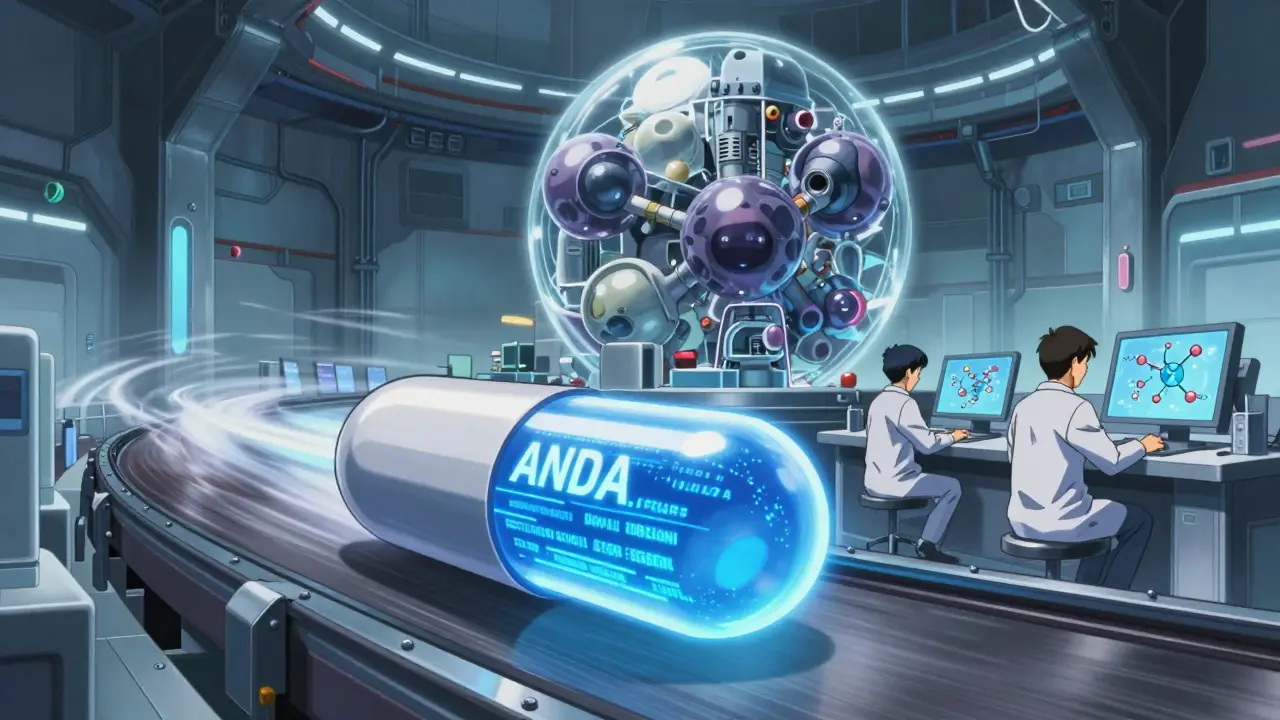
The heart of the Hatch-Waxman Act is the Abbreviated New Drug Application (ANDA) pathway. Before 1984, if you wanted to sell a generic version of an existing drug, you had to repeat all the expensive clinical trials to prove safety and efficacy. That cost hundreds of millions of dollars and took years. Why would a company do that if they couldn't charge premium prices?
The ANDA pathway changed the rules. Instead of proving a drug is safe and effective from scratch, generic manufacturers only need to demonstrate bioequivalence. This means showing that their version delivers the same amount of active ingredient into the patient's bloodstream at the same rate as the brand-name "reference listed drug." According to FDA estimates, this reduces development costs by approximately 75% compared to a full New Drug Application (NDA).
This shift didn't just lower costs; it exploded availability. In the year before the Act passed, fewer than 10 generic drugs were approved annually. By 2019, the FDA approved 771 generic drugs. Today, generics account for 90% of all prescriptions filled in the United States, yet they represent only about 18% of total drug spending. That gap represents billions in savings for consumers and the healthcare system.
Patent Term Restoration: Paying for the Wait
If generics got a fast track, what did brand-name companies get? They got time. Developing a new drug takes a long time-often 10 to 15 years from lab to shelf. But standard patents last only 20 years from the filing date. If a company spends eight years getting FDA approval, they are left with only 12 years of actual market exclusivity to recoup their investment. During the approval process, they can't sell the drug, but the patent clock keeps ticking.
The Hatch-Waxman Act introduced patent term restoration, which compensates innovator companies for up to 14 years of patent term lost during FDA regulatory review. This extension allows brand manufacturers to recover some of the time lost during the regulatory review process. However, it’s not a free pass. The maximum extension is capped at five years, and the total patent life cannot exceed 14 years post-approval. Data from the USPTO shows that between 1984 and 2019, the average restoration period granted was just 2.6 years per drug. While modest, those extra years can be crucial for recovering R&D costs, which now average $2.3 billion per approved drug according to the Tufts Center for the Study of Drug Development.
The Orange Book and Paragraph IV Certification
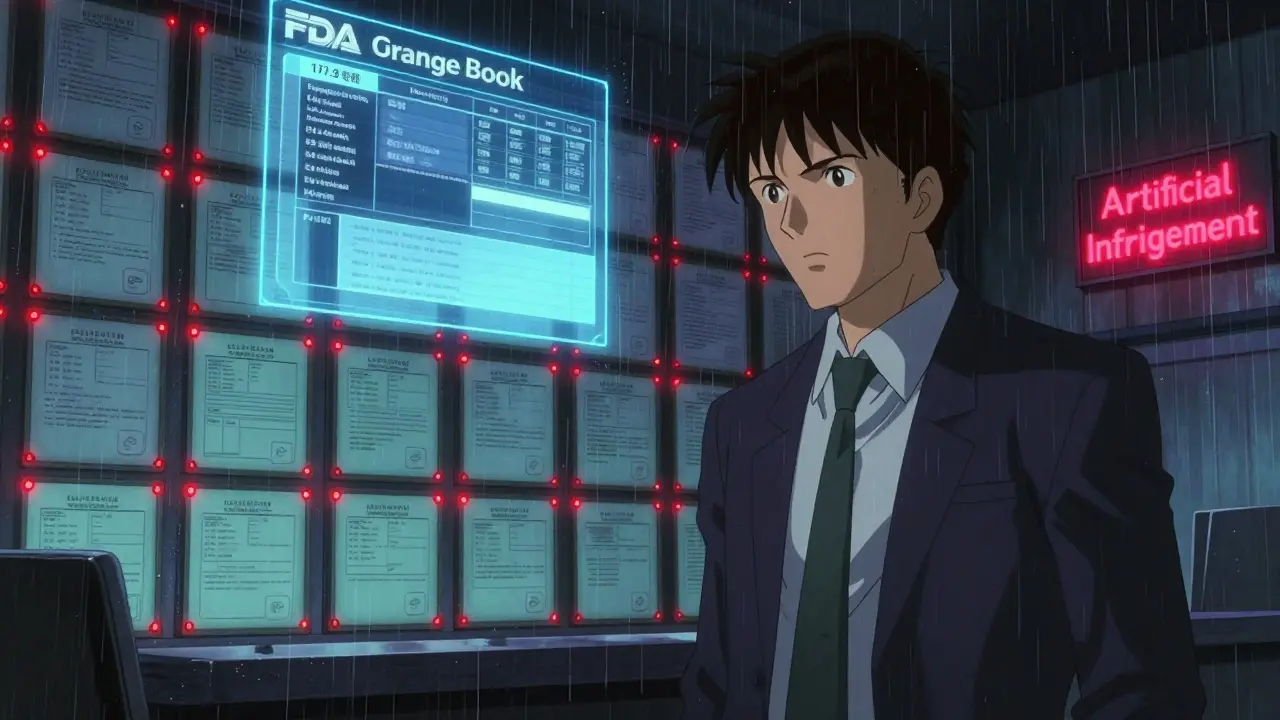
How does a generic company know if a drug is still protected? They check the FDA Orange Book, officially known as Approved Drug Products with Therapeutic Equivalence Evaluations, a database listing all FDA-approved drugs and their patent information. When a brand company gets approval, they must list any relevant patents in this book. This transparency is key to the Hatch-Waxman framework.
If a generic manufacturer wants to challenge a patent, they file what is known as a Paragraph IV certification, a legal declaration by a generic applicant stating that a patent listed in the Orange Book is invalid, unenforceable, or will not be infringed. This triggers a specific timeline. The brand company has 45 days to sue for patent infringement. If they do, FDA approval for the generic drug is automatically stayed for 30 months. This pause gives both sides time to litigate without the generic hitting the market prematurely.
To encourage these risky challenges, the Act offers a massive carrot: 180 days of marketing exclusivity. The first generic company to file a substantially complete ANDA with a Paragraph IV certification gets sole rights to sell that generic version for six months after it hits the market. This provision sparked intense competition. In the early days, generic companies literally camped outside FDA offices to be the first to submit their paperwork. The FDA eventually changed the policy in 2003 to allow shared exclusivity for same-day filers, but the race remains fierce.
| Feature | Pre-1984 | Post-1984 (Hatch-Waxman) |
|---|---|---|
| Generic Approval Pathway | Full NDA required (expensive/slow) | ANDA pathway (bioequivalence only) |
| Annual Generic Approvals | Fewer than 10 | Over 700 (by 2019) |
| Patent Protection During Testing | Testing constituted infringement (Bolar decision) | Safe harbor exemption (35 U.S.C. §271(e)(1)) |
| Patient Cost Impact | High brand prices, low generic access | Generics reduce prices to ~15% of brand levels |
| Innovation Incentive | Short effective patent life due to FDA delays | Patent term restoration available |
The Safe Harbor Provision
Remember the Supreme Court case that blocked generics from testing drugs? The Hatch-Waxman Act overturned that logic with a statutory "safe harbor" provision found in 35 U.S.C. §271(e)(1). This clause explicitly permits generic companies to make, use, and test patented drugs during the patent term for the sole purpose of generating data required for FDA approval.
This might sound like a small detail, but it’s critical. Without it, generic companies couldn't start their work until the day the patent expired. With it, they can begin development up to five years before expiration. They run their bioequivalence studies, prepare their manufacturing facilities, and have their ANDA ready to go. As soon as the patent expires-or as soon as they win a patent lawsuit-the generic drug can hit shelves immediately. This eliminates the artificial delay that previously kept prices high.
Loopholes and Modern Challenges
While the Hatch-Waxman Act succeeded in boosting generic availability, it also created new strategies for delaying competition. Over the last two decades, the system has been "gamed" by both sides, leading to higher costs and complex litigation.
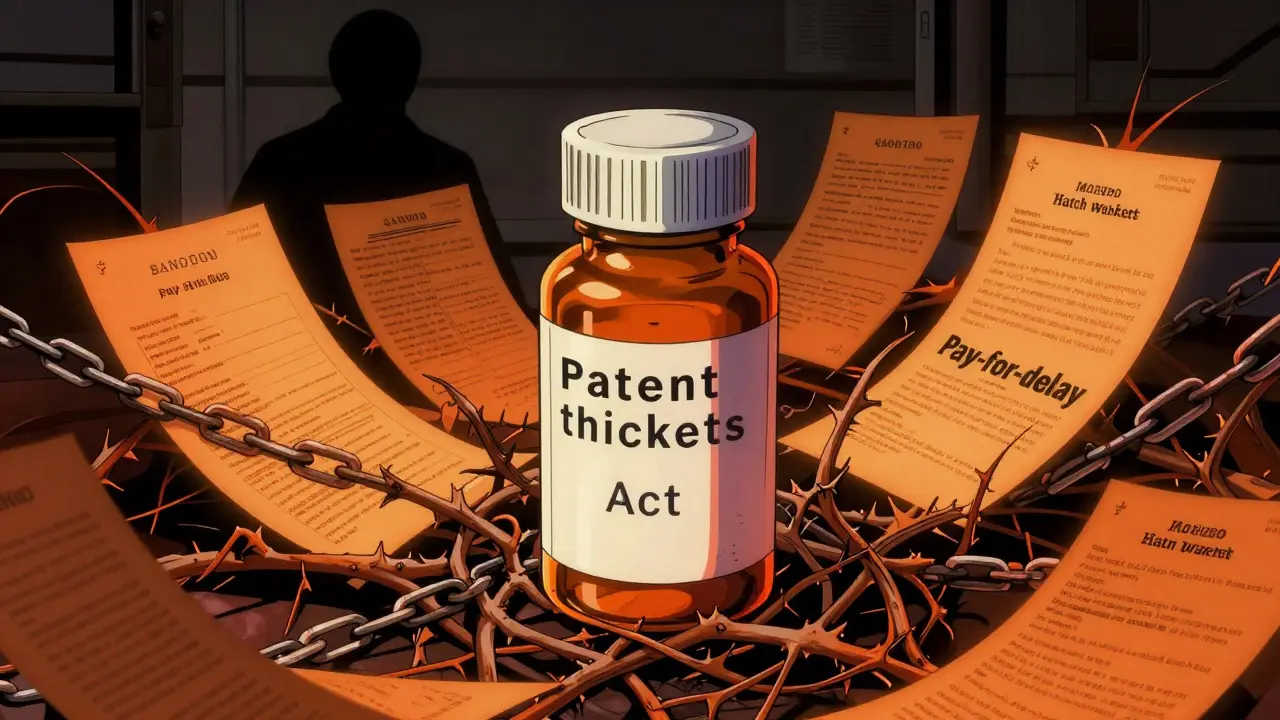
Patent Thickets: Brand manufacturers no longer rely on a single patent for the drug molecule. They now file dozens of patents covering minor modifications, such as the coating of a pill, the dosage form, or the method of administration. Professor Robin Feldman of UC Hastings College of the Law notes that the average number of patents per drug rose from 3.5 in 1984 to 14 today. These "secondary patents" create thickets that generics must navigate, often delaying entry by several years.
Pay-for-Delay Settlements: Sometimes, instead of fighting a patent lawsuit to the end, brand companies pay generic manufacturers to stay out of the market. These reverse-payment settlements were common until recent reforms. Between 2005 and 2012, they affected 10% of all generic challenges. The 2023 Preserve Access to Affordable Generics and Biosimilars Act aims to ban these practices, though enforcement remains a topic of debate.
Product Hopping: When a patent is about to expire, a brand company might slightly modify the drug-changing it from a tablet to a capsule, for example-and withdraw the old version from the market. This forces doctors and patients to switch to the new formulation, which has its own fresh set of patents, effectively resetting the clock on generic competition.
Impact on Healthcare Costs
The economic impact of the Hatch-Waxman Act is staggering. The Congressional Budget Office estimated that the Act saved the U.S. healthcare system $1.18 trillion between 1991 and 2011. More recently, the Association for Accessible Medicines reported that generics save the system an estimated $313 billion annually. When a generic enters the market, prices typically drop to 15% of the brand-name level within six months, according to FTC data.
However, the benefits aren't evenly distributed. The generic market has consolidated significantly. In 2022, the top 10 generic manufacturers controlled 62% of the market, up from 38% in 2000. This concentration can lead to supply shortages and price spikes when competition is thin. Furthermore, while generics save money, the rise in secondary patents and litigation has increased prescription drug spending by an estimated $149 billion annually since 2010 due to delayed generic entry.
Future Reforms and Current Developments
The landscape is shifting again. The 2022 CREATES Act closed a loophole where brand companies denied generic manufacturers access to samples needed for testing. The FDA is also tightening rules on what patents can be listed in the Orange Book, aiming to reduce frivolous listings that block generic entry. Under GDUFA IV, the FDA plans to reduce ANDA review times to 8 months by 2025, down from the current average of 10 months.
Despite criticisms, the core framework remains intact. A 2023 Deloitte survey found that 87% of pharmaceutical executives believe the principles of Hatch-Waxman are still sound. The challenge now is refining the tools to prevent abuse while preserving the balance that encourages innovation and ensures affordability. As we move further into the 2020s, the focus is on speeding up generic entry without disincentivizing the creation of new molecular entities.
What is the main purpose of the Hatch-Waxman Act?
The Hatch-Waxman Act balances two competing interests: incentivizing pharmaceutical innovation by extending patents for brand-name drugs and facilitating competition by creating a streamlined approval pathway for generic drugs. It aims to ensure patients have access to affordable medications while allowing companies to recoup R&D costs.
How does the ANDA pathway differ from a traditional NDA?
An Abbreviated New Drug Application (ANDA) requires generic manufacturers to prove bioequivalence to an already-approved reference drug, rather than conducting full safety and efficacy clinical trials. This significantly reduces development time and cost, making generic production economically viable.
What is a Paragraph IV certification?
A Paragraph IV certification is a statement filed by a generic drug applicant declaring that a patent listed in the FDA Orange Book is invalid, unenforceable, or will not be infringed. Filing this certification triggers a 30-month stay on FDA approval while the patent dispute is litigated.
Why do generic drugs cost less than brand-name drugs?
Generic drugs cost less because manufacturers do not bear the initial costs of discovery, clinical trials, and marketing associated with bringing a new drug to market. They only need to demonstrate that their product is bioequivalent to the brand-name version, saving billions in R&D expenses.
What is the FDA Orange Book?
The FDA Orange Book is a database of approved drug products that includes patent information and exclusivity data. It serves as a reference for generic manufacturers to determine which patents may block their entry into the market and whether they can file a Paragraph IV certification.