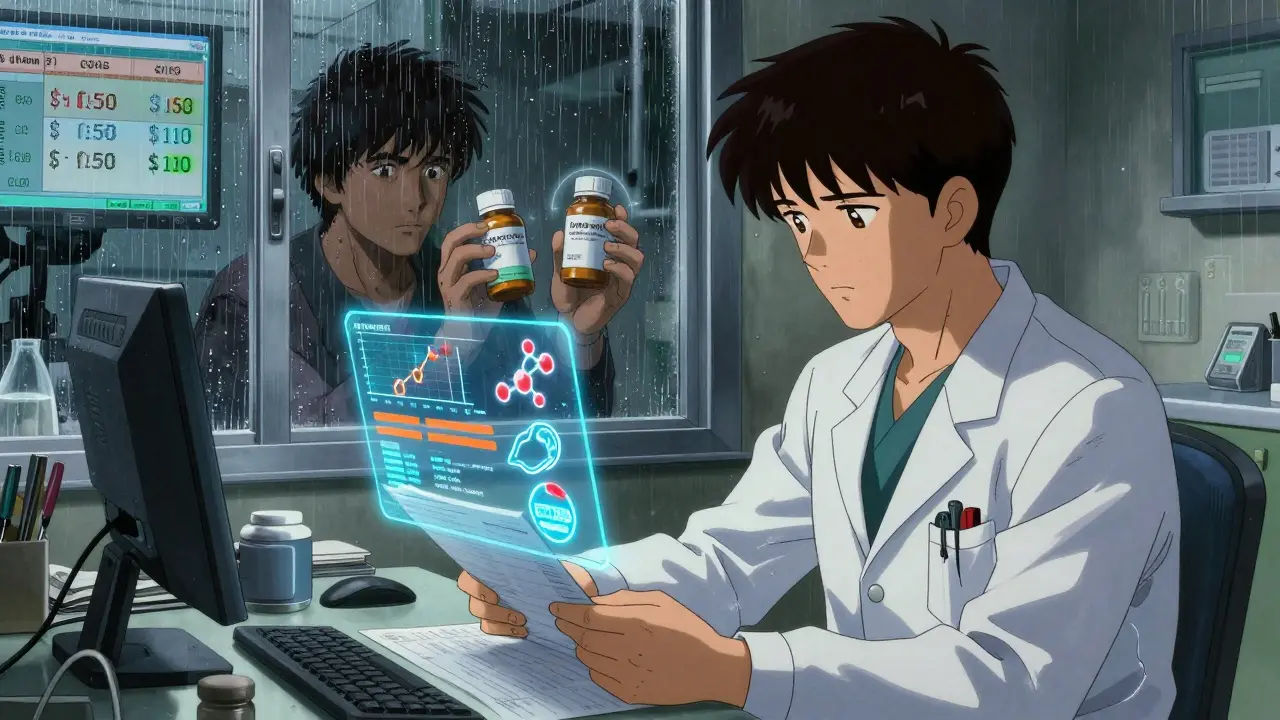
Most prescriptions in the U.S. today are for generic drugs - 90% of them. Yet many doctors still hesitate to prescribe them. Why? Because they’re not sure if generics really work the same way. This isn’t about patient preferences. It’s about clinician knowledge gaps - and those gaps are costing patients money, adherence, and even health outcomes.
What Generic Drugs Actually Are (And What They’re Not)
A generic drug isn’t a cheaper copy. It’s the exact same medicine as the brand-name version - same active ingredient, same strength, same way of taking it. The FDA requires it. That means if you’re prescribed metoprolol, whether it’s called Lopressor or just metoprolol tartrate, the chemical that lowers your blood pressure is identical. The only differences? The color, shape, or inactive ingredients like fillers or coatings. And those? They can’t affect how the drug works.
The FDA’s approval process for generics is strict. To get approved, a generic must show bioequivalence: its absorption into the bloodstream must be within 80-125% of the brand-name drug’s. That’s not a wide range - it’s a tight band. If a generic’s peak concentration (Cmax) or total exposure (AUC) falls outside those numbers, it gets rejected. Over 95% of ANDAs (Abbreviated New Drug Applications) pass on the first try. Still, a 2020 survey found 27% of prescribers believed generics could contain up to 25% less active ingredient. That’s not just wrong - it’s dangerous misinformation.
Why Doctors Still Doubt Generics
It’s not that doctors are lazy. It’s that they’ve been trained to think in brand names. Medical schools teach drug names, but clinical rotations often reinforce brand names. A resident might learn that metoprolol is for hypertension, but then hear their attending say, “Give him Lopressor.” By the time they’re prescribing on their own, they default to what they’ve heard most often - even if it’s not the cheapest or most accessible option.
Then there’s the myth of manufacturing quality. Some clinicians think brand-name drugs come from better facilities. They don’t. The same factories often make both. The FDA inspects both types equally. A 2022 analysis showed no difference in adverse event rates between generics and brand-name drugs for over 100 common conditions.
And then there’s the nocebo effect - the opposite of placebo. When a doctor says, “This generic might not work as well,” patients are more likely to report side effects, even if the drug is identical. Harvard researchers found that when providers explicitly endorsed generic equivalence, patient-reported side effects dropped by 18%. That’s not magic. That’s communication.
The Real Impact: Adherence, Cost, and Outcomes
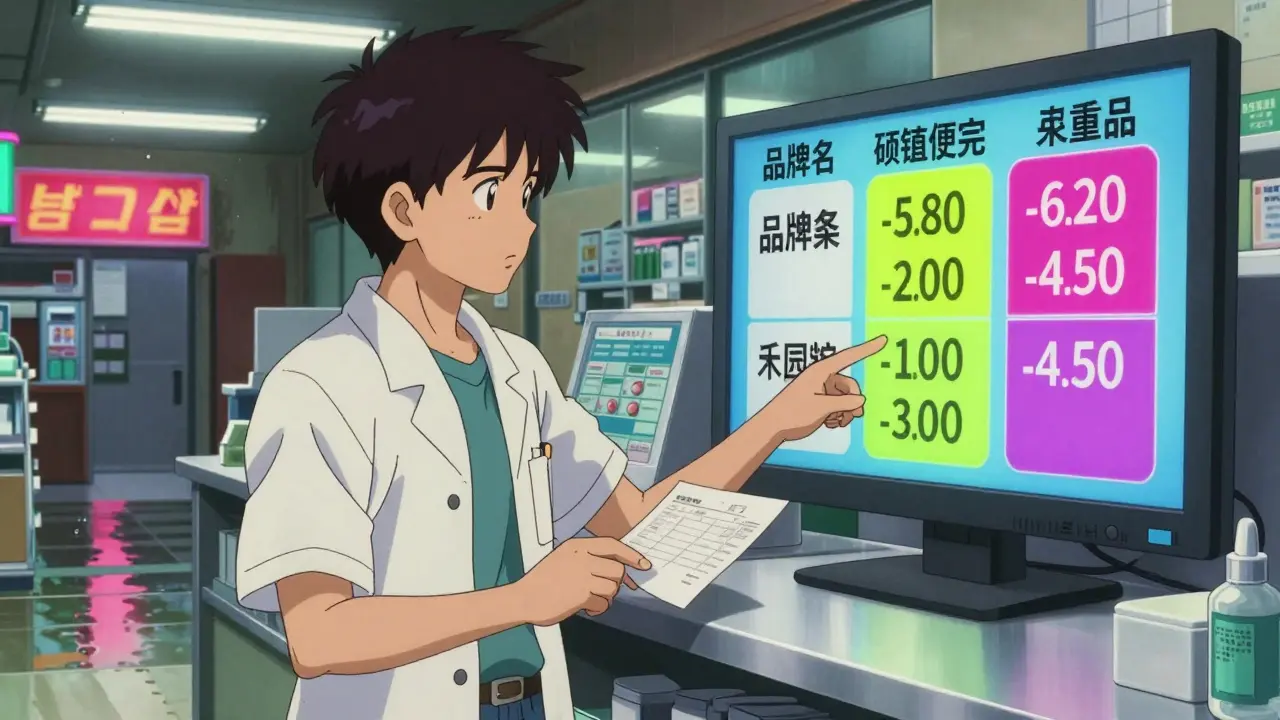
Patients who get generics are 35% more likely to start their medication. Why? Because they can afford it. A 30-day supply of brand-name statins can cost $150. The generic? $10. That’s not a small difference - it’s life-changing for someone choosing between meds and groceries.
For chronic conditions like hypertension, diabetes, or depression, adherence isn’t optional. Missing doses leads to hospitalizations, complications, and higher long-term costs. A 2020 ASPE study showed that patients on generics were 22% less likely to be hospitalized for uncontrolled conditions over 12 months. That’s not theoretical. That’s real people avoiding ER visits because they could keep taking their pills.
And the savings? Over $2.2 trillion in the last decade. That’s money that didn’t go to drug companies. It went back into the system - to clinics, to nurses, to mental health services. Yet only 35% of primary care doctors routinely discuss generic options with patients. Why? Time. They’re rushed. But education doesn’t have to take long. A two-minute conversation - “This generic is just as effective and saves you $120 a month” - can change everything.

What Works: Better Education, Not Just More Handouts
Passive materials - PDFs, brochures, webinars - don’t cut it. A 2021 JAMA study found that clinicians who received interactive, case-based training kept 42% more knowledge after six months than those who just read fact sheets. Why? Because they practiced. They role-played conversations with patients who said, “I’ve heard generics aren’t as good.” They saw data on their own prescribing patterns. They got feedback.
Successful programs don’t just teach facts. They change behavior. At UCSF Medical Center, they embedded prompts in the EHR: when a doctor typed “atorvastatin,” the system showed, “Generic available. Saves $110/month.” Within a year, brand-name statin prescriptions dropped 37%. No lectures. No meetings. Just smart tech nudging better choices.
Other models work too. The FDA’s Generic Drug Stakeholder Toolkit includes ready-to-use scripts for talking to patients. Academic detailing - where trained pharmacists visit clinics one-on-one to review prescribing - has increased generic use by up to 20% in some practices. And now, the FDA is testing VR training that simulates real patient conversations. Early results show a 41% boost in provider confidence.
Where Education Falls Short
Not all education efforts succeed. A Tennessee Medicaid program spent $1.2 million on physician education in 2020. Generic use only went up 8%. Why? The materials weren’t tied to the EHR. Doctors didn’t see them when they were prescribing. Education that doesn’t meet clinicians where they work - at the computer, in the exam room - just gathers dust.
Another blind spot? Biosimilars. Many providers still confuse them with generics. Biosimilars are for complex biologic drugs - like Humira or Enbrel - which are made from living cells. They’re not exact copies. They’re highly similar, but not identical. And the approval process is different. Only 31% of providers could correctly explain the difference in a 2023 FDA survey. That’s a problem. When a rheumatologist prescribes a biosimilar thinking it’s just a generic, they might not realize the monitoring requirements are different. Education needs to separate these two categories clearly.

Who’s Leading the Way - and Who’s Falling Behind
Family physicians lead in generic prescribing - 89% of their prescriptions are generics. Neurologists? Only 67%. Cardiologists and psychiatrists are also slower to adopt. Why? Perceived risk. Neurologists worry about seizure control. Cardiologists fear arrhythmias. Psychiatrists fear relapse. But data doesn’t back up those fears. Multiple studies show no difference in outcomes for epilepsy, heart failure, or depression when switching to generics.
One exception? Levothyroxine. Some studies suggest small variations in absorption may matter for thyroid patients. But the FDA says the data isn’t strong enough to justify avoiding generics. Still, some providers stick with brand-name Synthroid out of habit. That’s where education should focus - not on fear, but on evidence.
Getting Started: What Every Clinician Needs to Know
You don’t need a degree in pharmacology to use generics confidently. Here’s what matters:
- Therapeutic equivalence: The FDA’s Orange Book uses “A” ratings for equivalent drugs. “B” means not equivalent - rare, but important to spot.
- State laws: In 34 states, pharmacists can swap generics without asking you. In 16, you must write “dispense as written.” Know your state’s rules.
- Communication: Say, “This generic is approved by the FDA to work exactly like the brand. It’s safe, effective, and saves you money.” That’s all you need.
- Resources: Download the FDA’s free Generic Drug Facts Handout. Use the Orange Book app. Check out GPhA’s online modules.
It takes 6-8 hours of focused learning to fully understand generics. But you don’t need to do it all at once. Start with one condition - say, hypertension. Learn the top five generics used for it. Practice explaining them to one patient this week. Then the next. Build confidence slowly.
The Future Is Here - And It’s Personalized
Education is no longer one-size-fits-all. UnitedHealthcare’s 2024 pilot uses AI to track prescribing habits. If a doctor writes 80% brand-name prescriptions for antidepressants, the system sends them a targeted video - not a generic lecture, but one showing real data from their own patients: “Your patients on generics had the same improvement in depression scores as those on brand-name drugs.” The result? A 28% increase in generic prescribing.
And in 2025, CMS will start factoring generic prescribing rates into Medicare’s Merit-based Incentive Payment System (MIPS). That means your reimbursement could depend on how often you choose cost-effective, evidence-based generics. This isn’t punishment. It’s alignment. It’s saying: do the right thing, and you’ll be rewarded.
Provider education on generics isn’t about convincing doctors to save money. It’s about helping them prescribe better. When clinicians understand the science, trust the data, and communicate clearly, patients take their meds. They feel better. And the system works for everyone.
Are generic drugs really as effective as brand-name drugs?
Yes. The FDA requires generics to have the same active ingredient, strength, dosage form, and route of administration as the brand-name drug. They must also prove bioequivalence - meaning they’re absorbed into the body at the same rate and extent, within a strict 80-125% range. Thousands of studies and decades of real-world use confirm that generics work just as well for the vast majority of conditions.
Why do some doctors still prefer brand-name drugs?
Many were trained to use brand names, and some still believe myths - like generics are made in lower-quality factories or contain less active ingredient. Others fear patient complaints or worry about conditions like epilepsy or thyroid disease, even though evidence shows no difference in outcomes. Lack of exposure to updated education and time constraints also play a role.
Can pharmacists substitute generics without the doctor’s approval?
In 34 states, yes - pharmacists can substitute a generic for a brand-name drug unless the prescriber writes “dispense as written.” In 16 states, the prescriber must explicitly block substitution. Always check your state’s laws. But even where substitution is allowed, the patient can still request the brand if they prefer.
What’s the difference between a generic and a biosimilar?
Generics are exact copies of small-molecule drugs - like metoprolol or lisinopril - made chemically. Biosimilars are highly similar versions of complex biologic drugs - like Humira or Enbrel - made from living cells. They’re not identical, but they’re proven to have no meaningful clinical differences. Only 31% of providers can correctly explain this distinction, which is why targeted education is critical.
How can I start using more generics in my practice?
Start small. Pick one condition - like high blood pressure - and learn the top three generic options. Use the FDA’s Orange Book to check therapeutic equivalence ratings. Talk to one patient this week: “This generic works just as well and saves you $100 a month.” Use EHR prompts if your system has them. Over time, it becomes second nature. You don’t need to be an expert - just informed and intentional.






SWAPNIL SIDAM
January 27, 2026 AT 05:39Generics work. I’ve been taking them for years. My blood pressure is stable, my wallet is happy. No drama.
Geoff Miskinis
January 28, 2026 AT 17:43Let’s be honest-this whole discourse is predicated on a false dichotomy between ‘brand’ and ‘generic.’ The FDA’s bioequivalence thresholds are statistically arbitrary, and the 80-125% window is a regulatory fiction masquerading as clinical science. Real pharmacokinetic variability in human populations often exceeds this range, especially in polypharmacy scenarios. You’re not educating clinicians-you’re legitimizing a corporate cost-cutting scheme dressed up as public health.
eric fert
January 29, 2026 AT 07:38Okay but let’s just pause for a second. I’ve had patients on generics who swore up and down they felt ‘different’-like their depression got worse, or their heart started racing. And yeah, maybe it’s the nocebo effect, but what if it’s not? What if the fillers, the coatings, the manufacturing batch variations-those tiny differences-add up over time in vulnerable people? I’m not saying generics are bad, I’m saying we’re oversimplifying a deeply complex biological system. And then we act shocked when someone stops taking their meds because ‘it just doesn’t feel right.’ You can’t data-wash human experience. The FDA doesn’t test for how you feel. They test for what’s measurable. And that’s not enough.
Henry Jenkins
January 30, 2026 AT 00:59Interesting piece. I’ve seen both sides. I used to default to brand names out of habit, but after reviewing real-world data from our clinic’s EHR-especially for statins and metformin-I switched. My patients’ adherence went up, no adverse events spiked, and we saved thousands. The key isn’t just education-it’s integration. If your EHR doesn’t nudge you with cost and equivalence info at the point of care, you’re fighting an uphill battle. Also, the biosimilar confusion is real. I had a patient ask me last week if her Humira biosimilar was ‘the same as a generic.’ I had to pull up the FDA’s page and explain it like I was talking to a smart 12-year-old. We need better tools, not just more pamphlets.
Rakesh Kakkad
January 31, 2026 AT 19:00Respected colleagues, it is imperative that we acknowledge the structural inequities embedded within pharmaceutical prescribing paradigms. The assertion that generics are universally equivalent is a neoliberal myth propagated by corporate interests. In India, where I practice, generic manufacturers operate under vastly different regulatory environments. Even within the U.S., the sourcing of active pharmaceutical ingredients from overseas raises legitimate concerns regarding purity and stability. To dismiss these as ‘myths’ is to ignore the lived reality of millions who have experienced adverse reactions to substandard generics. Education must include global supply chain literacy, not just FDA brochures.
TONY ADAMS
January 31, 2026 AT 21:13bro i used to think generics were sketch too but then i took my dad’s blood pressure med (the generic version) and i swear i felt it working the same. no weird side effects, no crashes. he saves like 100 bucks a month. i’m just saying… maybe we’re overthinking this? the body doesn’t care what the pill looks like. it cares if the chemical is there. and it is.
George Rahn
February 1, 2026 AT 19:15This is what happens when you let bureaucrats dictate medicine. The FDA isn’t a medical authority-it’s a bureaucratic machine designed to appease corporate lobbyists and reduce federal spending. We used to have physicians as gatekeepers of therapeutic integrity. Now we have algorithms and ‘nudges’ pushing generics like they’re cereal on a grocery shelf. Where is the art of medicine? Where is the physician’s judgment? You want to save money? Fine. But don’t confuse cost-efficiency with clinical wisdom. Our ancestors didn’t prescribe generics because they were poor-they prescribed them because they trusted the science. Today, we prescribe generics because we’ve lost faith in our own expertise.
Ashley Karanja
February 2, 2026 AT 18:17I love how this post frames education as a behavioral intervention rather than a knowledge deficit. The nocebo effect piece is so critical-I’ve seen it firsthand in psychiatric care. Patients who are told ‘this is just a generic’ report more side effects even when the drug is identical. But the real win? When clinicians reframe the narrative: ‘This is the exact same molecule, just without the marketing.’ That simple shift reduces anxiety on both sides. Also, the VR training? Genius. Empathy-based simulation works better than any lecture because it mirrors the emotional weight of the clinical encounter. We need more of this-embedded, experiential, iterative. Not just ‘here’s a PDF.’
Karen Droege
February 3, 2026 AT 06:53Let’s not pretend this is just about education. It’s about power. Who gets to decide what’s ‘equivalent’? Pharma companies. Regulators. Insurance bots. Not patients. Not providers. We’re being sold a narrative that generics = good, brands = greedy. But what if the real issue is that we’ve turned medicine into a transaction? A pill for a price? The fact that we need AI to ‘nudge’ doctors into prescribing generics says everything. We’ve outsourced clinical judgment to cost algorithms. And now we’re surprised when patients feel alienated? The answer isn’t more training-it’s rebuilding trust. In the science. In the system. In each other.
Aurelie L.
February 4, 2026 AT 03:21Generics are fine. But levothyroxine? Don’t mess with it.
Joanna Domżalska
February 5, 2026 AT 17:03Of course generics work. That’s why Big Pharma spends billions lobbying to keep them off the market. The FDA is a puppet. The studies? Funded by the same companies that make the brand names. Wake up. This isn’t science-it’s propaganda.
Faisal Mohamed
February 6, 2026 AT 15:38Interestingly, the bioequivalence paradigm operates under a pharmacokinetic reductionist framework that fails to account for epigenetic modulation and inter-individual pharmacodynamic heterogeneity. The 80–125% AUC/Cmax window is statistically robust but biologically reductive. One must interrogate the ontological assumption that ‘same molecule = same effect’ in the context of polypharmacy, gut microbiome variation, and CYP450 polymorphisms. The clinical literature is replete with case reports of therapeutic failure following generic substitution in patients with complex comorbidities. This is not fear-mongering-it’s systems pharmacology.
Josh josh
February 7, 2026 AT 11:44generic = same drug cheaper why is this even a thing??
Mohammed Rizvi
February 7, 2026 AT 17:50My uncle in Delhi takes 7 different generics. Lives to 92. No hospital visits. His doctor? Didn’t even know what brand names were. He just wrote ‘generic’ on the script. Maybe we’re the ones overcomplicating it.
Suresh Kumar Govindan
February 9, 2026 AT 12:25It is a well-documented fact that the United States Food and Drug Administration maintains a clandestine relationship with multinational pharmaceutical conglomerates. The approval thresholds for generic drugs are deliberately inflated to facilitate market consolidation. The 95% first-pass approval rate is statistically anomalous and indicative of regulatory capture. Furthermore, the assertion that ‘the same factories produce both’ is a fabrication-most generics are manufactured in facilities with no FDA inspection for over five years. This is not medicine. It is corporate espionage disguised as public health policy.