Ever stood at the pharmacy counter and felt your heart sink as the pharmacist told you the cash price for your medication? You aren't alone. With the rise of high-deductible health plans, nearly 43% of U.S. workers are now in a position where they have to pay full price for their meds until they hit a massive deductible. If you're uninsured or just exhausted by the cost of your prescriptions, coupon and discount card programs can feel like a lifeline, provided you know how to use them. But here is the catch: these cards are fantastic for generics, but they can be almost useless for brand-name drugs.
| Feature | Pharmacy-Specific Plans (e.g., Walmart, Kroger) | Third-Party Cards (e.g., GoodRx, Blink Health) |
|---|---|---|
| Pricing Model | Standardized (e.g., $4 or $10 generics) | Variable (up to 85% off) |
| Network | Single pharmacy chain | Thousands of participating pharmacies |
| Drug Focus | Primarily generics | Both brand-name and generics |
| Access | Walk-in / Instant | App or Printed Voucher |
What Exactly Are These Discount Programs?
First, let's clear something up: Prescription Drug Discount Cards is a third-party service that negotiates lower rates with pharmacies to provide patients with reduced medication prices. They are not insurance. They don't count toward your deductible, and they don't coordinate benefits. Think of them more like a digital coupon for your medicine.
These programs really took off around 2006 when Walmart launched its famous $4 generic drug program. Soon, other giants like Target, Kroger, and Costco jumped in. Today, the landscape is dominated by tech-driven players like GoodRx, which operates in over 70,000 pharmacies, and others like Blink Health or NeedyMeds. These companies act as middlemen, negotiating bulk pricing and receiving a small fee from the pharmacy when you use their voucher.
Why Generics Are the Secret to Real Savings
If you want to actually save money, you have to focus on Generic Drugs. These are medications that have the same active ingredients, strength, and dosage as brand-name drugs but cost significantly less. The effectiveness of a discount card depends almost entirely on whether your drug is a generic or a brand name.
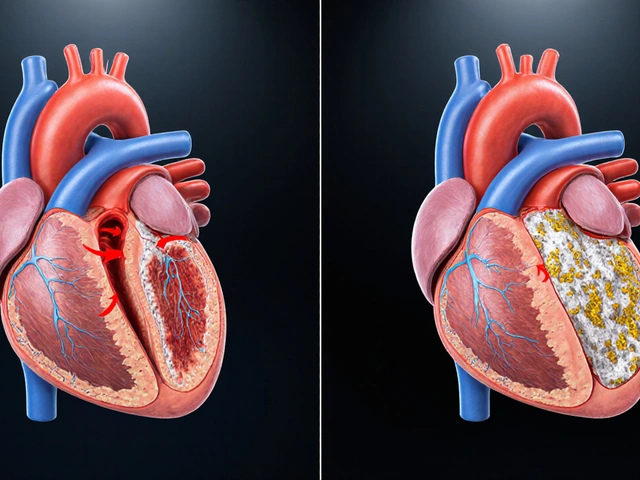
Consider a real-world scenario: heart failure treatment. A study published in Circulation: Cardiovascular Quality and Outcomes found that a three-drug regimen consisting only of generics could cost as little as $11 a month when using discount cards-a staggering 65% drop from the standard cash price. However, the moment a brand-name drug (like certain SGLT2 inhibitors) is added to the mix, the monthly cost can rocket to $1,200 or $1,500. In that case, the discount card only shaved off about 10% of the cost. The lesson? The a coupon and discount card programs strategy works best when your doctor prescribes generics.
How to Navigate the "Shopping" Process
Saving money with these cards isn't as simple as just handing over a piece of paper; it requires some actual effort. Because prices vary wildly between pharmacies-even those on the same street-you have to be your own advocate. Here is the most effective workflow for lowering your costs:
- Check Multiple Apps: Don't just rely on one service. A drug might be $15 on Blink Health but $42 on GoodRx at the exact same pharmacy.
- Compare Local Pharmacies: Check prices at a big-box retailer (like Walmart), a grocery chain (like Kroger), and a standalone pharmacy in your zip code.
- Ask About the "Cash Price": Sometimes the pharmacy's own internal cash price is actually lower than the discount card price.
- Verify with Your Pharmacist: Your pharmacist can often see if there's a better coupon available in their system that you might have missed.
Be warned: this process takes time. Some users report spending 15 minutes per prescription just to find the best deal. If you're managing multiple chronic conditions, this "administrative burden" can become a chore. If you find yourself struggling, ask your doctor if there is a therapeutic alternative that is more commonly discounted.
The Pros and Cons: Who Actually Benefits?
Not everyone saves the same amount. If you have a gold-plated insurance plan with a low copay, using a discount card might actually cost you more. The real winners here are the uninsured and those with high-deductible health plans (HDHPs) who are stuck paying full price early in the year.
On the positive side, people frequently report massive savings on common generics. For instance, users on platforms like Reddit often share stories of saving $70 to $80 a month on staples like lisinopril or metformin. For someone without insurance, that's the difference between taking their medicine and skipping doses.
On the flip side, the frustration is real. There is a lack of pricing consistency. You might find a great price on Monday, but by the time you refill next month, the price has spiked. Furthermore, the effort required to shop around can lead to "medication delays," where patients put off picking up their drugs because they are too stressed by the pricing hunt.
What's Changing in 2026?
The industry is moving toward a more automated experience. We are seeing the rise of "integrated discount card programs." Instead of you manually hunting for coupons, some Pharmacy Benefit Managers (PBMs) like OptumRx and Express Scripts are starting to automatically apply the lowest available price-whether it's from your insurance or a third-party card-at the point of sale.
We're also seeing a shift in how these services are delivered. For example, GoodRx has expanded into telehealth, allowing you to talk to a doctor and get a prescription with a pre-applied discount all in one app. While this makes things easier, the Federal Trade Commission (FTC) is keeping a close eye on the revenue models of these companies to ensure that the fees paid by pharmacies aren't driving up the base prices for everyone else.
Do discount cards work with my insurance?
No. You cannot "double dip" by using a discount card and insurance at the same time for one prescription. You must choose one or the other. Most people use the discount card if the negotiated price is lower than their insurance copay or if they haven't met their deductible yet.
Are generic drugs really as effective as brand-name ones?
Yes. Generic drugs are required to have the same active ingredient, strength, and dosage form as the brand-name version. They are bioequivalent, meaning they work the same way in your body. This is why they are so much cheaper-they don't have the massive research and marketing costs attached to the original brand.
Why does the price change every time I refill?
Discount card prices are negotiated in real-time and can fluctuate based on the pharmacy's current contract with the discount provider. It's always a good idea to re-check your app before heading to the pharmacy to see if a different pharmacy has a better current rate.
Can I use these cards for specialty medications?
It's much harder. While some cards offer discounts on specialty generics, many of the deepest savings are reserved for common maintenance medications. For very expensive specialty drugs, you are often better off looking for a Patient Assistance Program (PAP) run by the manufacturer.
How do I actually "use" the card at the pharmacy?
You don't need to sign up for a formal membership. Simply find the drug in the app, get the coupon code (BIN, PCN, Group, and ID), and show the digital voucher to the pharmacist. They enter those codes into their system just like they would with an insurance card.
Next Steps for Your Wallet
If you're looking to lower your pharmacy bill today, start by auditing your current medications. Identify which ones are generics and which are brands. For the generics, download two or three of the major discount apps and compare the prices at three different pharmacies in your area. If you find that a brand-name drug is eating up your budget, talk to your doctor about whether a generic alternative exists. A simple switch from a brand to a generic, combined with a discount card, can sometimes save you over 60% of your monthly healthcare spending.


Goodwin Colangelo
April 4, 2026 AT 18:32One thing to keep in mind is that some pharmacies have their own internal generic lists that are even cheaper than the apps. I always tell people to ask the pharmacist for the cash price before scanning a GoodRx code. Sometimes you can save another few bucks just by bypassing the third-party voucher entirely.
The Charlotte Moms Blog
April 5, 2026 AT 20:11This is such a joke!!! Who has 15 minutes to spend on an app while their kid is screaming in the car??? The absolute inefficiency of the US healthcare system is a disaster!!!!
Divine Manna
April 6, 2026 AT 03:50The fundamental tragedy here is the commodification of wellness. We treat the alchemy of pharmacology as a mere shopping trip, reducing the sanctity of health to a series of discount codes. It is a stark reflection of a society that values the bottom line over the biological imperative of survival. One must wonder if the psychological toll of this "administrative burden" outweighs the nominal financial gain.
simran kaur
April 7, 2026 AT 16:00Notice how they push these "integrated programs" for 2026. It is completely obvious they just want total control over your medical data to feed into their algorithms. These third-party cards are just a gateway to make us dependent on digital IDs for basic survival. The pharmacy industry is just a front for larger corporate surveillance agendas.
HARSH GUSANI
April 8, 2026 AT 16:29USA is so poor 🤣 we have best medicines in India for free or cheap 🇮🇳 why you need apps for this? Just move to a real country! 💊🔥
Jenna Carpenter
April 10, 2026 AT 08:45honestly just try natural supplements first. most of these generics are just band-aids for bad dietes anyway. why pay any money when you can just heal urself with a bit of disipline and some herbs
Sakshi Mahant
April 11, 2026 AT 02:21It is interesting to see how different the systems are. While the struggle for affordability is real in the US, it's a reminder that we should all share knowledge about more accessible healthcare options globally to help those in need.
Hudson Nascimento Santos
April 11, 2026 AT 15:18The dichotomy between the brand name and the generic is a fascinating study in perceived value. We pay for the name, the trust, and the marketing, while the molecule remains unchanged. It makes one ponder the nature of authenticity in a capitalist framework. Is the medicine less real because it lacks the prestige of a trademark?